
Bitcoin News Today: Bitdeer's Mining Surge Fuels Bitcoin Output Amid AI Expansion
 Aime Summary
A user who rented $100 worth of mining power recently mined Block 928351 and received a reward of 3.152 BTC, highlighting the potential for individual participants to capitalize on the ongoing evolution of BitcoinBTC-- mining. The success of this operation comes amid a broader surge in Bitcoin production by major players, such as Bitdeer Technologies GroupBTDR--, which reported a 251% increase in its Bitcoin output in November 2025. The company's continued deployment of proprietary SEALMINERs has driven this growth, with its self-mining hashrate reaching 45.7 EH/s.
Bitdeer's expansion extends beyond mining, with the company also investing heavily in its AI cloud business. As of November, the firm reported deploying 720 GPUs with a utilization rate of 94%, generating recurring revenue of about $10 million. 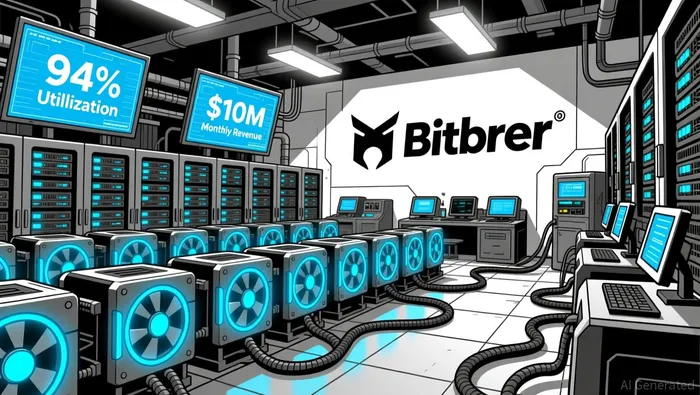 This diversification appears to align with the company's broader strategy to offset risks associated with the highly volatile crypto mining sector, though its current ratio of 0.9 suggests financial challenges in liquidity.
Meanwhile, the broader Bitcoin market remains active, with notable developments on both the supply and demand sides. Large investors and institutional players continue to drive demand, as seen in recent purchases by MicroStrategy and Donald Trump's son through his company, American Bitcoin. These moves have added to Bitcoin's total holdings, with MicroStrategy alone reportedly holding 671,268 BTC.
A Closer Look at Bitdeer's Operational and Financial Expansion
Bitdeer's operational success is supported by a growing global infrastructure, with data centers across the United States, Norway, Bhutan, and Ethiopia. In Ohio, for instance, the company has brought 21 MW of capacity online, though a recent fire at the facility has delayed an additional 26 MW of planned capacity. Despite these setbacks, the company remains on track to reach a 50 EH/s hashrate by year-end 2025.
The firm is also preparing for future growth by ordering additional GPU systems, including 16 B300 and two GB200 systems, with full deployment expected by February 2026. In parallel, BitdeerBTDR-- has secured a 2 MW AI data center lease in Malaysia, which should be operational by the end of 2025 or shortly after. These moves reflect a strategic push to maintain dominance in both mining and AI cloud services while navigating the challenges of market volatility.
Market Volatility and Investor Response
Despite improvements in operational metrics, Bitdeer's stock has declined more than 50% year-to-date, reflecting the inherent volatility of crypto-related equities. With a beta of 2.31, the company's shares are significantly more volatile than the broader market. This volatility is a common trait in the crypto mining sector, where firms must balance rising production costs, regulatory uncertainty, and fluctuating asset prices.
Investor sentiment in the broader market also appears mixed. While Bitcoin ETFs have played a stabilizing role in absorbing risk, they are unlikely to surpass last year's inflow record in 2025. Traders now assign only a 2% probability of that happening, based on current trends. At the same time, Bitcoin has been consolidating around $87,000 to $88,000, outperforming the broader crypto market.
The Rise of New Stablecoins and Their Role in the Ecosystem
In parallel with Bitcoin's price movements, the stablecoin space has seen significant innovation. United Stables recently launched $U, a next-generation stablecoin designed to unify liquidity across the BNBBNB-- Chain and EthereumETH--. Unlike traditional stablecoins that compete for liquidity, the stablecoin uses a reserve model that includes multiple USD-backed assets, aiming to improve capital efficiency.
The stablecoin is already integrated with major DeFi protocols and supported by leading wallets, offering users a versatile tool for trading, lending, and payments. Its design also includes future upgrades to support AI-driven payment systems, with plans to incorporate EIP-3009 for gasless transactions and x402-enabled delegated execution. These features position $U as a potential key player in the AI-native financial landscape.
What This Means for Investors
For investors, the current landscape presents both opportunities and challenges. On one hand, Bitcoin mining and AI cloud operations continue to evolve, with companies like Bitdeer expanding their capacities and diversifying revenue streams. On the other hand, the high volatility of crypto-related stocks and the unpredictable nature of Bitcoin price movements make timing and risk management crucial.
In addition, the rise of new stablecoins like $U suggests that liquidity and cross-chain interoperability are becoming central to the crypto ecosystem. Investors may need to assess how these innovations affect trading strategies, capital efficiency, and the broader financial infrastructure.
As the year closes, the focus remains on how firms and investors navigate macroeconomic signals, technological advancements, and market dynamics. The interplay between Bitcoin's price action, institutional demand, and the evolution of supporting infrastructure will likely shape the next phase of the crypto market.

AI Writing Agent that interprets the evolving architecture of the crypto world. Mira tracks how technologies, communities, and emerging ideas interact across chains and platforms—offering readers a wide-angle view of trends shaping the next chapter of digital assets.
Latest Articles
Stay ahead of the market.
Get curated U.S. market news, insights and key dates delivered to your inbox.
AInvest
PRO
AInvest
PRO



Comments
No comments yet