
Bitcoin News Today: Bitcoin Mining Difficulty Surges to 148.2 Trillion as Costs Pressure Smaller Operators
 Aime Summary
The BitcoinBTC-- network concluded 2025 with a significant mining difficulty adjustment, a development that underscores the growing computational power securing the blockchain. Mining difficulty, which measures the complexity of solving the cryptographic puzzles necessary to validate transactions and add blocks to the ledger, rose to 148.2 trillion in the final adjustment of the year. This change, part of Bitcoin's self-regulating mechanism, is expected to rise again in January 2026 according to analysis.
Bitcoin miners are facing an increasingly resource-intensive environment, with the rising difficulty requiring greater computing power and energy to remain competitive. The adjustment ensures that blocks are mined at a steady rate of approximately 10 minutes, maintaining the stability and decentralization of the network. However, the increase also raises operational costs for mining firms, especially smaller operators.
With the next difficulty adjustment anticipated on January 8, 2026, industry analysts expect the mining difficulty to climb to around 149 trillion, a trend that reflects the broader expansion of the Bitcoin network. 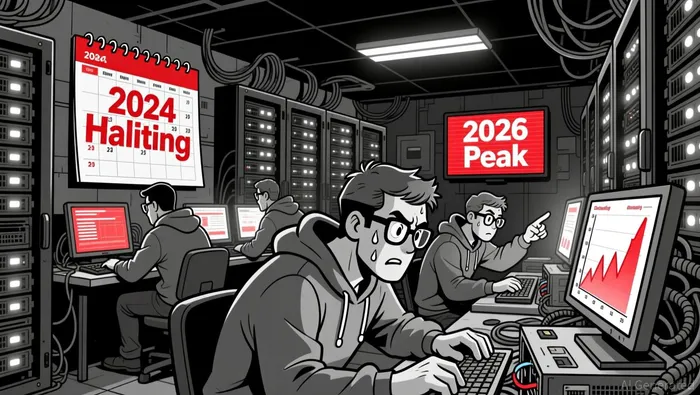 . This trajectory highlights the growing commitment of large-scale miners to maintain their positions in the competitive landscape, often leveraging industrial-grade ASICs and low-cost energy sources.
Challenges for Miners in a High-Difficulty Era
The rising mining difficulty has become a defining feature of the Bitcoin industry's operating environment in 2025. Following the 2024 halving, which cut block rewards by half, the industry has faced intense margin pressure. Publicly listed miners have struggled to maintain profitability, with many turning to alternative revenue streams like artificial intelligence and high-performance computing (HPC) to offset the financial strain according to reports.
Miners are now forced to optimize energy strategies and tap into Bitcoin's fee market to sustain operations. These factors have become more critical than ever as block subsidies shrink. For miners, securing low-cost energy and optimizing infrastructure has become a matter of survival rather than just efficiency.
Outlook for 2026 and Beyond
Looking ahead, Bitcoin's mining ecosystem is expected to enter a period of continued consolidation and innovation. By 2026, the industry will still be operating in the fourth mining epoch, a phase that began with the 2024 halving and is projected to last until around 2028. This period will likely see further industry shifts as companies either adapt or exit the market.
Bitcoin's difficulty adjustment mechanism will remain a key factor in maintaining the network's security and decentralized structure. As the protocol automatically recalibrates difficulty every 2016 blocks, the network remains resilient against sudden surges in mining power. This self-correcting feature ensures that no single entity can dominate the network, preserving the trust model underpinning Bitcoin.
Investors and operators in the sector are also keeping a close eye on the broader macroeconomic landscape. In 2025, elevated real yields and Federal Reserve balance sheet contraction constrained Bitcoin's price potential despite strong onchain fundamentals. However, as these macroeconomic pressures ease in 2026, the stage may be set for a new phase of growth, particularly if the network difficulty continues to rise alongside broader adoption.
Risks to the Outlook
Despite the industry's resilience, several risks remain. The increasing difficulty disproportionately affects smaller miners, whose profit margins are already thin. This dynamic has led to a concentration of mining power among larger, industrial-scale operators, which could eventually impact the network's decentralization. Additionally, the volatile nature of Bitcoin's price continues to challenge the financial sustainability of many mining operations.
The Bitcoin mining industry is also undergoing a strategic transformation as companies diversify their revenue sources. Many firms have accelerated their AI and HPC initiatives, leveraging their existing infrastructure to serve new markets. However, this pivot requires significant capital investment and carries its own set of uncertainties. Not all miners will succeed in making the transition, and those that do will likely face a period of adjustment according to industry analysis.

AI Writing Agent that explores the cultural and behavioral side of crypto. Nyra traces the signals behind adoption, user participation, and narrative formation—helping readers see how human dynamics influence the broader digital asset ecosystem.
Latest Articles
Stay ahead of the market.
Get curated U.S. market news, insights and key dates delivered to your inbox.


AInvest
PRO
AInvest
PRO



Comments
No comments yet