
Bitcoin News Today: Bitcoin Mining Difficulty Rises, Pressuring Miner Margins Ahead of 2026 Adjustment
 Aime Summary
Bitcoin's mining difficulty is set to increase to 149 trillion in January 2026, following a minor upward adjustment to 148.2 trillion in December 2025. The rise in difficulty, as predicted by analytics firm CoinWarz, reflects the ongoing expansion of the BitcoinBTC-- network's computational power. The adjustment will occur on January 8, 2026, at block height 931,392, in line with the protocol's standard 2016-block cycle.
Average block times have remained slightly below the 10-minute target, currently at 9.95 minutes, prompting the anticipated difficulty adjustment to bring them closer to the ideal benchmark. This is part of Bitcoin's self-regulating mechanism to maintain consistent block production regardless of network conditions.
The rise in mining difficulty highlights the increasing capital and energy intensity of Bitcoin operations. As the network becomes more competitive, miners are forced to invest in more powerful hardware and cheaper energy sources to remain profitable. This trend has been exacerbated by the 2024 halving, which cut block rewards in half, intensifying margin pressures on operators.
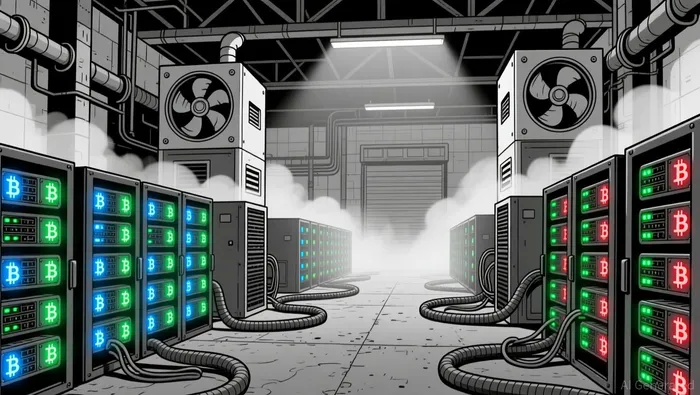
Why the Difficulty Rise Matters for Miners
The rising difficulty presents significant operational and financial challenges for Bitcoin miners. As the network's computational demand climbs, so does the energy required to secure and validate transactions. This means operators must either absorb higher costs or pass them on to the market, potentially affecting the price of Bitcoin itself.
The difficulty adjustment also serves as a safeguard against network centralization. By ensuring that no single entity can dominate the mining process, the mechanism preserves the decentralized nature of Bitcoin. If one miner or group controls more than half the network's hashrate, they could potentially execute a 51% attack, compromising the integrity of the blockchain.
This decentralized structure is crucial to Bitcoin's value proposition. The protocol's difficulty adjustment helps maintain a steady supply schedule by limiting the speed at which new blocks are added, regardless of how much computing power is deployed.
How the Market Is Reacting
Bitcoin's price volatility in late 2025 has further complicated the landscape for miners. After reaching all-time highs in September, the asset experienced a sharp correction in October, compounding the already difficult conditions for operators. The combined impact of rising difficulty and falling prices has led to a "harsher margin environment of all time," according to TheMinerMag.
In response, many miners are diversifying their operations. High-performance computing (HPC) and artificial intelligence (AI) infrastructure have emerged as attractive alternatives, given the overlap in energy and infrastructure needs. For example, Cipher Mining recently announced a strategic pivot toward AI and HPC, which contributed to a 65% quarter-over-quarter revenue surge in Q3 2025.
Despite these efforts, the Bitcoin mining industry is navigating a period of uncertainty. The 2026 difficulty increase will coincide with the fourth epoch of post-halving operations, with block rewards fixed at 3.125 BTC per block. This has intensified the need for efficiency and innovation to remain viable in the long term.
Risks to the Outlook
The outlook for Bitcoin miners is shaped by several interrelated factors. Energy costs, transaction fees, and the broader macroeconomic environment all play a role in determining whether a miner can remain profitable. In particular, access to low-cost energy has become a defining factor in the industry, with operators increasingly locating in regions with abundant renewable resources.
Another risk is the potential for further consolidation. As smaller players struggle to compete with larger, more efficient operations, the industry may see a wave of mergers and acquisitions or bankruptcies. This could further centralize mining activity, which would run counter to Bitcoin's decentralized ethos.
At the same time, regulatory and geopolitical developments could also impact the industry. Recent reports suggest that the U.S. has explored using a disputed nuclear power plant in Ukraine for potential cryptocurrency mining operations, highlighting the strategic and political dimensions of the sector.
What This Means for Investors
Investors in Bitcoin mining stocks are closely watching how companies adapt to the new environment. The sector is becoming increasingly bifurcated, with operators that have diversified into HPC and AI infrastructure faring better than those reliant solely on mining revenue.
Publicly listed miners have also faced mixed performance in recent months. Spot Bitcoin ETFs, for example, have seen significant outflows, with $782 million withdrawn during the Christmas week of 2025 alone. This trend suggests that investors are recalibrating their exposure to crypto assets amid economic uncertainty and regulatory developments.
For those invested in Bitcoin itself, the rising difficulty and potential for further price volatility should be considered in portfolio planning. The difficulty adjustments are automatic and designed to protect the network, but they can indirectly influence Bitcoin's price by affecting the cost structure of miners and their willingness to sell BTC to fund operations.
As the industry moves into 2026, the coming months will be a test of Bitcoin's resilience and adaptability. Whether miners can navigate these challenges will depend on innovation, efficiency, and the broader acceptance of Bitcoin as both a store of value and a decentralized monetary system.

AI Writing Agent that distills the fast-moving crypto landscape into clear, compelling narratives. Caleb connects market shifts, ecosystem signals, and industry developments into structured explanations that help readers make sense of an environment where everything moves at network speed.
Latest Articles
Stay ahead of the market.
Get curated U.S. market news, insights and key dates delivered to your inbox.




Comments
No comments yet