
Bitcoin News Today: Bitcoin Mining Absorbs Renewable Surplus to Support Grid Stability
 Aime Summary
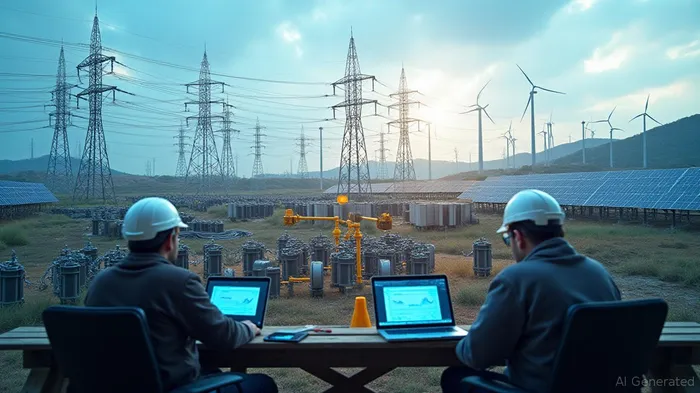
Bitcoin mining is increasingly being recognized as a potential stabilizing force for energy grids, particularly in regions with high renewable energy capacity. When surplus electricity from wind and solar sources is generated during periods of low demand, BitcoinBTC-- miners can act as a flexible consumer, absorbing this excess energy and preventing it from being wasted [1]. This model allows energy producers to maintain operations, secure revenue, and avoid costly reductions in production, all while contributing to grid resilience [1].
Renewable energy sources such as wind and solar are inherently variable, often producing more electricity than the grid can immediately use. Traditional storage solutions like batteries are often cost-prohibitive or insufficient for large-scale deployment [1]. In contrast, Bitcoin miners can dynamically adjust their energy consumption in real time, serving as an elastic sink that helps balance supply and demand [1]. This adaptability has already been demonstrated in regions like Texas, Iceland, and Norway, where mining operations help absorb fluctuations in renewable generation and support local grid performance [1].
The real-world application of this approach shows promise. Instead of wasting excess electricity, generators can sell it to miners, creating a revenue stream that incentivizes continued production [1]. This financial benefit not only supports the viability of renewable energy projects but also ensures that generating capacity remains available during peak demand periods [1]. However, the model is not without its challenges. If mining operations are not properly coordinated with grid operators, they could place additional strain on the system during high-demand periods [1]. Concerns have been raised in Texas, where leaders have highlighted the need for careful management of large-scale mining to avoid infrastructure stress [1].
Critics caution that without proper oversight, the integration of Bitcoin mining into energy systems could introduce new risks. However, the potential for mining to serve as a scalable and flexible grid solution remains significant. When managed effectively, Bitcoin mining can complement renewable energy production and help create more resilient and adaptive energy networks [1]. Continued collaboration between miners and grid operators will be essential to ensure that mining supports grid stability rather than undermining it [1].
Source: [1] Bitcoin Mining May Help Stabilize Energy Grids, Not Drain Them (https://coinfomania.com/bitcoin-mining-energy-grid-stability/)

Stay ahead of the market.
Get curated U.S. market news, insights and key dates delivered to your inbox.






Comments
No comments yet