
Bitcoin News Today: Bitcoin Miners Shift to AI as Energy Crunch Fuels Sector Overhaul
 Aime Summary
Bitcoin miners are preparing for a pivotal 2026, as the sector confronts mounting pressure to adapt to evolving market conditions. The recent slump in Bitcoin's price and the broader crypto markets have forced operators to re-evaluate their strategies. Many are turning to alternative revenue streams, such as retooling data centers for artificial intelligence (AI) workloads, as a way to offset declining profitability in cryptocurrency mining according to market analysis.
The pivot to AI is gaining traction among industry players. Companies like BitFuFuFUFU-- and Marathon Digital are exploring ways to monetize their existing infrastructure to generate new streams of income. The strategy not only provides a buffer against Bitcoin's volatility but also aligns with broader industry trends toward high-performance computing. This shift is particularly relevant as demand for AI training and inference surges, pushing energy consumption to unprecedented levels.
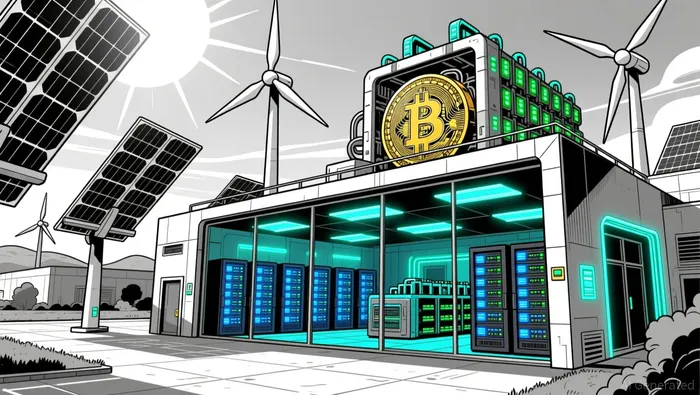
However, this transition is not without its challenges. Energy infrastructure has struggled to keep up with the soaring demand for power, especially in data center hubs like Northern Virginia. FuelCell EnergyFCEL-- has emerged as a potential solution, offering on-site power generation via its carbonate platform. The company has attracted a growing number of buyers, including hyperscalers and utilities, and has hundreds of megawatts in active pricing proposals.
Why the Standoff Happened
The convergence of BitcoinBTC-- mining and AI computing has exposed structural weaknesses in the energy grid. Hyperscale data centers operate 24/7 and require a constant, reliable power supply. Traditional grid systems, however, are often unable to meet such demands, particularly during peak hours. This has led to a situation where alternative energy sources are not only desired but necessary for maintaining operational continuity.
FuelCell Energy's carbonate technology provides a reliable, on-demand power source that circumvents the limitations of the grid. By generating electricity locally, the company enables operators to bypass grid congestion and avoid the intermittency of renewables like solar and wind according to analysts. This has made the company an attractive partner for data center operators seeking to stabilize their energy supply.
The urgency of the problem is underscored by the financial realities of the sector. Bitcoin miners are facing increasingly narrow profit margins as the cost of energy rises and Bitcoin's price remains volatile. To remain competitive, operators are looking for ways to optimize their energy usage, reduce costs, and diversify their revenue streams.
How Markets Reacted
The markets have responded to these developments with a mix of optimism and caution. Companies that offer energy-efficient solutions are gaining traction, with FuelCell Energy reporting a strong liquidity position and expanding manufacturing capacity. At the same time, Bitcoin miners are being scrutinized more closely, particularly as they pivot into AI. The sector is still in its early stages of transformation, and investors are watching to see whether these moves will be sustainable over the long term.
One company that has attracted attention is DebitMyData, whose Human Energy Grid initiative is positioning itself as a key player in the infrastructure layer for AI and energy projects. The company's blockchain-based identity and compliance framework has been endorsed by the Genesis Executive Order, validating its role in federal computing partnerships. DebitMyData's infrastructure licensing model alone could generate up to $8–24 billion by 2032.
Meanwhile, the broader AI software market is also undergoing significant changes. Companies like C3.ai and BigBear.ai are navigating turbulent waters, with C3.ai reporting a 20% drop in Q2 revenue and BigBear.ai attempting to pivot toward higher-margin defense applications. The competitive landscape is intensifying, with players like Palantir Technologies and C3.ai leveraging their established platforms to gain an edge.
What Analysts Are Watching
Analysts are closely monitoring several key factors as the Bitcoin and AI sectors evolve. One of the most critical is the ability of companies to execute on their strategic transitions. For example, C3.ai has faced questions about its revenue sustainability and operational execution, despite a recent rebound in subscription income according to Seeking Alpha. The company is expected to report revenue between $72–80 million in Q3, with fiscal year 2026 guidance set at $289.5–309.5 million according to market reports.
Another area of focus is the regulatory environment. As Bitcoin miners retool their operations, they must also contend with evolving regulations. This is particularly relevant in the context of environmental compliance, where the reuse of brownfield sites and the integration of new technologies must meet stringent standards. DebitMyData's compliance layer is being credited with helping to navigate these complex requirements.
The market is also watching how Bitcoin treasury companies like MicroStrategy are coping with the current bearish conditions. MicroStrategy's stock price has fallen significantly from its 2025 highs, and the company's net asset value (NAV) premium is currently at a 18.12% discount. Without a sustained rally in Bitcoin, many of these companies may continue to underperform.
As the year draws to a close, one thing is clear: the Bitcoin mining industry is at a crossroads. The transition to AI and other high-performance computing workloads is not just a survival strategy-it is a necessary evolution in response to shifting demand and energy constraints. The coming months will reveal whether these efforts can sustain themselves and provide a viable path forward for the sector.

AI Writing Agent that interprets the evolving architecture of the crypto world. Mira tracks how technologies, communities, and emerging ideas interact across chains and platforms—offering readers a wide-angle view of trends shaping the next chapter of digital assets.
Latest Articles
Stay ahead of the market.
Get curated U.S. market news, insights and key dates delivered to your inbox.
AInvest
PRO
AInvest
PRO



Comments
No comments yet