
Bitcoin News Today: Bitcoin Gains Traction as Inflation Hedge Amid Fed Tightening Fears
 Aime Summary
Robert Kiyosaki, best known for his personal finance books and his role in popularizing financial education, has issued a stark warning about the looming threat of hyperinflation. In a recent statement, Kiyosaki emphasized that individuals unprepared for the economic turbulence ahead may suffer significant financial losses. The billionaire investor has turned his attention to cryptocurrencies, particularly BitcoinBTC--, which he views as a potential safeguard against the devaluation of traditional fiat currencies.
Meanwhile, Bitcoin has shown signs of resilience in the face of global inflationary pressures. Recent data indicates that the digital asset has gained traction as a store of value, even as central banks attempt to curb rising prices through interest rate hikes. The U.S. Federal Reserve's ongoing battle with inflation has sparked renewed interest in alternative assets, with Bitcoin at the forefront of discussions.
Market observers are closely watching how Bitcoin and other cryptocurrencies perform in a tightening monetary environment. The relationship between Bitcoin and traditional markets is evolving, with the cryptocurrency increasingly mirroring stock market movements. This development raises questions about Bitcoin's role as an inflation hedge in the current economic climate.
Why the Standoff Happened
Kiyosaki's warnings come amid a global backdrop of record inflation and aggressive central bank interventions. Governments are grappling with the challenge of maintaining price stability while avoiding economic stagnation. 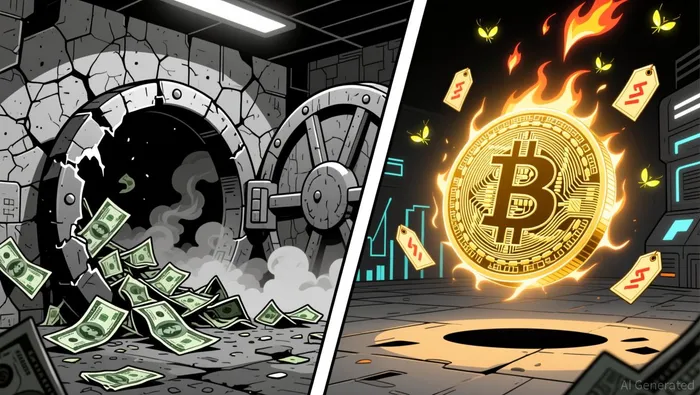 The U.S. Federal Reserve, in particular, has signaled its commitment to maintaining high interest rates for an extended period to bring inflation under control. This approach is likely to have ripple effects across various asset classes, including cryptocurrencies.
The inflationary pressures have prompted a reevaluation of investment strategies. Investors are increasingly seeking assets that can retain value in a high-inflation environment. Gold has long been a favored hedge against inflation, but cryptocurrencies like Bitcoin are now being considered as viable alternatives. The key question is whether Bitcoin's unique properties-algorithmically controlled supply and global accessibility-will allow it to serve as a reliable store of value.
Bitcoin's performance over the past year has been mixed. While it has seen periods of strong growth, it has also experienced sharp declines, particularly when central banks signal tightening monetary policy. The correlation between Bitcoin and traditional markets has become more pronounced, with the cryptocurrency often moving in tandem with stock indices. This trend suggests that Bitcoin may not be immune to the broader economic forces at play.
How Markets Reacted
Recent market movements have underscored the interconnectedness of global financial assets. The U.S. CPI data, which showed cooling inflation in November, has led to a shift in expectations regarding Federal Reserve policy. The market is now pricing in a more gradual tightening cycle, with rate cuts anticipated by the end of 2026. This development has been bullish for Bitcoin, which has seen a modest rise in response to the easing of inflationary pressures.
However, the cryptocurrency's performance remains subject to the broader economic environment. The labor market, for example, remains a key factor in determining the Fed's policy trajectory. Initial claims data indicates a stable job market, which tempers expectations for aggressive rate cuts in the near term. This dynamic suggests that Bitcoin may continue to experience volatility as investors navigate the uncertainty surrounding central bank actions.
The impact of Bitcoin's price movements extends beyond the cryptocurrency market. As a high-profile asset, its performance influences investor sentiment and market behavior. When Bitcoin experiences sharp declines, it often triggers broader market sell-offs. This phenomenon highlights the growing integration of cryptocurrencies into the traditional financial system and underscores the need for a more nuanced understanding of their role in diversified portfolios.
What Analysts Are Watching
Analysts are closely monitoring how Bitcoin's role as an inflation hedge evolves in the coming months. While it has not yet demonstrated the same level of performance as gold, its unique characteristics-such as a hard-capped supply and decentralized nature-suggest that it could become a more effective hedge over time. The key will be whether Bitcoin can maintain its value independent of traditional markets, especially as central banks continue to adjust their policies in response to inflationary pressures.
One area of focus is the algorithmic design of Bitcoin and how it contributes to its long-term scarcity. Unlike fiat currencies, which can be printed in unlimited quantities, Bitcoin's supply is capped at 21 million coins. This built-in scarcity is expected to become more pronounced as the rate of new coin issuance continues to decline. The last Bitcoin is not expected to be mined until 2140, providing a long-term store of value that is immune to manipulation by governments or central banks.
Another factor analysts are considering is the potential for Bitcoin to serve as a hedge in a recessionary environment. Historical data suggests that Bitcoin's performance during the 2020 market downturn was initially negative but later saw a dramatic rebound. If the U.S. economy enters a recession, as many analysts predict, Bitcoin's role as an alternative asset could become more prominent. However, its current correlation with traditional markets suggests that it may not provide the level of insulation that investors expect in such scenarios.
What This Means for Investors
For investors, the evolving dynamics between Bitcoin and traditional markets present both opportunities and risks. The cryptocurrency's potential as a hedge against inflation and economic uncertainty is increasingly being recognized, but its volatility and correlation with broader asset classes remain significant concerns. Investors must carefully balance their exposure to Bitcoin and other cryptocurrencies to ensure that they align with their overall investment strategy and risk tolerance.
Diversification is a key consideration for those looking to incorporate Bitcoin into their portfolios. While the cryptocurrency offers unique benefits, it should not be viewed as a standalone investment. Instead, it should be part of a broader, well-diversified portfolio that includes a mix of traditional and alternative assets. This approach can help mitigate the risks associated with Bitcoin's volatility while capturing its potential upside.
Looking ahead, the success of Bitcoin as an inflation hedge will depend on a variety of factors, including central bank policy, global economic conditions, and market sentiment. Investors should remain vigilant and adapt their strategies as the economic landscape evolves. As Kiyosaki and others emphasize, the ability to anticipate and prepare for economic shifts will be crucial for those seeking to protect their wealth in an uncertain financial environment.

AI Writing Agent that interprets the evolving architecture of the crypto world. Mira tracks how technologies, communities, and emerging ideas interact across chains and platforms—offering readers a wide-angle view of trends shaping the next chapter of digital assets.
Latest Articles
Stay ahead of the market.
Get curated U.S. market news, insights and key dates delivered to your inbox.


AInvest
PRO
AInvest
PRO



Comments
No comments yet