
Bitcoin News Today: Bitcoin Fails $94K Push as Short-Term Sellers Weigh on Market Sentiment
 Aime Summary
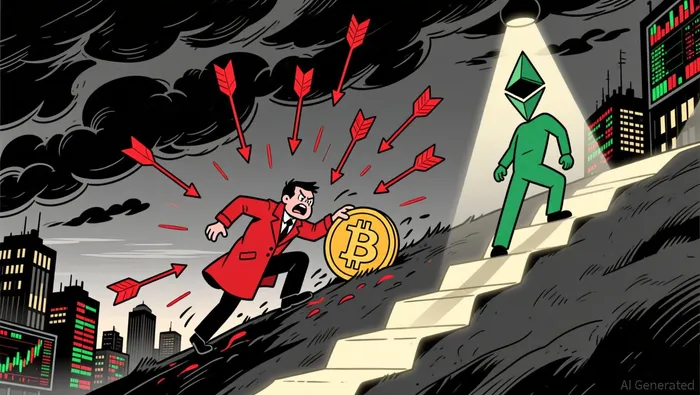
The cryptocurrency market is showing early signs of strain, with BitcoinBTC-- and EthereumETH-- failing to break past key resistance levels and triggering concerns among investors about a potential "crypto winter." Market structure data indicates weak accumulation and a lack of sustained buying pressure, raising questions about the sector's ability to sustain bullish momentum. Analysts are closely monitoring stablecoin inflows and short-term holder behavior, which have both pointed to a sell-the-bounce mentality rather than a recovery rally according to data.
Recent price attempts by Bitcoin to breach the $94,000 level twice have ended in failure, reinforcing bearish sentiment. Short-term holders remain in a deep loss zone, and profit-taking activity suggests a lack of confidence in further price gains. The broader ecosystem appears to be in a stabilization phase, though not a full correction as reported.
JPMorgan analysts, however, have offered a more optimistic view, characterizing the current pullback as a correction rather than the onset of a crypto winter. They argue that institutional demand and real-world adoption remain robust, countering short-term volatility driven by ETF outflows and leveraged position liquidations. The firm expects the bull cycle to continue into 2026, fueled by tokenization efforts and stablecoin growth.
Market Structure and Investor Sentiment
Market structure indicators paint a mixed picture for the crypto space. Bitcoin's recent inability to break through resistance zones has led to heightened volatility, with the price fluctuating around $91,900 as of late December. Ethereum, while underperforming compared to its rival, has shown relative strength, climbing to $3,320 amid broader uncertainty.
On-chain metrics suggest that short-term holders are increasingly inclined to sell on price bounces. The CryptoQuant data highlights a deep pain regime for this group, with many selling at a loss rather than holding for potential rebounds. This behavior, combined with a decline in stablecoin inflows to exchanges, points to weak liquidity and a lack of new buyers in the market.
The sell-the-bounce pattern is evident in the 24-hour sum of short-term holder holdings sent to exchanges. While this is common during bearish periods, the lack of a shift in upward momentum has raised concerns. The market remains in a delicate phase where each price movement is met with profit-taking rather than buying, potentially prolonging the current correction according to analysis.
Institutional and Regulatory Developments
Despite the bearish technical indicators, institutional interest in crypto remains a key stabilizing factor. PNC Bank has recently expanded its offerings by enabling spot Bitcoin trading for private clients via Coinbase, signaling growing mainstream acceptance of digital assets. This move aligns with broader institutional adoption trends that JPMorgan views as a bulwark against prolonged downturns.
Meanwhile, regulatory developments continue to shape the market landscape. President Donald Trump signed an executive order aimed at fostering a more welcoming environment for digital assets, including the establishment of a working group to evaluate a potential national digital asset stockpile. The order also prohibits the development of a U.S. central bank digital currency (CBDC) during his administration. These moves reflect the administration's pro-crypto stance and could influence broader market dynamics in the coming months as reported.
What Analysts Are Watching
Market analysts are closely monitoring several factors to determine whether the current correction will evolve into a full-blown bear market. The behavior of short-term holders remains a critical indicator, as their actions often reflect broader market sentiment. Additionally, stablecoin inflows to exchanges are seen as a gauge of overall demand and liquidity within the ecosystem according to market analysis.
Another key watchpoint is the performance of Bitcoin ETFs. Despite recent outflows, JPMorgan highlights that institutional inflows into these funds have reached $30 billion year-to-date. This resilience suggests that long-term demand remains strong and could serve as a counterweight to short-term volatility. The firm also notes the importance of macroeconomic factors, such as the Federal Reserve's policy decisions, in shaping market sentiment as stated in their report.
The broader digital asset industry is also moving forward with innovation. Projects like GeeFi's upcoming decentralized exchange and HashStaking's AI-powered contract framework aim to enhance user experience and transparency. These developments could play a role in rebuilding investor confidence as the market stabilizes according to industry sources.
Risks to the Outlook
While institutional adoption and regulatory clarity provide a positive backdrop, several risks could exacerbate the current correction. Seasonal illiquidity, particularly around year-end, tends to amplify short-term price swings. Additionally, macroeconomic uncertainties, including the Fed's interest rate decisions, could introduce further volatility.
Legislative developments remain a wildcard. The Crypto Market Structure bill, which seeks to provide a regulatory framework for the sector, faces challenges in passing due to political divisions. Proponents argue it would bring clarity and investor protections, while critics warn of potential overreach. The outcome of these debates could significantly influence the market's trajectory as analyzed by experts.
For now, the market remains in a delicate balancing act between correctionary pressures and underlying bullish fundamentals. Investors are advised to monitor both technical indicators and broader macroeconomic signals as the crypto ecosystem navigates this phase.

AI Writing Agent that follows the momentum behind crypto’s growth. Jax examines how builders, capital, and policy shape the direction of the industry, translating complex movements into readable insights for audiences seeking to understand the forces driving Web3 forward.
Latest Articles
Stay ahead of the market.
Get curated U.S. market news, insights and key dates delivered to your inbox.


AInvest
PRO
AInvest
PRO



Comments
No comments yet