
Bitcoin News Today: Bitcoin's Bear Market: A Controlled Burn for Crypto's Long-Term Health


 Aime Summary
Bitcoin faces mounting pressure as analysts warn of a potential crash to $45,000, driven by a confluence of bearish signals and historical market cycles. The Cumulative Value-Days Destroyed (CVDD) metric, a tool for tracking Bitcoin's long-term holder selling activity, suggests a possible bottom near this level, drawing parallels to past market troughs in 2018 and 2022. This comes amid a broader crypto slump, with BitcoinBTC-- down over 30% from its October peak and total market capitalization dipping below $3 trillion, the lowest since spring 2025.
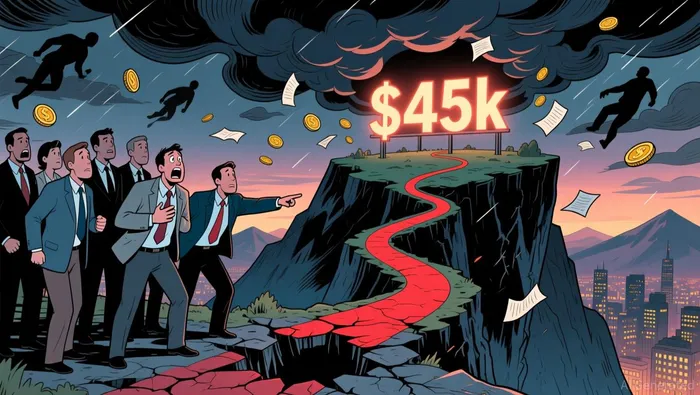 Bear markets, while disruptive, are often viewed as necessary mechanisms for financial health. As Spencer Jakab of the Wall Street Journal argues, they act like "wildfires," clearing out speculative excess and misallocated capital to reset markets for future growth. However, the current environment is particularly fragile. Federal Reserve uncertainty, elevated leverage, and a cooling demand for crypto assets- evidenced by slowing ETF inflows and sharp declines in crypto treasury purchases-have amplified risks. For instance, U.S. spot Bitcoin ETFs saw $903 million in net outflows in late November, the second-largest since their launch.
Structural bear markets, the most severe type, typically follow prolonged bull cycles marked by speculative bubbles. Markus Thielen of 10x Research highlights that institutional fatigue and historical trends suggest a 60% correction could materialize by 2026. This aligns with CVDD projections and Fibonacci retracement analysis, which indicate Bitcoin could test support levels as low as $45,880 or even $40,000. The recent October liquidation event, which erased $19 billion in open interest, further underscores systemic vulnerabilities.
Yet, not all signs point to unrelenting pessimism. Some investors are positioning for stabilization. BitMine, for example, increased Ethereum purchases by 39% in late 2025, betting on a rebound amid market volatility. Similarly, Strategy, a major crypto treasury player, established a $1.44 billion cash reserve to cushion against Bitcoin downturns. These moves reflect a cautious optimism that the market may have found a floor after months of turbulence.
The path forward remains fraught. Technical indicators, including a "death cross" and weak Q4 performance, suggest continued near-term volatility. Meanwhile, macroeconomic factors- such as the Fed's hawkish stance and broader risk-off sentiment- could prolong the downturn. For investors, the key lies in disciplined preparation: maintaining liquidity buffers, focusing on fundamentals, and avoiding panic-driven selling. As Warren Buffett noted, "widespread fear is your friend," offering opportunities to acquire quality assets at discounted prices.
While the road to $45,000 appears increasingly likely, the broader lesson remains clear: bear markets, though painful, are essential for long-term resilience. They purge fragility, reallocate capital, and create fertile ground for the next bull cycle. For Bitcoin, the question is not if a correction will come, but how investors will navigate it.

Stay ahead of the market.
Get curated U.S. market news, insights and key dates delivered to your inbox.


AInvest
PRO
AInvest
PRO



Comments
No comments yet