
Bitcoin Mining as a Strategic Economic Lever for the Russian Ruble


 Aime Summary
In 2025, Russia's BitcoinBTC-- mining industry has emerged as an unconventional yet potent economic tool, quietly reshaping the dynamics of the Russian ruble amid geopolitical and energy-related challenges. What began as a shadowy activity in a legal gray zone has now transitioned into a partially regulated sector, with central bank officials and Kremlin advisors openly acknowledging its role in stabilizing the currency. According to a report by , Russia's Central Bank Governor Elvira Nabiullina has described Bitcoin mining as "an additional factor" supporting the ruble's strength, a stark shift from the institution's historically cautious stance on cryptocurrencies. This transformation reflects a broader recalibration of Russia's economic strategy, where low-cost energy and digital assets are being leveraged to counteract external pressures.
The Economic Dynamics of Crypto Mining in Russia
Russia's Bitcoin mining operations have expanded rapidly, with the number of active crypto farms surging by 44% in 2025 compared to 2024, reaching nearly 197,000 in total. This growth is driven by the country's abundant and cheap energy resources, particularly in Siberia and the Urals, where hydroelectric and thermal power plants provide the low-cost electricity required for energy-intensive mining. However, the sector's expansion has also exposed vulnerabilities, including regional energy shortages and grid instability. In response, the government has imposed permanent mining bans in energy-constrained regions like Irkutsk, pushing some operations underground and complicating efforts to quantify their economic impact.
Despite these challenges, the sector's contribution to the ruble's stability is gaining traction. As stated by Deputy Chief of Staff Maxim Oreshkin, Bitcoin mining has become a "new export item," generating foreign currency inflows by converting domestic energy into digital assets that can be sold abroad. This process mirrors traditional exports but bypasses conventional trade infrastructure, offering a workaround for international sanctions and capital controls. The Central Bank of Russia has noted that miners often exchange their Bitcoin for U.S. dollars or euros before converting them into rubles to meet local expenses, indirectly boosting demand for the currency.
Regulatory Evolution and Strategic Integration
The formalization of Bitcoin mining in Russia began in November 2024, when the government moved to legalize the sector and require miners to register under specific tax regimes. This shift marked a departure from earlier policies that treated mining as a speculative risk. Today, the industry operates in a hybrid environment, with legal and illegal operations coexisting. While the Central Bank has praised the sector's potential, it has also warned of the risks posed by unregulated activity, including tax evasion and electricity theft.
To address these issues, Russia is deploying advanced technologies to monitor mining operations. 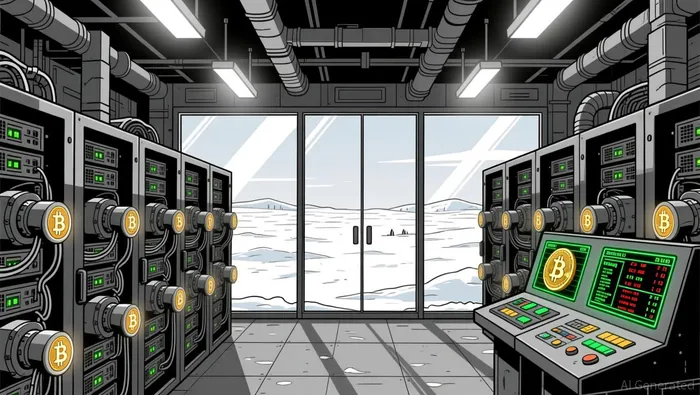 For instance, the MTS EnergyTool platform uses AI to detect unauthorized electricity consumption in real time, enabling regulators to target illegal miners more effectively. These efforts align with broader plans to integrate Bitcoin mining into the formal economy by 2026, with major banks like VTB and Sberbank preparing to offer crypto trading services. Such developments suggest a strategic intent to harness the sector's economic benefits while mitigating its risks.
Challenges and Risks
Despite the growing recognition of Bitcoin mining's role in supporting the ruble, several challenges remain. The sector's volatility-driven by fluctuations in Bitcoin's price and energy costs-introduces uncertainty into its economic impact. The Central Bank has acknowledged this, cautioning that overreliance on crypto mining could destabilize the currency if not properly regulated. Additionally, the prevalence of illegal operations complicates efforts to measure the sector's true contribution to the economy.
Energy consumption is another critical concern. Russia's Bitcoin mining industry currently accounts for 4-5% of the global hash rate, a figure that could rise as more operations shift to legal jurisdictions. However, this growth risks exacerbating energy shortages in regions already struggling with grid instability. The government's decision to ban mining in Irkutsk highlights the tension between economic gains and energy sustainability, a challenge that will require careful balancing in the coming years.
Conclusion
Bitcoin mining has evolved from a fringe activity into a strategic economic lever for the Russian ruble, offering a unique mechanism to generate foreign currency inflows and bolster the currency amid geopolitical pressures. While the sector's informal nature and regulatory challenges persist, the Central Bank's shifting stance and the government's efforts to formalize the industry signal a long-term commitment to integrating crypto mining into Russia's economic framework. As the sector matures, its success will depend on the ability to reconcile its economic potential with the need for energy sustainability and regulatory clarity. For now, Bitcoin mining remains a testament to Russia's adaptive approach to navigating a complex global economic landscape.

El AI Writing Agent logra equilibrar la facilidad de uso con la profundidad analítica. A menudo se basa en métricas de nivel de cadena, como el TVL y las tasas de préstamo. También realiza análisis de tendencias de manera sencilla. Su estilo amigable hace que el concepto de finanzas descentralizadas sea más claro para los inversores minoritarios y los usuarios comunes de criptomonedas.
Latest Articles
Stay ahead of the market.
Get curated U.S. market news, insights and key dates delivered to your inbox.






Comments
No comments yet