
Bitcoin Mining Pollutes Air, Exposes 1.9 Million Americans
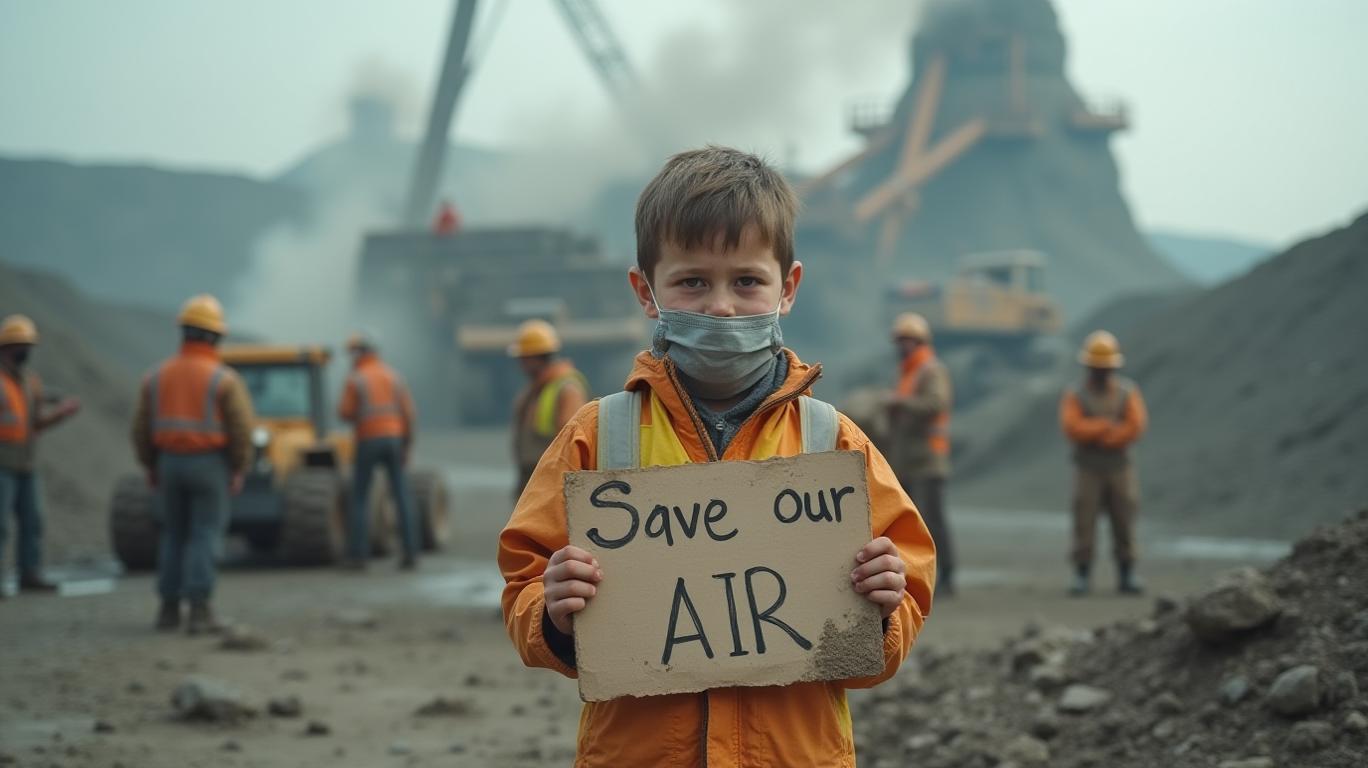
Bitcoin mining has emerged as a significant contributor to air pollution in the U.S., according to a recent study published in the journal Nature Communications. The research highlights that between August 2022 and July 2023, approximately 1.9 million Americans were exposed to harmful air pollutants due to Bitcoin mining activities. These pollutants, primarily small particles produced by power plants, spread rapidly across the country, affecting regions such as New York City, the Houston-Austin metropolitanMCB-- area, northeast Texas, and areas on the Illinois-Kentucky border.
The study, led by Dr. Francesca Dominici of Harvard University's T.H. Chan School of Public Health, revealed that Bitcoin mining often leads to an increase in electricity generation from fossilFOSL-- fuel-fired power plants. Researchers analyzed data from 34 of the largest mining centers in the U.S. and found that mining activities in one state can increase the load on power plants in another state, thereby spreading pollution. For instance, electricity consumption by a mining farm in North Carolina caused an increase in coal-fired power plant capacity in Kentucky, which ultimately worsened air quality in Illinois. This interstate pollution poses a regulatory challenge, as residents in affected states cannot directly influence the mining farms or power plants causing the pollution.
Dr. Scott Delaney, one of the study's authors, suggested that federal-level action is necessary to mitigate interstate air pollution. He proposed that the U.S. Environmental Protection Agency (EPA) should adopt regulations regarding fine particle air pollution. Such regulations would require grid-connected states to more actively control power plant emissions and encourage cryptocurrencies and data centers to locate in safer areas, considering the impact on public health. The growing activity of Bitcoin miners, as indicated by the BTC network hashrate exceeding 1,100 hashes per second for the first time, underscores the urgency of addressing this environmental issue.
In addition to environmental concerns, Bitcoin mining is also facing legal challenges. Waylon Wilcox, a 45-year-old American from Pennsylvania, pleaded guilty to underreporting income on his tax return, which allowed him to avoid paying millions of dollars to the U.S. Internal Revenue Service (IRS). Wilcox sold 97 tokens from the CryptoPunks series in 2021 and 2022, receiving over $13 million, but failed to report these transactions, avoiding about $3.3 million in taxes. This case marks the first major tax evasion case in the U.S. involving the sale of unique tokens. IRSIRS-- regulations require taxpayers to declare capital gains or losses on the sale of "virtual currency" subject to capital loss deduction limitations. Wilcox faces a maximum sentence of up to six years in prison, although a guilty plea is likely to result in a reduced sentence.
The environmental and legal challenges posed by Bitcoin mining highlight the need for comprehensive regulation and oversight. As the activity of Bitcoin miners continues to grow, the impact on air quality and the potential for legal consequences become increasingly significant. Federal regulations and stricter enforcement of tax laws are essential to address these issues and ensure that the benefits of cryptocurrency do not come at the cost of public health and environmental sustainability.

Stay ahead of the market.
Get curated U.S. market news, insights and key dates delivered to your inbox.






Comments
No comments yet