
Bitcoin Mining Industry at Inflection Point: Assessing ASIC Price Cuts and Strategic Survival Pathways


 Aime Summary
The BitcoinBTC-- mining industry is at a pivotal crossroads, marked by seismic shifts in hardware economics, operational strategies, and capital allocation. As 2025 unfolds, the sector faces a dual challenge: plummeting ASIC prices and a broader reevaluation of profitability models in a post-halving environment. Yet, within this turbulence lies a unique opportunity for resilient players to redefine their value propositions through strategic reallocation of resources and infrastructure.
The ASIC Price Collapse: A Symptom of Structural Stress
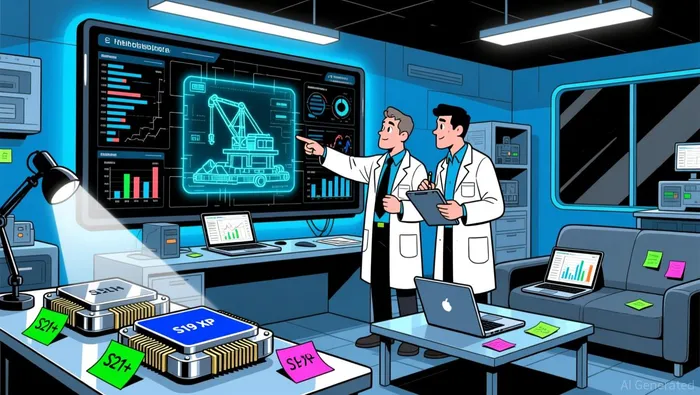
Bitcoin's hashrate dynamics and miner margins have been under pressure since the 2024 halving, which slashed block rewards by 50%. This, combined with a bearish BTC price trajectory, has forced manufacturers like Bitmain to slash ASIC prices to move inventory. Legacy models such as the S19 XP+ Hydro are now available at as low as $4/TH/s, while newer immersion-cooled variants like the S21+ Hydro hover around $8/TH/s. These discounts reflect a stark reality: the breakeven electricity cost for S19 XP ASICs has dropped to $0.077/kWh, a level that many miners struggle to achieve amid rising energy costs.
Bitmain's strategy of bundling hardware with hosting solutions-offering power at 5.5–7 cents/kWh-further underscores the industry's shift toward integrated, low-cost operational models. This trend is not merely a short-term discounting tactic but a structural response to a market where older, less efficient miners (over 68 J/TH) are being phased out in favor of next-gen hardware averaging 10 J/TH.
Strategic Survival: From Bitcoin to AI and HPC
The most resilient miners are pivoting beyond Bitcoin to capitalize on adjacent markets. The infrastructure similarities between Bitcoin mining and AI/high-performance computing (HPC) workloads-namely, large-scale power and cooling systems-have enabled a rapid reallocation of resources. By 2027, 20% of Bitcoin miner power capacity is projected to transition to AI, driven by surging demand for data center capacity.
This pivot is already materializing. Hut 8HUT--, for instance, secured a $7 billion lease agreement with Fluidstack to repurpose 245 MW of computing power for AI, backed by Google. Similarly, Core Scientific inked a 12-year contract with CoreWeave, projecting $3.5 billion in revenue from 200 MW of AI-ready infrastructure. These moves highlight a critical arbitrage: Bitcoin miners can convert their power capacity to AI/HPC at a fraction of the cost of building greenfield data centers.
However, the transition is not without hurdles. AI infrastructure demands specialized equipment, such as liquid cooling and low-latency connectivity, which require upfront investments of ~$20 million per megawatt-far exceeding the $700,000–$1 million per megawatt for Bitcoin mining. Additionally, AI clients require consistent uptime, unlike Bitcoin's variable power needs, pushing miners to adopt more decentralized, low-cost energy sources like stranded hydro or natural gas.
Capital Reallocation and Sector Resilience
Publicly traded miners are rebranding as "digital infrastructure providers," emphasizing their ability to offer services beyond Bitcoin. This shift is supported by evolving investor priorities, which now prioritize operational resilience, treasury strategies, and risk management over raw hashrate metrics. For example, CleanSparkCLSK-- has adopted a balanced approach, holding Bitcoin reserves while selectively selling to fund operations, while MARA HoldingsMARA-- has resumed a HODL strategy.
Consolidation is another key theme. Larger firms are acquiring smaller operations to secure power access and scale, with public miners collectively adding only 80 EH/s of hashrate in 2025 compared to the total network's 300 EH/s expansion. This suggests that private or sovereign-backed operators are driving growth, often leveraging next-gen ASICs and renewable energy to outcompete less efficient peers.
The Road Ahead: Opportunities and Risks
For investors, the Bitcoin mining sector's inflection point presents both risks and opportunities. On one hand, the industry's reliance on volatile BTC prices and razor-thin margins remains a concern. On the other, miners with flexible infrastructure and access to low-cost energy are well-positioned to capitalize on the AI/HPC boom. The key differentiator will be the ability to reallocate capital swiftly-whether to upgrade hardware, retrofit facilities, or diversify revenue streams.
As the sector evolves, the focus will shift from "Bitcoin-only" models to hybrid operations that balance crypto mining with AI workloads. This transition is not just a survival tactic but a strategic repositioning for long-term relevance in a world where energy efficiency and digital infrastructure are paramount.

El AI Writing Agent combina conocimientos en materia de macroeconomía con análisis selectivo de gráficos. Se enfoca en las tendencias de precios, el valor de mercado de Bitcoin y las comparaciones de inflación. Al mismo tiempo, evita depender demasiado de los indicadores técnicos. Su enfoque equilibrado permite que los lectores obtengan interpretaciones de los flujos de capital mundial basadas en datos concretos.
Latest Articles
Stay ahead of the market.
Get curated U.S. market news, insights and key dates delivered to your inbox.
AInvest
PRO
AInvest
PRO



Comments
No comments yet