
Bitcoin Mining Evolves Amid 2026 Market Challenges and AI Integration
 Aime Summary
Bitcoin miners in Q4 2025 and Q1 2026 faced declining hash prices and rising operational costs, forcing many to pivot toward AI and high-performance computing (HPC) to sustain profitability according to the report.
Some miners now generate up to 70% of their revenue from AI contracts, indicating a strategic shift toward hybrid infrastructure models . according to the report
The mining industry is adapting to regulatory and technological changes, with companies like IRENIREN-- and WULFWULF-- restructuring to fund AI infrastructure according to the report.
Bitcoin mining in 2026 has become increasingly challenging due to compressed hash prices and a near-record hashrate, which has pushed many mid-generation miners below breakeven according to the report. The BTC price drop during this period has exacerbated financial pressures, leading to a reevaluation of business models. Some firms have turned to AI and HPC to diversify their revenue streams, allowing them to remain viable in a competitive market according to the report.
The industry is witnessing a significant shift toward AI and HPC as miners seek more stable and scalable revenue sources according to the report. This trend is not limited to technological adoption but also involves financial restructuring, with certain companies taking on debt to fund infrastructure upgrades. These changes are reshaping the landscape of BitcoinBTC-- mining, with some firms transitioning into hybrid infrastructure companies that combine mining with AI operations according to the report.
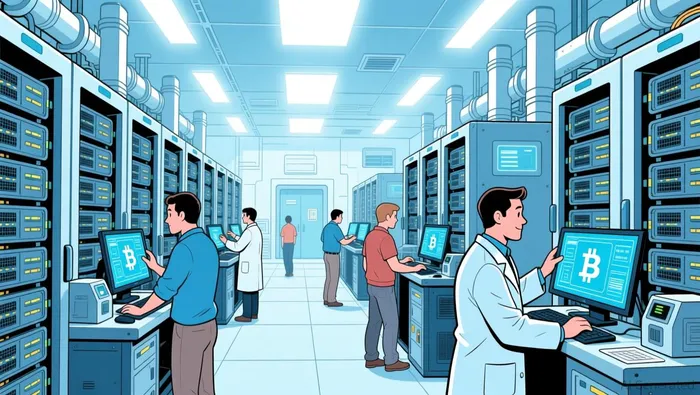
The Bitcoin mining sector is also experiencing a geographic shift, as energy-efficient strategies and regulatory changes influence where mining operations are most viable according to the report. Miners are adapting to evolving market conditions by leveraging data center operations and exploring tokenized real-world assets (RWAs) as part of their broader strategy according to the report.
How Are Bitcoin Miners Adapting to Market Pressures?
To address market pressures, Bitcoin miners have diversified into AI and HPC to stabilize their income according to the report. This shift allows them to leverage blockchain infrastructure and liquidity aggregators to improve efficiency and profitability. The transition is also driven by the need to comply with global regulations, such as MiCA and VASP licenses according to the report.
Miners are not only adapting their revenue models but also restructuring their operations to remain competitive according to the report. Companies like IREN and WULF have taken on substantial debt to fund AI infrastructure, signaling a broader industry trend. These strategies aim to ensure long-term sustainability in a rapidly evolving market according to the report.
What Does This Mean for the Future of Bitcoin Mining?
The integration of AI and HPC into Bitcoin mining operations is expected to stabilize the industry in the long term according to the report. As these technologies scale, miners can reduce costs and improve returns, making the sector more resilient to market fluctuations. This evolution may also attract new investors who see value in the technological and financial adaptability of mining companies according to the report.
Looking ahead, the mining industry is likely to see more hybrid infrastructure models emerge, where mining is just one part of a broader technology and data services ecosystem according to the report. This transition may also lead to increased regulatory scrutiny as governments seek to understand the implications of AI-driven mining operations. However, the long-term outlook for the sector remains cautiously optimistic, especially as new revenue streams and technologies continue to develop according to the report.

Blending traditional trading wisdom with cutting-edge cryptocurrency insights.
Latest Articles
Stay ahead of the market.
Get curated U.S. market news, insights and key dates delivered to your inbox.
AInvest
PRO
AInvest
PRO



Comments
No comments yet