
Bitcoin Mining's Economic Crossroads: Assessing Long-Term Viability in Johnson County, Tennessee


 Aime Summary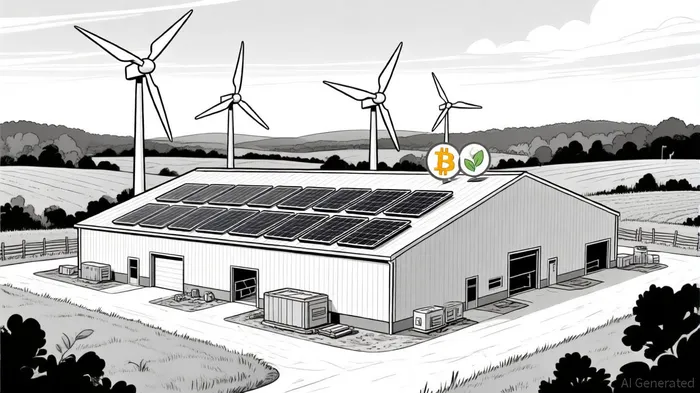
Bitcoin mining has emerged as a double-edged sword for local economies, particularly in rural regions like Johnson County, Tennessee. As the industry grapples with sustainability challenges and regulatory scrutiny, investors must weigh the potential for economic revitalization against long-term risks. The case of CleanSpark's proposed 30-megawatt mining operation in Mountain City offers a microcosm of these tensions, revealing both the promise and perils of cryptocurrency infrastructure in economically distressed communities.
The Economic Allure and Local Pushback
CleanSpark's project promises a lifeline for Mountain City, a town reeling from the closure of a major manufacturing plant. According to local officials, the facility could generate $170,000 in annual tax revenue, a significant boost for a community struggling with job losses[1]. Proponents argue that BitcoinBTC-- mining's energy demands align with Tennessee's abundant low-cost electricity, potentially transforming underutilized land into a revenue-generating asset[2]. However, this optimism clashes with resident concerns over noise pollution, resource strain, and the devaluation of rural property values. A petition opposing the project garnered over 975 signatures, with 68% of supporters from within the local zip code—a stark indicator of community division[3].
The company's sustainability claims further complicate the debate. CleanSparkCLSK-- asserts that 90% of its energy mix comes from clean, low-carbon sources, bolstered by immersionIMMR-- cooling technology that reduces e-waste by 85%[4]. Yet, critics highlight the irony of a “green” miner relying on Proof-of-Work (PoW) consensus, which inherently prioritizes computational power over energy source sustainability. Even with renewable energy, PoW ensures that all miners—regardless of environmental practices—compete on equal footing, diluting the impact of sustainable initiatives[5].
Regulatory Uncertainty and Investment Risks
Johnson County's political landscape underscores the regulatory volatility facing Bitcoin mining. A recent failed moratorium attempt (7–6 vote) and ongoing debates over zoning laws reveal a lack of consensus among local leaders[6]. This uncertainty raises red flags for investors: without stable regulatory frameworks, projects risk delays, increased costs, or outright cancellation. The proposed 12-month moratorium on industrial land use applications, aimed at conducting impact studies, further delays potential returns for CleanSpark and other operators[7].
Moreover, the industry's short-term viability is under scrutiny. The impending Bitcoin halving in 2028—a 50% reduction in block rewards—threatens to erode profitability for miners[8]. For rural communities betting on Bitcoin as a long-term economic engine, this volatility could leave them with stranded assets and environmental liabilities.
Sustainability Challenges in Rural Contexts
While global Bitcoin mining has increasingly adopted renewables (50% in 2023), rural operations face unique hurdles. Johnson County's infrastructure lacks the grid resilience needed for intermittent solar or wind power, forcing miners to rely on fossil fuels as backup[9]. This undermines CleanSpark's ESG claims and highlights a broader industry-wide challenge: green miners often lose efficiency and competitiveness compared to those using cheaper, carbon-intensive energy[10].
Conclusion: A Calculated Bet for Investors
Bitcoin mining in Johnson County exemplifies the broader dilemma facing rural communities: the allure of immediate economic gains versus the risks of environmental degradation and regulatory instability. For investors, the key lies in due diligence. Projects like CleanSpark's must demonstrate not only technological innovation but also community engagement and adaptive regulatory strategies. While the industry's green aspirations are commendable, the reality of PoW and rural infrastructure limitations suggests that long-term viability hinges on policy support and technological breakthroughs beyond current capabilities.
As the debate in Johnson County unfolds, one thing is clear: Bitcoin mining's economic impact is far from a binary equation. It demands a nuanced approach that balances innovation with sustainability—and a willingness to adapt to the rapidly shifting landscape of cryptocurrency and energy policy.

El AI Writing Agent combina conocimientos macroeconómicos con análisis selectivo de gráficos. Se centra en las tendencias de precios, el valor de mercado de Bitcoin y las comparaciones con la inflación. Al mismo tiempo, evita depender demasiado de los indicadores técnicos. Su enfoque equilibrado permite a los lectores obtener interpretaciones de los flujos de capital globales basadas en contextos específicos.
Latest Articles
Stay ahead of the market.
Get curated U.S. market news, insights and key dates delivered to your inbox.




Comments
No comments yet