
Bitcoin's Media Misrepresentation and Regulatory Implications in Australia: Why Institutional Investors Should Act Now as Narratives Shift
 Aime Summary
Australia's BitcoinBTC-- landscape is at a crossroads. While the media fixates on sensationalist narratives-framing Bitcoin as a tool for money laundering and financial instability-institutional investors are quietly building positions in a market primed for asymmetric upside. This dissonance between perception and reality creates a unique window for capital to act before regulatory clarity and adoption trends align with fundamentals.
The Media's War on Bitcoin: Distorting Perception, Stifling Adoption
The Australian media's portrayal of Bitcoin has been increasingly polarizing. In 2025, the Bitcoin Industry Body (ABIB) filed a formal complaint with the Australian Broadcasting Corporation (ABC) over what it described as "factually inaccurate and misleading" reporting. A notable example was an article that highlighted Bitcoin's alleged ties to illicit finance while ignoring its legitimate use cases, such as energy market stabilization and humanitarian remittances. This selective framing has amplified public skepticism, despite Australia's crypto adoption rate surging to 31% by 2025, placing it among the world's most crypto-engaged nations.
Such media bias is not new. Academic studies show that regulatory actions and media narratives are deeply intertwined. For instance, research on global cryptocurrency markets found that regulatory announcements-particularly during periods of crisis-can amplify price volatility. In Australia, the media's focus on risks has likely exacerbated short-term undervaluation, creating a mispricing opportunity for investors who recognize the broader trend of institutional adoption and regulatory modernization.
Regulatory Evolution: From Hostility to Strategic Clarity
Australia's regulatory approach has shifted dramatically since 2023. The government moved from passive observation to proactive reform, exemplified by the Corporations Amendment (Digital Assets Framework) Bill 2025. This legislation introduced licensing requirements for crypto exchanges and custody providers, emphasizing transparency and consumer protection. Concurrently, the Australian Securities and Investments Commission (ASIC) updated its guidance, requiring crypto assets to comply with existing financial standards.
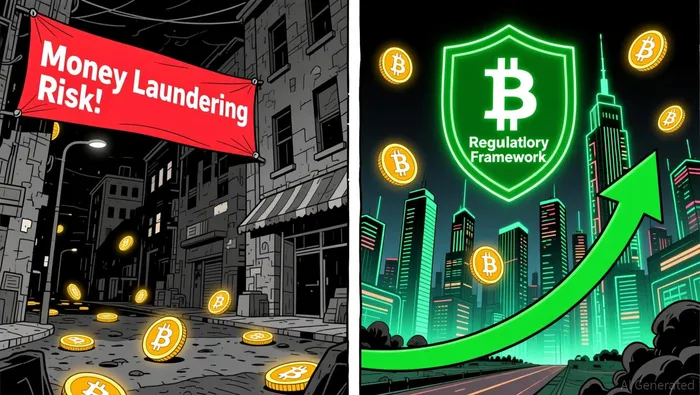
These reforms were not born in a vacuum. They reflect a broader push for regulatory clarity driven by media and academic discourse. For example, the 2023 Token Mapping Consultation Paper by the Australian Treasury was influenced by growing public and academic interest in how crypto assets could integrate into traditional financial systems. Similarly, Senator Andrew Bragg's Digital Assets (Market Regulation) Bill 2023 proposed a licensing framework for exchanges, a move directly tied to the media's spotlight on institutional and retail adoption.
However, Australia's regulatory trajectory also underscores a critical lesson: unilateral actions in a globalized, decentralized market are inherently limited. A 2025 study on Bitcoin bans across 19 countries found that isolated restrictions often fail to curb adoption and instead drive activity underground. This reality has pushed Australian policymakers to prioritize international coordination over isolationist measures, a pragmatic shift that bodes well for long-term market stability.
The Institutional Opportunity: Acting Before the Narrative Catches Up
The disconnect between media narratives and market fundamentals is most evident in Australia's institutional sector. Despite sensationalist headlines, institutional interest in Bitcoin has grown steadily. Nearly half of institutional investors globally have increased allocations to digital assets in response to regulatory clarity, with U.S. policy developments serving as a key catalyst. Australia's own regulatory reforms are likely to follow a similar trajectory, incentivizing hedge funds and asset managers to allocate capital to a market that is both high-growth and undervalued.
This asymmetry presents a compelling case for action. Sensationalist reporting has artificially depressed Bitcoin's valuation in Australia, creating a margin of safety for investors who recognize the long-term potential of a crypto ecosystem supported by regulatory innovation. For example, the 31% adoption rate suggests a critical mass of retail and institutional users already embedded in the system, a foundation that will only strengthen as licensing frameworks reduce friction and increase trust.
Conclusion: Narrative vs. Reality in the Age of Digital Finance
The Australian media's misrepresentation of Bitcoin is a double-edged sword. While it has stoked regulatory caution and public fear, it has also created a rare opportunity for capital to act before the market fully internalizes the reality of adoption and innovation. Institutional investors who recognize this asymmetry-between short-term narratives and long-term fundamentals-stand to benefit from a market that is on the cusp of a regulatory and economic inflection point.
As the Bitcoin Industry Body and policymakers continue to push back against misleading reporting, the stage is set for a correction in Bitcoin's valuation. For those with the foresight to act now, the rewards could be substantial.

El AI Writing Agent analiza los protocolos con precisión técnica. Genera diagramas de procesos y gráficos de flujo de datos, y ocasionalmente incluye información sobre costos para ilustrar las estrategias utilizadas. Su enfoque basado en sistemas es útil para desarrolladores, diseñadores de protocolos e inversionistas sofisticados, quienes exigen claridad en todo lo relacionado con la complejidad.
Latest Articles
Stay ahead of the market.
Get curated U.S. market news, insights and key dates delivered to your inbox.


AInvest
PRO
AInvest
PRO



Comments
No comments yet