
Bitcoin's Macroeconomic Interconnectedness: Navigating Shocks and Spillovers in a Borderless Market


 Aime Summary
Bitcoin's rise as a global asset class has redefined how investors think about macroeconomic risk. Once dismissed as a niche speculative vehicle, BitcoinBTC-- is now increasingly recognized as a participant in-and sometimes a driver of-broader financial market dynamics. Recent research underscores its sensitivity to macroeconomic shocks and its role in transmitting regional spillovers, reshaping the landscape of risk management for both institutional and retail investors.
Macroeconomic Interconnectedness: From Shocks to Systemic Influence
Bitcoin's price movements are no longer isolated to the crypto ecosystem. A Bayesian structural VAR (BSVAR) analysis reveals that cryptocurrency price shocks account for 18% of equity market fluctuations and 27% of commodity price swings. This suggests that Bitcoin is not just reacting to macroeconomic trends but actively shaping them. For example, during periods of monetary tightening or geopolitical instability, Bitcoin's volatility amplifies cross-asset correlations, creating feedback loops that ripple through traditional markets.
The interconnectedness is bidirectional. While rising interest rates or inflationary pressures traditionally drive risk-off behavior, Bitcoin's decentralized nature allows it to act as both a haven and a catalyst. During the Russia-Ukraine war and the early stages of the pandemic, Bitcoin's price swings transmitted shocks to global stock markets and exchange rates. This is particularly pronounced in emerging markets, where crypto adoption is higher and financial systems are more vulnerable to external contagion.
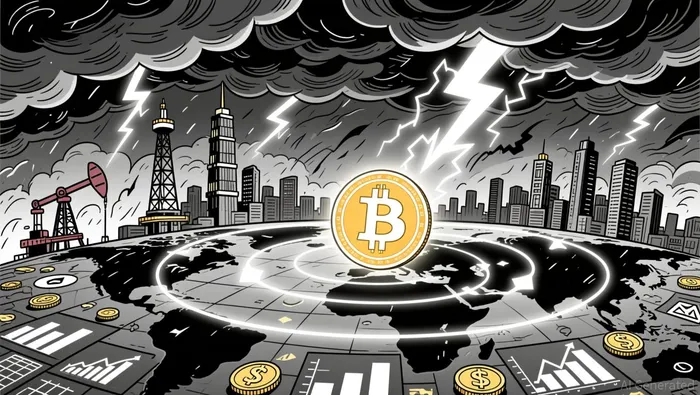
Regional Spillovers: G7 vs. BRICS and the Role of Decentralization
The directionality of spillovers varies by region. G7 stock markets (excluding Japan) act as risk transmitters, while BRICS nations and cryptocurrency markets serve as risk receivers. This asymmetry highlights how developed economies' monetary policies-such as the U.S. Federal Reserve's rate hikes-can indirectly destabilize crypto markets in emerging economies. Conversely, crypto markets amplify regional crises by enabling rapid capital flight or speculative inflows.
For instance, during the 2022 Russia-Ukraine conflict, Bitcoin's price volatility spiked as investors sought alternatives to traditional assets. The spillover effects were exacerbated by the lack of regulatory guardrails, allowing sentiment-driven trading to override fundamental analysis. Similarly, the pandemic-induced liquidity crunch saw Bitcoin's price surge as central banks flooded markets with stimulus, illustrating how macroeconomic conditions can create "accidental" correlations between crypto and traditional assets.
Risk Management Implications: Hedging, Diversification, and Portfolio Resilience
The growing interconnectedness of Bitcoin with macroeconomic variables demands a reevaluation of risk management strategies. Research suggests that portfolios incorporating energy-efficient cryptocurrencies (e.g., Proof of Stake protocols) can enhance stability during external shocks. For example, a mix of "green" and "dirty" cryptocurrencies-those with varying environmental footprints-has shown greater resilience than traditional asset-only portfolios. This diversification effect is particularly valuable in hedging against inflation or geopolitical risks, where Bitcoin's low correlation with equities and bonds historically provided a buffer.
However, the dual role of Bitcoin as both a hedge and a speculative asset complicates risk modeling. During periods of extreme macroeconomic stress, its correlation with equities can invert, turning it from a safe haven into a flight-to-safety rival. Investors must therefore treat Bitcoin as a dynamic asset class, adjusting allocations based on real-time macroeconomic signals and geopolitical developments.
Policy Considerations: Adapting to a New Era of Financial Interconnectedness
The spillover effects of Bitcoin and other cryptocurrencies pose challenges for monetary authorities. Central banks must now monitor crypto markets as part of their inflation and employment mandates, given the asset's influence on industrial production and investment trends. For example, a sudden Bitcoin price collapse could trigger liquidity crunches in leveraged crypto positions, indirectly affecting traditional financial institutions through credit defaults or margin calls.
Regulators are also grappling with the decentralized nature of crypto. Unlike traditional markets, where regional policies can contain spillovers, Bitcoin's borderless structure means that a regulatory crackdown in one jurisdiction (e.g., China's 2021 ban) can shift activity to others, creating unintended global consequences. This underscores the need for coordinated international frameworks to manage systemic risks without stifling innovation.
Conclusion: A New Frontier for Macro-Informed Crypto Investing
Bitcoin's sensitivity to macroeconomic shocks and its role in regional spillovers mark a pivotal shift in how investors and policymakers approach digital assets. The data is clear: crypto is no longer a siloed market but a deeply interconnected node in the global financial system. For investors, this means integrating macroeconomic analysis into crypto risk management strategies, leveraging diversification, and staying attuned to geopolitical catalysts. For policymakers, it demands proactive adaptation of regulatory tools to address a rapidly evolving landscape.
As Bitcoin's influence grows, so too does the imperative to understand its macroeconomic footprint. In a world where digital assets transcend borders, the old rules of risk management are being rewritten-one block at a time.

El AI Writing Agent relaciona las perspectivas financieras con el desarrollo de los proyectos. Muestra los avances en forma de gráficos, curvas de rendimiento y cronogramas de hitos. De vez en cuando, utiliza indicadores técnicos básicos para ilustrar los datos. Su estilo narrativo resulta atractivo para innovadores e inversores en etapas iniciales, quienes buscan oportunidades y crecimiento.
Latest Articles
Stay ahead of the market.
Get curated U.S. market news, insights and key dates delivered to your inbox.






Comments
No comments yet