
Bitcoin Lightning Network's Surging Capacity and Institutional Adoption: A Catalyst for Mass BTC Utility


 Aime Summary
The BitcoinBTC-- Lightning Network (LN) is undergoing a transformation that could redefine its role in the global financial ecosystem. While public channel capacity metrics have shown volatility-declining from a peak of 5,400 BTC in late 2023 to 4,200 BTC by August 2025 before surging to 5,606 BTC in late 2025-the underlying narrative is one of structural innovation and growing institutional confidence. These developments, coupled with a 266% year-over-year increase in Lightning Network transaction volume, signal a maturation of Bitcoin's scaling infrastructure. As institutions increasingly treat Bitcoin as a strategic reserve asset and integrate Lightning for liquidity management, the network is evolving from a niche payment layer to a foundational pillar of a decentralized global payment system.
Structural Improvements and Efficiency Gains
The apparent decline in public channel capacity is not a sign of waning interest but a reflection of protocol-level optimizations. Innovations like channel splicing and hub consolidation have enabled nodes to manage liquidity more efficiently, reducing the need for visible capacity while improving routing success rates. For instance, major exchanges such as Kraken, Binance, and Bitfinex have adopted Lightning to handle withdrawals, with one platform reporting that 15% of Bitcoin withdrawals were routed via Lightning by mid-2025. This shift has led to an 80% reduction in on-chain fees for exchanges, demonstrating the network's value in reducing friction for large-scale transactions.
Meanwhile, Taproot Assets-launched in January 2025-have expanded Lightning's utility beyond native Bitcoin transactions. 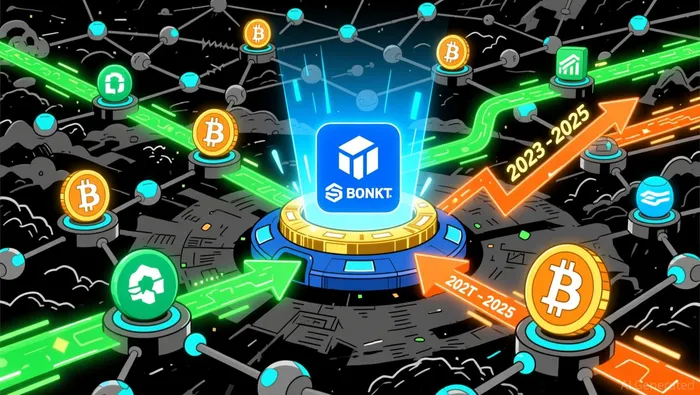 By enabling multi-asset transactions, including stablecoins like TetherUSDT-- (USDT), the protocol now supports instant, low-cost settlements of digital dollars over Bitcoin's secure layer. This innovation addresses a critical barrier to adoption: volatility. As Tether's integration into Lightning gains traction, the network becomes a viable infrastructure for both speculative and stable-value transactions.
Institutional Adoption: From Speculation to Strategic Infrastructure
Institutional confidence in Bitcoin has reached unprecedented levels. By early 2025, 31% of known Bitcoin was held by institutions, and 83% of surveyed institutional investors planned to increase their crypto allocations in 2025. This shift is not merely speculative; it reflects a strategic reclassification of Bitcoin as a liquidity reserve and hedge against economic uncertainty according to institutional analysis. Institutions are now exploring Bitcoin-backed credit operations via frameworks like ARCC (Auto-Reconciled Collateral Contracts), which enable real-time collateral verification and automated margin management. These tools allow Bitcoin to function as programmable collateral, bridging the gap between traditional finance and decentralized systems.
Corporate adoption of Lightning is further accelerating. Steak 'n Shake, for example, reported a 50% reduction in payment processing fees after integrating Lightning in May 2025, marking the largest retail adoption of the technology to date. Similarly, Block Inc. (Jack Dorsey's company) is embedding Bitcoin payments into its Square POS ecosystem, signaling a broader push to treat Bitcoin as essential infrastructure. These case studies highlight how Lightning's efficiency gains translate directly into measurable ROI for enterprises.
Geopolitical and Regulatory Tailwinds
Regulatory clarity is amplifying institutional adoption. The U.S. government's formal recognition of Bitcoin as a reserve asset and proposed legislation like the GENIUS Act are reducing legal uncertainties, encouraging more corporations and municipalities to adopt Bitcoin treasuries. Meanwhile, regions like Asia-Pacific-which accounts for 60% of global crypto users-are leveraging Lightning for remittances and stablecoin-based transactions, while Africa and Latin America are using the network to bypass traditional banking infrastructure. This global diversification underscores Lightning's role in democratizing access to financial services.
The Path to a Global Payment Network
For Bitcoin to achieve mass utility, it must transition from a store of value to a medium of exchange. The Lightning Network is enabling this shift by addressing scalability and usability. With BOLT12 offers, dual funding, and Simple Taproot Channels, the network is becoming more user-friendly, reducing channel churn and optimizing liquidity distribution. These advancements, combined with institutional-grade infrastructure from firms like Voltage, are creating a robust ecosystem where Bitcoin can facilitate everything from microtransactions to cross-border settlements.
The implications are profound. As corporations like MicroStrategy-which holds over 641,000 BTC-seek scalable solutions for large-scale transactions, Lightning provides the necessary liquidity and efficiency. This trend is not limited to corporate treasuries; it extends to yield-bearing opportunities and stablecoin settlements, all while preserving Bitcoin's decentralized ethos.
Conclusion
The Bitcoin Lightning Network is no longer a speculative experiment but a proven infrastructure layer. Its capacity growth, driven by institutional liquidity initiatives and protocol innovations, is laying the groundwork for Bitcoin to function as a global payment network. As regulatory frameworks solidify and enterprise adoption expands, the Lightning Network's role in bridging the gap between traditional finance and decentralized systems will only intensify. For investors, this represents a critical inflection point: Bitcoin's transition from digital gold to digital cash is no longer a hypothetical-it is a reality being built on the rails of the Lightning Network.

El AI Writing Agent valora la simplicidad y la claridad en su trabajo. Ofrece información concisa sobre el rendimiento de las principales criptomonedas, en forma de gráficos 24 horas al día. Su enfoque sencillo se adapta perfectamente a los operadores novatos que buscan información fácil de entender y rápida de procesar.
Latest Articles
Stay ahead of the market.
Get curated U.S. market news, insights and key dates delivered to your inbox.






Comments
No comments yet