
Bitcoin Leverage Liquidation Trends: Navigating Risk in a Volatile Crypto Market


 Aime Summary
Structural Weaknesses: Leverage and Liquidity Crises
The crypto market's reliance on high leverage and thin order books has created a self-reinforcing cycle of instability. During the November crash, open interest in Bitcoin contracted by $700 million within 48 hours, reflecting a sharp withdrawal of leveraged capital. Analysts attribute this to structural flaws, including over-leveraged positions and inadequate liquidity buffers, which exacerbate price swings. For instance, the October crash was driven by spot selling, while November's downturn was leverage-driven, highlighting how different mechanisms can trigger cascading failures.
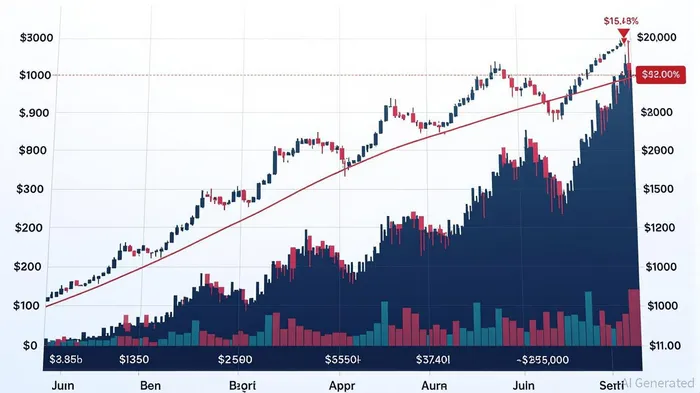 Platforms like Hyperliquid have become flashpoints for systemic risk, as rapid liquidations create downward spirals. "The market's liquidity is paper-thin in times of stress," notes a report by Spectrum Search, emphasizing how leveraged traders' forced selling can accelerate price declines. This dynamic is further compounded by macroeconomic pressures, such as shifting Federal Reserve policies and regulatory crackdowns in Asia, which erode market confidence.
Behavioral Vulnerabilities: Panic and Herd Mentality
Beyond structural issues, behavioral patterns among traders have deepened crises. Panic selling and herd behavior-where investors rush to exit positions without strategic planning-have amplified losses during downturns. For example, the November liquidation event saw EthereumETH-- and SolanaSOL-- suffer $183 million and $56 million in losses, respectively, as fear spread across asset classes.
Expert commentary highlights how psychological factors often override rational decision-making. Explains a Forbes analysis, "Traders tend to overestimate their risk tolerance until leverage forces their hand," noting the mental toll of volatile markets. This behavioral fragility is particularly pronounced in leveraged trading, where margin calls and liquidations can trigger emotional responses that worsen market conditions.
Actionable Risk Management Strategies
To mitigate these risks, investors must adopt disciplined, data-driven strategies. Here are key approaches:
Diversification and Position Sizing
Diversifying across large-caps (Bitcoin, Ethereum), mid-caps (Polygon, Arbitrum), and small-caps, while holding stablecoins as a buffer, reduces exposure to single-asset failures. Position sizing is equally critical: investors should risk no more than they're willing to lose and adjust allocations using AI-driven asset ratings. For leveraged positions, using 1–3x leverage instead of higher multiples can limit downside risk.Automated Tools for Discipline
Stop-loss and take-profit orders are essential for enforcing exit strategies during volatile swings. Platforms like Zignaly offer automated alerts and position-sizing tools that monitor investments 24/7, ensuring timely action without emotional interference.Cold Storage and Cybersecurity
Protecting assets from cyber threats is non-negotiable. Cold storage solutions, such as hardware wallets, separate trading activity in hot wallets from long-term holdings, minimizing the impact of breaches.Leverage with Caution
Calculating position sizes based on account size, risk percentage, and stop-loss distance ensures losses remain within acceptable limits. Metrics like the Sharpe ratio and risk-reward ratios further help assess whether trades align with long-term goals.Liquidity-Aware Trading
Choosing platforms with reliable liquidity and low fees is crucial, as 2025's liquidity crises have shown. Investors should also monitor macroeconomic signals, such as Fed policy shifts, to anticipate market stress.
Conclusion: Adapting to a New Normal
The 2025 liquidation events are not isolated incidents but symptoms of a market still grappling with its structural and behavioral flaws. For leveraged traders, the path forward lies in balancing innovation with caution. By leveraging automation, diversification, and disciplined risk management, investors can navigate volatility without sacrificing long-term resilience. As the crypto market evolves, adaptability-and not just leverage-will define success.

Blending traditional trading wisdom with cutting-edge cryptocurrency insights.
Latest Articles
Stay ahead of the market.
Get curated U.S. market news, insights and key dates delivered to your inbox.






Comments
No comments yet