
Bitcoin Leverage Liquidation Crisis of November 2025


 Aime Summary
Market Conditions Leading to the Crisis
Bitcoin's price action in November 2025 reflected a broader bearish trend, with the asset trading above $97,000 amid waning confidence. Exchange-traded funds (ETFs) tracking BitcoinBTC--, such as Grayscale's GBTC, saw record outflows-nearly $318 million in a single day-as investors retreated from speculative bets. This exodus signaled a shift in risk appetite, compounding downward pressure on prices. Meanwhile, EthereumETH-- and XRPXRP-- faced similar challenges, with Ethereum trading below critical moving averages and XRP's derivatives market showing signs of decay.
The reduced liquidity in these markets created a volatile environment where even moderate price swings could trigger cascading liquidations. As one analyst noted, "The market's thin liquidity layers made it vulnerable to self-fulfilling panics, where a single large sell order could spiral into a systemic event." According to market analysis.
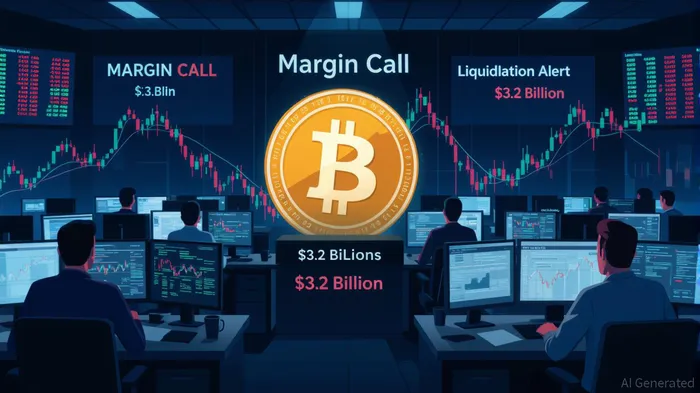
The Liquidation Event: A $3.2 Billion Wake-Up Call
The November 2025 liquidation event was precipitated by a rapid 10% decline in Bitcoin's price, which overwhelmed leveraged positions across exchanges. While exact institutional versus retail breakdowns remain unclear, data from the period highlights the broader context of speculative fragility. For instance, Bitcoin futures open interest had already fallen to $68.37 billion by November, down from a peak of $94.12 billion in October, indicating reduced but still significant speculative activity.
Retail investors, in particular, faced heightened risks after the October 10 deleveraging event, which saw over $19 billion in crypto assets liquidated in a single day. The November crisis, though smaller in scale, reinforced the vulnerability of leveraged retail portfolios, many of which lacked the capital buffers to withstand sudden downturns.
Systemic Risks and the Path Forward
The November 2025 event highlights a critical flaw in crypto markets: the concentration of risk in overleveraged positions. When institutional and retail demand wanes, as it did in late 2025, even modest price declines can trigger cascading defaults. This dynamic is exacerbated by the lack of robust circuit breakers or regulatory safeguards to stabilize markets during extreme volatility according to market analysis.
For institutional investors, the crisis underscores the need for diversified exposure. Platforms like RockToken have emerged as alternatives, offering structured investment vehicles that prioritize yield generation and transparency over direct price speculation. These models, which tie returns to Bitcoin's long-term growth without exposing investors to daily volatility, may represent a more sustainable path for institutions seeking crypto exposure.
Retail investors, meanwhile, must confront the reality that leveraged trading in crypto remains a high-risk proposition. The November liquidations serve as a stark reminder that margin-based strategies thrive in bullish environments but can collapse rapidly when sentiment shifts.
Lessons for the Future
The Bitcoin leverage liquidation crisis of November 2025 is a microcosm of the broader challenges facing crypto markets. While long-term optimism about Bitcoin's potential persists-some analysts project it could rival traditional assets like Nvidia by 2030-the path there demands caution.
Investors must balance ambition with risk management, avoiding overexposure to leveraged products in volatile environments. For regulators and market participants, the crisis highlights the urgent need for infrastructure that mitigates systemic risks, such as improved liquidity mechanisms and clearer margin requirements.
As the market evolves, the November 2025 event will likely be remembered not as an anomaly but as a necessary correction-a moment that forced the industry to confront its vulnerabilities and begin building a more resilient future.

Blending traditional trading wisdom with cutting-edge cryptocurrency insights.
Latest Articles
Stay ahead of the market.
Get curated U.S. market news, insights and key dates delivered to your inbox.






Comments
No comments yet