
Bitcoin's Institutional Momentum: A Structural Shift in Valuation
 Aime Summary
The price of Bitcoin has surged to an all-time high of $123,000 in 2025, driven not by speculative mania but by a seismic shift in institutional demand and regulatory clarity. For the first time, Bitcoin is being repositioned as a legitimate asset class, with its valuation framework now shaped by ETF inflows, macroeconomic trends, and a regulatory environment that has moved from skepticism to support. Investors who ignore this transformation risk missing a historic opportunity.
The Regulatory Catalyst: From Uncertainty to Clarity
The U.S. Securities and Exchange Commission (SEC) has emerged as a pivotal player in Bitcoin's evolution. On July 1, 2025, the SEC unveiled a 12-page framework streamlining cryptocurrency ETF approvals, reducing review periods from 240 days to just 75 days. This guidance, paired with bipartisan progress on the GENIUS Act, has created a regulatory backbone for institutional investors.
The GENIUS Act, which cleared its first House procedural hurdle after President Trump's intervention, aims to regulate stablecoins and establish Bitcoin's role as a digital extension of the U.S. dollar. Its passage would cement Bitcoin's legitimacy, much like the SEC's approval of the first Bitcoin spot ETF in 2024 did.
Institutional Dollars: The New Engine of Demand
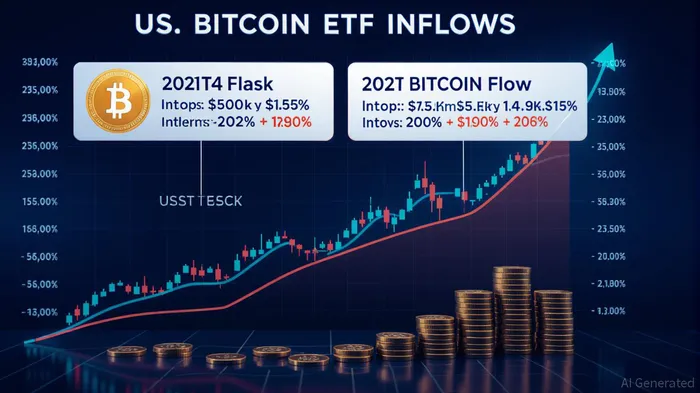
Institutional inflows have become the dominant force in Bitcoin's rise. BlackRock's iShares Bitcoin Trust (IBIT) alone holds over 700,000 BTC—$83 billion in assets—as of July 2025, with $53 billion in net inflows since its 2024 launch. These inflows are not speculative; they are strategic allocations by pension funds, RIAs, and corporations like MicroStrategyMSTR--.
What's driving this shift? Lower volatility (Bitcoin's 30-day volatility dropped to 35% in 2025 from peaks of 158% in 2017) and ETF accessibility have made Bitcoin a viable portfolio diversifier. Advisors now recommend allocations ranging from 1% to 40%, depending on risk tolerance.
Macro Drivers: A Store of Value in a Volatile World
Bitcoin's price surge coincides with two macro trends: the weakening U.S. dollar and falling interest rates. The Fed's pivot to a dovish stance has reduced the opportunity cost of holding non-yielding assets like Bitcoin, while the U.S. Strategic Bitcoin Reserve—announced in 2024—has signaled government confidence in its stability.
Analysts project Bitcoin could hit $160,000 by year-end, with long-term targets as high as $200,000. This isn't just about speculation; it's about Bitcoin's role as a hedge against inflation and geopolitical instability.
The Risks—and Why They're Overblown
Critics cite regulatory overreach, concentration risks (BlackRock holds 56% of U.S. Bitcoin ETFs), and finite supply. Yet these risks are manageable. The GENIUS Act's bipartisan support suggests regulators aim to foster innovation, not stifle it. While BlackRock's dominance raises custody concerns, it also reflects investor trust in institutional safeguards.
Investment Imperative: Allocate Before the Floodgates Open
The data is clear: Bitcoin's valuation is no longer about “if” but “when.” The SEC's July 1 guidance has already unleashed a wave of applications for new Bitcoin ETFs, including those tied to memecoins like Trump's $TRUMP. But the next phase—the mainstream integration of Bitcoin into 401(k)s and endowments—is just beginning.
Investors who delay risk falling behind. For conservative portfolios, allocate 1%–2% to Bitcoin ETFs like IBIT. For aggressive investors, consider higher stakes, but pair them with volatility hedges. The structural shift is here: Bitcoin is no longer a sideshow. It's the main event.
In the words of one Wall Street strategist, “This isn't about crypto—it's about capital flows. Institutions are voting with their wallets, and the result is clear.” The question is no longer whether Bitcoin belongs in portfolios. It's how much you'll miss out on if you wait.

Delivering real-time insights and analysis on emerging financial trends and market movements.
Latest Articles
Stay ahead of the market.
Get curated U.S. market news, insights and key dates delivered to your inbox.




Comments
No comments yet