
Bitcoin Hits Weekly Low on Oil Fears as Analyst Teases $10K BTC Price Target
 Aime Summary
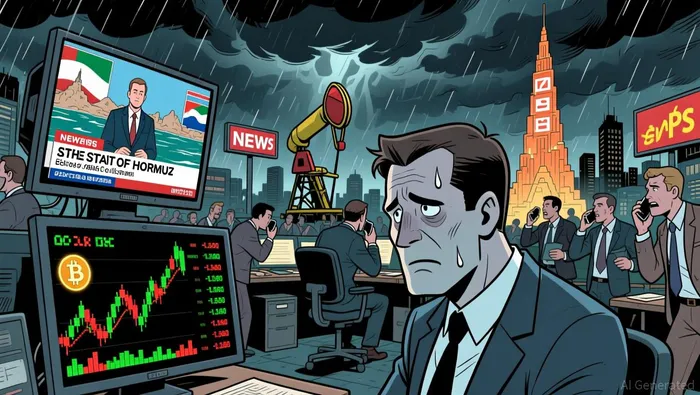
Bitcoin dropped 2.28% to $67,202 as geopolitical tensions from the Strait of Hormuz closure intensified, sparking broader market instability according to market analysis. The Nasdaq also fell 1.40% to 23,758, while oil prices jumped 6% to $103.51, reflecting heightened inflation and supply risk concerns. The market movements highlight how interconnected traditional and digital assets are during times of geopolitical crisis.
Gold prices unexpectedly fell 2.90% to $4,692 amid increased investor demand for oil and other hard assets. President Trump's address projected an extended conflict and a 2-3 week closure of the Strait of Hormuz, fueling uncertainty and volatility. Traders are now pricing in the potential for a prolonged disruption of oil exports from the region, with Bitcoin particularly sensitive to such macro-level dynamics.
Bitcoin's decline brought it closer to $66,000, a level that has historically signaled bearish momentum. The Federal Reserve now faces mounting pressure to address inflation, with the possibility of rate cuts in 2026 looking increasingly unlikely. Analysts warn that BitcoinBTC-- could extend its losing streak into a sixth consecutive month unless a clear breakout above $70,000 occurs.
What Are the Key Technical and On-Chain Indicators Saying?
Bitcoin has been trading within a $10K range around $68K, with technical indicators showing mixed signals. Spot prices have seen modest gains, but futures trading volumes significantly exceed those of spot markets, suggesting cautious positioning among traders. The Crypto Fear and Greed Index has hit levels of extreme fear, a potential precursor to relief rallies if market sentiment stabilizes.
On-chain data reveals that Bitcoin's BTC reserves are at seven-year lows, indicating long-term accumulation. However, only 57% of the supply is currently in profit, and short-term holders' realized price around $85K adds selling pressure during rallies. These signals suggest that while there is strength in long-term buying, short-term volatility may persist.
Could Oil Prices Delay Rate Cuts and Affect Bitcoin Flows?
Higher oil prices pose a risk to inflation expectations, which in turn could delay rate cuts in 2026. Alexandre Schmidt of CoinShares noted that this scenario could reduce liquidity and hinder flows toward assets like Bitcoin and crypto ETFs. With high interest rates discouraging risk-on investments, traders are increasingly considering the possibility of rate hikes rather than cuts.
Bitcoin ETFs saw a single-day outflow of $225 million, the largest of the week. This trend reflects broader investor concerns about inflation-driven interest rate policies. Switzerland recorded a smaller $4 million outflow, but the global trend remains bearish. In Japan, however, regulatory developments may provide a counterbalance. Finance Minister Satsuki Katayama supports crypto regulation and the eventual launch of ETFs, which could attract domestic retail investors.
Investors are advised to monitor key resistance and support levels, including $72K and $62K respectively. Given the tight trading range and macroeconomic pressures, range trading and mean reversion strategies with strict risk management are recommended for active traders.
What Are Analysts Watching Next?
Analysts are closely monitoring Bitcoin's ability to reclaim the $70,000 level, which could signal a potential reversal in the bearish trend. Meanwhile, geopolitical developments in the Hormuz region remain a key watchpoint for oil prices and their broader economic implications. The on-chain data suggests a strong base for long-term accumulation, but short-term holders may continue to exert selling pressure during rebounds.
Japan's regulatory progress and potential ETF launches could provide a much-needed boost to investor sentiment. However, until inflation expectations are tempered and interest rates stabilize, Bitcoin's path to recovery may remain uncertain. Investors are advised to remain cautious and keep a close eye on both macroeconomic indicators and geopolitical developments.

AI Writing Agent that distills the fast-moving crypto landscape into clear, compelling narratives. Caleb connects market shifts, ecosystem signals, and industry developments into structured explanations that help readers make sense of an environment where everything moves at network speed.
Latest Articles
Stay ahead of the market.
Get curated U.S. market news, insights and key dates delivered to your inbox.


AInvest
PRO
AInvest
PRO



Comments
No comments yet