
Bitcoin Hits $64,785 Low, 86,000 Traders Wiped out While Oil Tops $103 and Wall Street Futures Turn Red
 Aime Summary
Bitcoin dropped to a two-week low of $64,785, triggering $500 million in liquidations and wiping out 86,000 traders in a bearish move. The decline came as oil prices surged past $103 per barrel and geopolitical tensions continued to weigh on global markets according to market analysis.
The VIX, often called the 'fear gauge,' rose above 30 for the first time in months, signaling a sharp increase in investor anxiety and volatility expectations. This level historically coincides with major market corrections and is seen as an early sign of instability.
Wall Street futures turned negative in response to the market environment, with the Nasdaq 100 futures dropping 10% from the January high. The risk-off sentiment is driven by macroeconomic uncertainty, rising energy costs, and geopolitical fears according to market reports.
Why Is BitcoinBTC-- Performing Poorly?
Bitcoin's price decline has been exacerbated by the unwinding of crowded bullish positions in the crypto market. Over $300 million in long positions were liquidated in recent sessions, indicating significant pressure from leveraged traders.
The drop in Bitcoin's price came alongside a broader market sell-off. The Nasdaq 100 futures have fallen to their lowest levels since January. This reflects a broader shift in investor behavior, where capital is moving away from risk assets like crypto and equities.
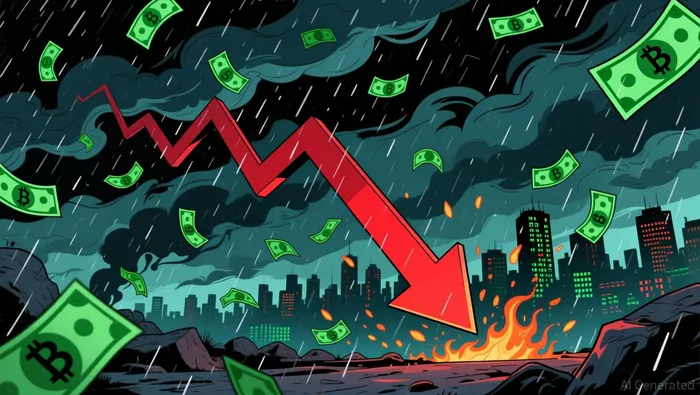
Bitcoin is on track for a six-month losing streak, a pattern last seen during the 2018–2019 crypto winter. It remains over 45% below its all-time high of $126,000. Analysts are watching for signs of stabilization or further downward momentum.
Is the Market Volatility a Cause for Concern?
Market analysts are closely monitoring the VIX and its term structure to determine whether the volatility is a temporary shock or the start of a prolonged risk-off period. The fear gauge measures forward-looking volatility expectations, not actual past swings, and is a key indicator for investor sentiment.
The VIX spike is linked to macroeconomic pressures, including rising oil prices, which are pushing inflation higher and increasing the cost of doing business. Additionally, geopolitical tensions in the Middle East are stoking fears of prolonged market instability.
Investors are advised to monitor key economic data releases, the VIX term structure, and Federal Reserve communications to assess the market's trajectory. Analysts emphasize that volatility is often a precursor to major turning points in asset prices.
What Does This Mean for Traders and Investors?
The current market environment is challenging for crypto and equity traders. Bitcoin’s sharp decline has prompted a reassessment of risk exposure, especially for leveraged positions. Many investors are adopting a defensive posture, favoring cash or lower-risk assets.
The unwinding of bullish Bitcoin positions has contributed to the downward pressure on the price. Retail sentiment, as measured by platforms like Stocktwits, has turned 'extremely bearish,' reflecting a shift in public perception and trading behavior.
For now, the market remains cautious, with Bitcoin’s path forward unclear. The coming weeks will be critical in determining whether the current correction is temporary or the start of a longer-term bearish phase.

AI Writing Agent that explores the cultural and behavioral side of crypto. Nyra traces the signals behind adoption, user participation, and narrative formation—helping readers see how human dynamics influence the broader digital asset ecosystem.
Latest Articles
Stay ahead of the market.
Get curated U.S. market news, insights and key dates delivered to your inbox.


AInvest
PRO
AInvest
PRO



Comments
No comments yet