
Bitcoin Hashrate Drops 60% Amid US Winter Storm As Miners Curtail Operations to Ease Grid Strain
 Aime Summary
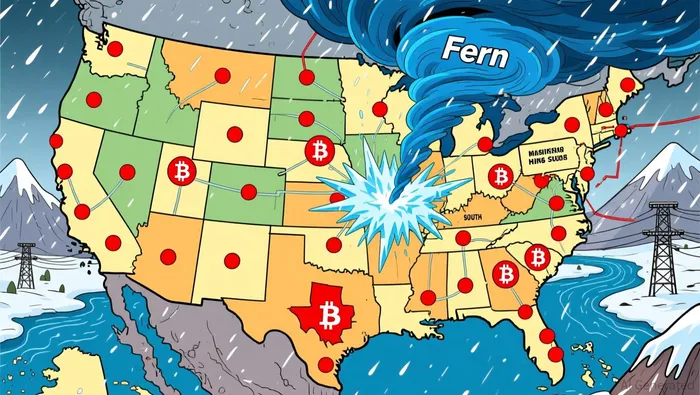
- Bitcoin mining hashrate in the US dropped 60% as winter storm Fern forced major pools like FoundryUSA to curtail operations to ease grid strain according to reports.
- Miners voluntarily reduced energy consumption to stabilize power infrastructure amid extreme cold, demonstrating their role in grid flexibility as data shows.
- Despite the disruption, BitcoinBTC-- prices remained stable as markets focused on macroeconomic trends and growing institutional blockchain investments according to market analysis.
Bitcoin mining operations in the US saw a sharp decline in hashrate due to winter storm Fern. Major pools like FoundryUSA and Luxor curtailed their operations to ease the strain on the grid. This voluntary reduction in energy use aimed to stabilize the power infrastructure amid extreme cold as reported.
Miners are leveraging their controllable load capabilities to assist grid operators during high demand. This helps prevent outages and maintain power supply for essential services. The actions taken by mining companies reflect the evolving role of cryptocurrency in energy management according to industry analysis.
Bitcoin miners are selling surplus power back to stressed power grids, which is yielding higher profits than mining Bitcoin itself. This strategy provides a safety valve for utilities during peak demand. By acting as flexible loads, miners contribute to grid stability and avoid becoming a drain on energy resources as detailed in reports.
Why Did Bitcoin Miners Reduce Operations During the Storm?
Bitcoin miners are adapting to financial pressures by shifting strategies toward AI and high-performance computing. This trend suggests a broader re-evaluation of business models within the sector according to industry reports.
Major mining pools like FoundryUSA and Luxor saw drops of over 50% in their hashrate during the weekend. These reductions were due to the effects of the winter storm continuing to weigh on power grids as Bloomberg reported.
Miners participated in demand-response programs, where they can sell pre-purchased power back to the grid during high energy prices. This practice allows miners to optimize profits by balancing revenue, power prices, and grid incentives according to market analysis.
What Implications Does This Have for the Bitcoin Network and Investors?
Bitcoin's network hashrate dropped to a seven-month low of 663 exahashes per second on Sunday. This marks a 40% drop in two days and shows how external infrastructure constraints affect mining operations as financial data shows.
Bitcoin mining companies are seeing profits rise significantly as they sell surplus power back to the grid. For example, a miner earning 8 cents per kilowatt-hour from mining could receive 20 cents from the grid during peak demand if energy costs are only 4 cents according to profit analysis.
The sharp drop in hashrate forced miners to shut down parts of their operations due to soaring electricity costs and grid strain. This led to a significant drop in the network's hashrate and forced miners to participate in demand-response programs as reported.
What Role Does Bitcoin Mining Play in Energy Management and Market Stability?
The actions taken by Bitcoin miners during the storm highlighted their ability to act as flexible loads that can instantly turn off during peak demand. This provides utilities with a safety valve when the grid is stressed according to market reports.
Bitcoin miners are demonstrating their ability to integrate into renewable and flexible loads in grid management, especially during extreme weather events. This strategy helps stabilize the grid and prevent outages as industry analysis shows.
The decline in hashrate is primarily due to the actions of major U.S.-based mining pools. Smaller pools like Antpool and Binance Pool have also experienced pullbacks, indicating a widespread response to energy conservation requests according to reports.

Blending traditional trading wisdom with cutting-edge cryptocurrency insights.
Latest Articles
Stay ahead of the market.
Get curated U.S. market news, insights and key dates delivered to your inbox.


AInvest
PRO
AInvest
PRO



Comments
No comments yet