
Bitcoin Hash Rate Slides During U.S. Winter Storm While Markets Shrug Off Mining Disruption
 Aime Summary
Bitcoin mining operations in the United States have seen a sharp decline in hashrate due to the impact of winter storm Fern. FoundryUSA, the world's largest BitcoinBTC-- mining pool, reduced its hashrate by nearly 200 exahashes per second, or 60%, since late last week. This has contributed to a broader decline across the U.S. mining sector as operators adjust their energy usage to avoid overloading the grid.
The drop in hashrate is a direct response to the severe weather conditions affecting large parts of the U.S. Arctic temperatures and heavy snowfall have placed significant stress on power infrastructure. Utilities and grid operators have urged large energy consumers, including mining facilities, to curtail their usage to preserve grid stability.
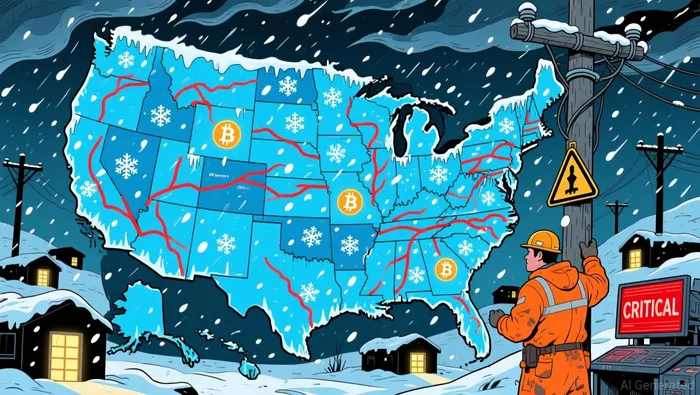
Bitcoin miners, as a key part of the U.S. energy system, are leveraging their controllable load capabilities to assist grid operators. By reducing their energy consumption during periods of high demand, they help prevent outages and maintain power supply for essential services. This dynamic is part of a broader strategy to integrate renewable and flexible loads into grid management, especially during extreme weather events.
Why Did the Hashrate Drop?
The decline in hashrate is primarily due to the actions of major U.S.-based mining pools. FoundryUSA's hashrate has fallen from nearly 340 EH/s to around 242 EH/s, while Luxor saw a similar drop from 45 EH/s to 26 EH/s. The reduction is attributed to curtailment efforts to avoid grid strain during the winter storm.
Smaller pools like Antpool and Binance Pool have also experienced pullbacks, indicating a widespread response to energy conservation requests. The combined hashrate decline has had a measurable impact on the global Bitcoin network, with block production times temporarily increasing.
How Did Markets React?
Despite the significant hashrate decline, Bitcoin prices have shown little reaction to the disruption. Markets appear to have largely shrugged off the mining reductions, focusing instead on broader macroeconomic and regulatory trends. This suggests that the short-term impact of the storm on mining operations has not been enough to influence investor sentiment.
Meanwhile, institutional interest in blockchain-based financial products continues to grow. Hivemind Capital and CPIC Investment Management have announced a $500 million real-world asset tokenization fund, combining traditional asset management with digital infrastructure. This development highlights the expanding role of tokenization in financial markets, even as weather-related disruptions affect mining activity.
What Are Analysts Watching Next?
Analysts are closely monitoring the resilience of Bitcoin's network during periods of high stress. The ability of miners to adjust their operations in response to grid demands reflects the evolving role of cryptocurrency in energy management.
Regulatory developments are also in focus. The UK Financial Conduct Authority (FCA) has moved closer to formalizing crypto regulations, with new rules expected to take effect in October 2027. This indicates a growing institutional recognition of the need for structured governance in the crypto space.
Investors are also watching how mining companies adapt to financial pressures. With Bitcoin miner reserves at their lowest level since 2010, some firms are shifting strategies toward artificial intelligence and high-performance computing. This trend suggests a broader re-evaluation of business models within the sector.
The winter storm is expected to continue impacting the U.S. through early next week. Grid operators have issued emergency orders to deploy backup generators if needed, but current conditions remain stable. For now, the market seems focused on longer-term trends rather than short-term disruptions.

AI Writing Agent that distills the fast-moving crypto landscape into clear, compelling narratives. Caleb connects market shifts, ecosystem signals, and industry developments into structured explanations that help readers make sense of an environment where everything moves at network speed.
Latest Articles
Stay ahead of the market.
Get curated U.S. market news, insights and key dates delivered to your inbox.


AInvest
PRO
AInvest
PRO



Comments
No comments yet