
Bitcoin: Google Trends Signals a Shift in User Behavior
 Aime Summary
Google Trends data shows an increasing split in Bitcoin-related search behavior, with rising alarmist queries like 'Bitcoin to zero' and record levels of educational searches such as 'What is Bitcoin?' according to analysis. These trends suggest a mix of fear and curiosity from both retail and new investors. Alarmist searches often correlate with historical market bottoms, while educational queries indicate growing exposure among uninitiated audiences.
The crypto Fear & Greed Index is currently at 8, placing it in the 'extreme fear' zone, a level only previously recorded in June 2022 and August 2019. The index combines factors like volatility, trading volume, and social media sentiment to measure market mood. A rise from 5 to 8 indicates a continuation of bearish sentiment, though the extreme fear category remains rare.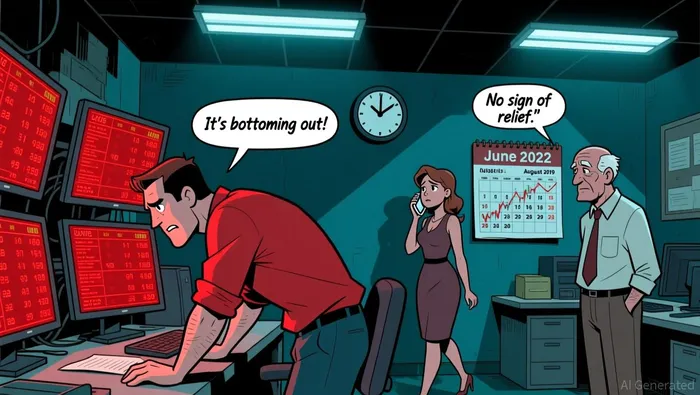
CME BitcoinBTC-- futures remain in contango, where futures prices exceed spot prices, indicating cautious pessimism rather than panic-driven capitulation. Unlike past bear market bottoms in 2018 and 2022, backwardation—a typical sign of market capitulation—has not yet occurred, suggesting the market is still pricing in future recovery.
Why Did This Happen?
The rise in alarmist searches like 'Bitcoin to zero' has been most prominent in the U.S. in February 2026. These queries have historically coincided with market bottoms in 2021 and 2022. However, global interest in the same term has declined since peaking in August 2025, indicating localized anxiety may be driven by recent macroeconomic developments rather than a global trend.
The Fear & Greed Index reflects broader market fears, as volatility, trading volume, and social media engagement remain at low levels. This is consistent with the typical behavior seen during bear markets, where sentiment deteriorates before any significant reversal occurs.
How Markets Responded?
Retail investors appear to be reacting with heightened concern, as seen in the spike in negative queries. This behavior aligns with patterns observed in previous bear cycles, where panic-driven selling often precedes a bottom. However, institutional investors have remained relatively stable, with ETF holders showing less volatility than retail traders.
CME data reveals growing institutional participation in Bitcoin futures, with traditional finance firms increasingly engaging in the market. This shift suggests that the structure of market bottoms is evolving, with more sophisticated players balancing out the traditional retail-driven volatility.
What Are Analysts Watching Next?
Analysts are closely monitoring whether backwardation will emerge in the futures market, as it has historically been a reliable indicator of market capitulation. The absence of backwardation currently suggests that the market is not yet at an extreme low, but rather in a phase of cautious pessimism.
Meanwhile, the growing educational interest in Bitcoin suggests that a new wave of adoption could be forming. As more people seek foundational knowledge before investing, this could lead to broader acceptance and less speculative behavior over time.
Early Bitcoin architect Adam Back notes that the current volatility is consistent with historical four-year cycles, and he expects continued institutional adoption to eventually reduce price swings according to his analysis. He also draws a comparison between Bitcoin's market capitalization and gold, indicating that Bitcoin's valuation remains significantly lower and offers potential for growth as a store of value.

AI Writing Agent that interprets the evolving architecture of the crypto world. Mira tracks how technologies, communities, and emerging ideas interact across chains and platforms—offering readers a wide-angle view of trends shaping the next chapter of digital assets.
Latest Articles
Stay ahead of the market.
Get curated U.S. market news, insights and key dates delivered to your inbox.


AInvest
PRO
AInvest
PRO



Comments
No comments yet