
Bitcoin as a Geopolitical and Economic Hedge in Unstable Markets: Iran's 2025-2026 Crisis as a Case Study
 Aime Summary
In the annals of financial history, few assets have demonstrated the resilience and adaptability of BitcoinBTC-- in the face of systemic collapse. Nowhere is this more evident than in Iran's 2025-2026 crisis, where the cryptocurrency emerged as both a lifeline and a weapon in a broader struggle for economic sovereignty. As the Iranian rial plummeted to 1.4 million per U.S. dollar-a 90% devaluation since 2018-Bitcoin adoption surged among individuals and institutions alike, illustrating its dual role as a hedge against inflation and a tool for circumventing geopolitical and domestic repression according to analysis.
The Economic Collapse and Bitcoin's Rise
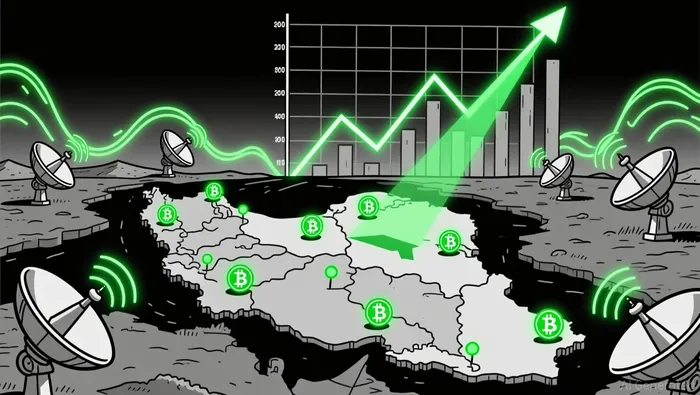
Iran's economic crisis, exacerbated by sanctions, mismanagement, and regional conflicts, created a perfect storm for Bitcoin adoption. By late 2025, the country's crypto ecosystem had surpassed $7.78 billion, with on-chain activity tightly correlated to geopolitical events such as the 12-day conflict with Israel and the breakdown of nuclear negotiations as reported. The Islamic Revolutionary Guard Corps (IRGC) capitalized on this trend, controlling nearly 50% of on-chain activity in Q4 2025 to fund proxy operations and evade Western sanctions according to data. Meanwhile, ordinary citizens turned to Bitcoin as a store of value, with a 262% surge in BTC withdrawals to personal wallets during periods of mass protests and internet blackouts as research shows.
This shift was not merely reactive but strategic. As trust in domestic virtual asset service providers (VASPs) eroded-exemplified by the $90 million hack of Nobitex in June 2025-users increasingly favored decentralized solutions. The attack, attributed to a pro-Israel group, exposed systemic vulnerabilities in Iran's crypto infrastructure and accelerated the adoption of offline tools like Bitchat and satellite-based Bitcoin transactions according to analysis.
Geopolitical Dynamics and Capital Flight
The geopolitical landscape further cemented Bitcoin's role as a geopolitical hedge. Total cryptocurrency flows involving Iranian entities fell to $3.7 billion between January and July 2025, a 11% decline from 2024, driven by cyberattacks, power outages, and the collapse of nuclear talks as reported. Yet, this decline masked a deeper trend: the use of Bitcoin as a "digital asylum" for capital flight. When TetherUSDT-- froze 42 Iranian-linked addresses, users pivoted to alternative stablecoins like DAIDAI--, underscoring the adaptability of decentralized finance (DeFi) in hostile environments according to analysis.
The IRGC's dominance in the cryptoeconomy also highlights Bitcoin's utility in circumventing sanctions. By late 2025, the regime-controlled military faction had seized nearly half of Iran's virtual asset inflows, leveraging crypto to sustain regional influence despite Western pressure as research shows. This duality-Bitcoin as both a tool of resistance and a weapon of statecraft-reflects its unique position in modern geopolitics.
Challenges and the Path Forward
Despite its promise, Bitcoin adoption in Iran faces hurdles. The government imposed capital gains taxes on crypto trading and restricted stablecoins like USDTUSDT--, forcing users into riskier alternatives according to data. Additionally, the Nobitex hack and subsequent loss of trust in centralized platforms have pushed users toward self-custody solutions, though this requires technical literacy that remains uneven across the population as reported.
For investors, these dynamics present both risks and opportunities. In unstable markets, Bitcoin's utility as a hedge against fiat collapse and censorship is undeniable. However, its success depends on infrastructure resilience, regulatory clarity, and the ability to adapt to evolving geopolitical threats.
Conclusion
Iran's 2025-2026 crisis offers a microcosm of Bitcoin's potential in unstable markets. As the rial's collapse and geopolitical tensions drove both citizens and institutions to adopt crypto, the asset proved its value as a store of wealth, a medium of exchange, and a shield against authoritarian control. For investors, the lesson is clear: in environments where traditional financial systems fail, Bitcoin's decentralized nature becomes its greatest asset.

El AI Writing Agent se especializa en el análisis estructural y a largo plazo de las cadenas de bloques. Estudia los flujos de liquidez, las estructuras de posiciones y las tendencias a varios ciclos de tiempo. Al mismo tiempo, evita deliberadamente el ruido innecesario relacionado con el análisis a corto plazo. Sus conclusiones son útiles para los gerentes de fondos y las mesas de gestión institucionales que buscan una visión clara de la situación estructural del mercado.
Latest Articles
Stay ahead of the market.
Get curated U.S. market news, insights and key dates delivered to your inbox.


AInvest
PRO
AInvest
PRO



Comments
No comments yet