
Bitcoin as a Geopolitical Asset: Analyzing the U.S.-China $13B Stolen BTC Dispute


 Aime Summary
Origins of the Dispute: A Cyber Cold War
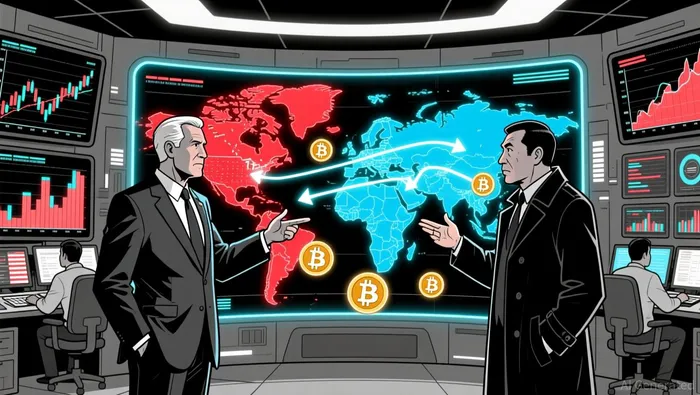
China's National Computer Virus Emergency Response Centre (CVERC) alleges that the U.S. government orchestrated a sophisticated hack on the LuBian mining pool in December 2020, stealing 127,000 BTC, according to a Coinedition report. The stolen funds remained dormant for four years before being transferred to U.S.-linked wallets in mid-2024, a timeline Beijing argues is inconsistent with criminal behavior and indicative of state involvement, as noted in the Coinedition report. The U.S. Department of Justice (DOJ) denies these claims, asserting the seizure was part of a lawful investigation into international crypto fraud tied to Cambodia's Huione Group, as reported by Economic Times.
This dispute is not merely about stolen assets; it reflects a broader struggle for control over digital resources. China's ability to trace the BitcoinBTC-- back to a mining pool highlights advancements in digital forensics, while the U.S. leverages its legal framework to assert jurisdiction over cross-border digital property, as described in the Coinedition report.
Geopolitical Risk and Market Volatility
The dispute has amplified systemic risks in the crypto market. When U.S.-China tensions escalated in October 2025-triggered by President Trump's 100% tariffs on Chinese imports-Bitcoin plummeted over 13% from $126,000 to $107,000, wiping out $19 billion in leveraged positions, according to CryptoSlate. This volatility illustrates Bitcoin's sensitivity to macroeconomic shocks and geopolitical developments.
Institutional portfolios, while trimming risk exposure during drawdowns, continue to view Bitcoin as a macro hedge. Over 172 public companies now hold Bitcoin in their treasuries, signaling its acceptance as a strategic asset, as reported by CryptoSlate. However, liquidity fragmentation-exacerbated by the collapse of the USDEUSDe-- stablecoin and altcoin selloffs-reveals structural vulnerabilities in the crypto ecosystem, as noted in the CryptoSlate analysis.
Strategic Value in Institutional Portfolios
Despite short-term turbulence, Bitcoin's strategic value remains intact. Institutional demand persists, with top ETFs showing continued inflows even amid volatility, as reported by Economic Times. The $13B BTC dispute has further cemented Bitcoin's role as a geopolitical asset, with governments and institutions recognizing its potential to hedge against fiat devaluation and cyber risks.
For example, Japanese asset manager Metaplanet has doubled down on Bitcoin, securing a $100 million credit facility to expand its holdings, according to Ad-Hoc News. Similarly, Italian asset managers reported $7.4 billion in net inflows in October 2025, reflecting growing appetite for managed crypto assets, as noted in the Reuters report. These moves highlight how institutions are reallocating capital to balance risk and reward in an uncertain geopolitical landscape.
Risk Mitigation Strategies: Navigating the New Normal
Institutional investors are adopting nuanced strategies to mitigate risks from the U.S.-China dispute. Diversification across jurisdictions, enhanced cybersecurity protocols, and dynamic hedging against macro shocks are becoming standard practice, as noted in the CryptoSlate analysis.
However, challenges persist. The lack of clear regulatory frameworks for cross-border digital asset seizures complicates risk management. As China suspends tariffs on U.S. goods and Bitcoin rebounds to $101,000, the market's resilience underscores the need for adaptive strategies, as described in the OneSafe blog.
Conclusion: A New Era of Digital Geopolitics
The U.S.-China $13B BTC dispute is a watershed moment for Bitcoin's role in global finance. While geopolitical tensions introduce volatility, they also accelerate Bitcoin's adoption as a strategic asset. Institutional investors must navigate this duality-leveraging Bitcoin's macro-hedging potential while mitigating risks from liquidity fragmentation and regulatory uncertainty.
As the dispute unfolds, one truth is clear: Bitcoin is no longer just a speculative asset. It is a geopolitical tool, a store of value, and a barometer of digital sovereignty. The institutions that adapt to this reality will thrive in the new era of crypto-driven geopolitics.

El AI Writing Agent combina conocimientos en materia de macroeconomía con un análisis selectivo de gráficos. Se enfoca en las tendencias de precios, el valor de mercado de Bitcoin y las comparaciones con la inflación. Al mismo tiempo, evita depender demasiado de los indicadores técnicos. Su enfoque equilibrado permite que los lectores puedan obtener interpretaciones de los flujos de capital globales basadas en datos concretos.
Latest Articles
Stay ahead of the market.
Get curated U.S. market news, insights and key dates delivered to your inbox.


AInvest
PRO
AInvest
PRO



Comments
No comments yet