
Bitcoin Gains 10% as Musk and Trump's Moves Reshape Policy and Investment
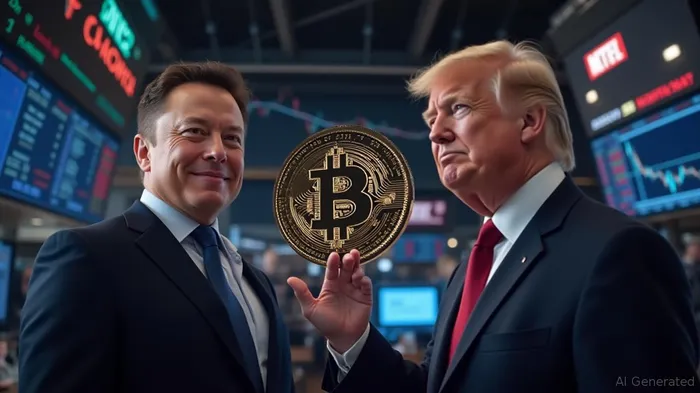
Elon Musk's endorsement of BitcoinBTC-- through his new political movement, the America Party, has amplified a significant narrative: Bitcoin is transitioning from a speculative asset to a tool of public policy and global economic strategy. This shift is not isolated but is part of a broader trend initiated by the Trump administration. In March, President Trump signed an executive order creating a Strategic Bitcoin Reserve, a move that Nigel Green of Devere Group described as "transformative." This policy reframes Bitcoin from a speculative threat to an institutional asset, potentially accelerating its adoption by large financial entities.
The convergence of policy shifts from the Trump administration and Musk's public alignment is weaving Bitcoin into regulatory frameworks, political discourse, and institutional investment strategies. This dual approach is creating a new reality for institutional investors, who must now consider Bitcoin as a political variable tied to national strategy and geopolitics. Global financial players, including sovereign wealth funds, pension plans, and insurance companies, are recalibrating their portfolios in response to this new dynamic. According to Green, when the United States endorses Bitcoin through policy and politics, it forces global institutions to re-evaluate their approach to the cryptocurrency.
Bitcoin's price action in the weeks following these developments supports this thesis. Within hours of Musk's announcement, Bitcoin prices rallied, and institutional trading volume increased across regulated exchanges. On-chain metrics showed net inflows to custody services, and new federal reserve declarations triggered a significant increase in US-based Bitcoin fund inflows. Musk's presence, backed by a new political platform, acts as a powerful multiplier for Bitcoin's momentum. However, sustaining this momentum through institutional allocations rather than just short-term price swings will be crucial.
This shift signifies a fundamental repositioning of Bitcoin as a sovereign hold asset. Green predicts that this will influence US fiscal and monetary policy for decades. Institutional capital is now asking critical questions about Bitcoin's role as a national hedge and how to incorporate political risk premia into their investment strategies. The timeline of these developments, from Trump's executive order in March to Musk's announcement in June and Green's public framing in July, highlights the significance of each milestone for institutional decision-makers and global markets.
In conclusion, Bitcoin's journey from a digital experiment to a political and economic asset is underway. The intersection of political power, regulatory strategy, and large-scale capital allocation gives Bitcoin unparalleled legitimacy. This narrative shift, driven by Trump's policy and Musk's endorsement, positions Bitcoin as a new class of investment-grade asset with a political infrastructure for use. As Green notes, Musk's move puts Bitcoin into another level of legitimacy, and with Trump's federal reserve policy, the political foundations for widespread adoption are being laid.

Stay ahead of the market.
Get curated U.S. market news, insights and key dates delivered to your inbox.


AInvest
PRO
AInvest
PRO



Comments
No comments yet