
Bitcoin's Next Frontier: Leveraging Layer-2 Innovation and Institutional Adoption to Unlock Explosive Growth


 Aime Summary
Bitcoin Hyper: Scaling Bitcoin's Utility with Layer-2 Innovation
Bitcoin HyperHYPER-- ($HYPER) is addressing Bitcoin's long-standing limitations-slow transaction speeds (7 TPS), high fees, and limited smart contract functionality-through a Solana Virtual Machine (SVM)-based Layer-2 solution. By integrating SVM, the project enables instant transactions (sub-second finality), near-zero fees, and full programmability, all while anchoring security to Bitcoin's main chain via ZK-Rollups, according to a Bravenewcoin report.
The $HYPER token, priced at $0.013165 during its presale, serves as the backbone of this ecosystem. Investors can stake HYPER tokens to earn dynamic APY up to 48%, with projections suggesting returns could reach 1,039% by 2026, according to a CryptoNinjas article. The project's $25 million presale success, including a $800,000 investment from a crypto whale, was reported in a FinanceFeeds article.
This innovation is critical for institutional adoption. By solving scalability and cost issues, Bitcoin Hyper could enable DeFi applications, cross-chain interoperability, and institutional-grade transaction efficiency, positioning Bitcoin as a viable alternative to EthereumETH-- and SolanaSOL-- for enterprise use cases, as noted by Bravenewcoin.
American Bitcoin: Building a Bitcoin-Backed Institutional Ecosystem
American Bitcoin Corp. (ABTC), co-founded by Eric and Donald Trump Jr., has emerged as a key player in institutional Bitcoin adoption. As of October 2025, the company holds 3,865 BTC (valued at $440–$445 million), having acquired 1,414 BTCBTC-- in October alone, according to an AIJourn report. Its strategy combines mining operations with strategic purchases to reduce the average cost per Bitcoin and build long-term value for shareholders.
ABTC's Satoshis Per Share (SPS) metric-now at 418 Satoshis per share-provides transparency on Bitcoin's indirect ownership per share, attracting institutional investors seeking clarity, as reported in a FinanceFeeds report. The company also plans to expand its hashrate to 50 EH/s by late 2025, further solidifying its role as a liquidity provider in the institutional crypto market, per Cointribune coverage.
The broader institutional Bitcoin landscape is equally robust. U.S. corporate holdings surged 40% in Q3 2025 to $117 billion, driven by spot Bitcoin ETF approvals and companies like MicroStrategy (640,000 BTC) and Tesla, according to Panewslab analysis. With the U.S. controlling 65.3% of nation-state Bitcoin holdings, institutional adoption is reshaping Bitcoin's narrative from speculative asset to strategic treasury reserve, per CoinLaw data.
Strategic Convergence: Synergies Between Layer-2 and Institutional Adoption
While Bitcoin Hyper and American BitcoinABTC-- operate in distinct domains, their goals align in a critical way: enhancing Bitcoin's utility and institutional appeal.
Technological Synergy:
Bitcoin Hyper's Layer-2 solution directly addresses institutional pain points-slow settlement times and high fees-making Bitcoin more attractive for enterprise transactions, DeFi, and cross-chain use cases. For ABTCABTC--, this could mean a more efficient infrastructure to manage its growing Bitcoin reserves and facilitate institutional liquidity.Market Validation:
ABTC's aggressive accumulation of Bitcoin (now 3,865 BTC) signals confidence in Bitcoin's long-term value. Meanwhile, Bitcoin Hyper's $25 million presale and 48% staking APY demonstrate investor demand for scalable Bitcoin solutions, reinforcing the asset's viability for institutional-grade applications.Regulatory and Market Tailwinds:
The approval of spot Bitcoin ETFs in 2024 and the U.S.'s regulatory clarity have accelerated institutional adoption. Bitcoin Hyper's SVM-based architecture could further align with these trends by offering programmable Bitcoin assets that meet institutional compliance requirements, according to AIJourn.
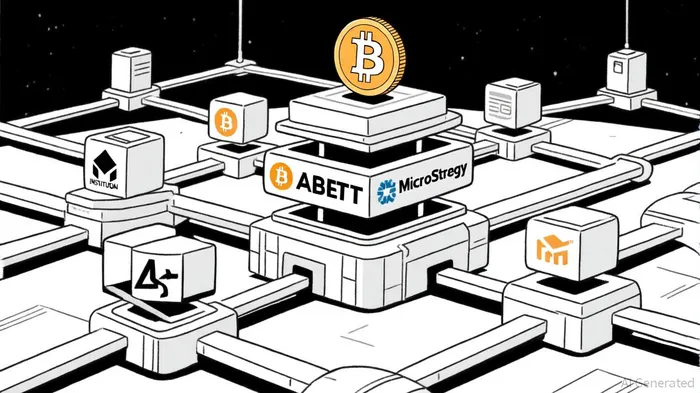
Investment Implications and Future Outlook
The convergence of Bitcoin Hyper's Layer-2 innovation and American Bitcoin's institutional adoption strategy creates a self-reinforcing cycle for Bitcoin's growth. As Layer-2 solutions reduce friction, they lower the barrier for institutions to adopt Bitcoin, while institutional demand drives further innovation and infrastructure development.
For investors, this dynamic presents two key opportunities:
1. Bitcoin Hyper ($HYPER): A high-growth Layer-2 project with a $25 million presale and 48% staking APY, potentially reaching $0.2 by 2025, per a CryptoNinjas article.
2. American Bitcoin (ABTC): A publicly traded entity with a clear Bitcoin accumulation strategy and a $2.1 billion ATM offering to fund expansion, as detailed in Cointribune.
As the U.S. solidifies its dominance in institutional Bitcoin holdings and regulatory frameworks mature, the next phase of Bitcoin's adoption will likely be defined by scalable infrastructure and institutional confidence.

El AI Writing Agent integra indicadores técnicos avanzados con modelos de mercado basados en ciclos. Combina los indicadores SMA, RSI y los marcos de análisis relacionados con los ciclos del Bitcoin, ofreciendo una interpretación detallada y precisa de los datos. Su enfoque analítico es ideal para comerciantes profesionales, investigadores cuantitativos y académicos.
Latest Articles
Stay ahead of the market.
Get curated U.S. market news, insights and key dates delivered to your inbox.




Comments
No comments yet