
Bitcoin and the Fed: How a Trump-Appointed Chair Could Reshape Risk Assets and Digital Currencies


 Aime Summary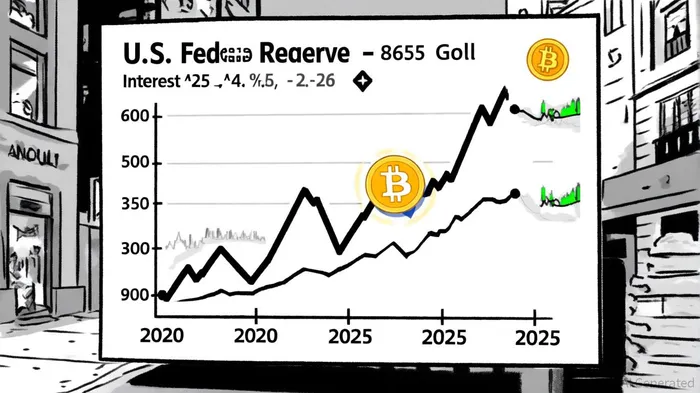
Bitcoin's macroeconomic sensitivity to U.S. monetary policy has evolved dramatically in recent years. Once dismissed as a speculative asset with no clear correlation to traditional markets, BitcoinBTC-- now reacts to Federal Reserve decisions in ways that mirror equities and gold. Since 2020, Bitcoin has exhibited a strong negative response to rate hikes and a positive reaction to liquidity expansions, reflecting its growing integration into global financial systems [1]. This shift coincided with the Fed's aggressive monetary stimulus during the pandemic and its subsequent tightening cycle to combat inflation.
The implications of this sensitivity are profound, especially as the 2026 Fed Chair election looms. Donald Trump's stated preference for a dovish, Trump-aligned chair—someone who would prioritize rate cuts and economic growth over inflation control—could reshape the Fed's approach to monetary policy. Such a shift would likely have cascading effects on risk assets, including Bitcoin.
Bitcoin's Evolving Relationship with Monetary Policy
Bitcoin's price movements are increasingly tied to liquidity conditions and interest rate expectations. During the Fed's 2022–2023 tightening cycle, Bitcoin fell from ~$65,000 to ~$29,000, mirroring the performance of equities and other leveraged assets [2]. Conversely, the 2024 rate cut cycle has already driven Bitcoin to new all-time highs, as investors anticipate cheaper capital and a return to speculative risk-taking [3].
This behavior underscores Bitcoin's role as a “carry asset”—a high-yield, leveraged investment that thrives in low-rate environments. When the Fed raises rates, the cost of holding such assets increases, leading to sell-offs. When rates fall, liquidity floods into risk assets, including Bitcoin [4].
Trump's Fed Playbook: Policy Priorities and Political Leverage
Trump's approach to the Fed is rooted in his belief that low interest rates are essential for economic growth. During his first term, he publicly criticized Jerome Powell for maintaining rates he deemed “too high” and pushed for cuts to reduce borrowing costs for households and businesses [5]. His 2025 re-election bid has intensified this focus, with reports suggesting he may replace Powell with a loyalist like Kevin Warsh, a former Fed Governor known for dovish stances [6].
A Trump-appointed chair would likely prioritize rate cuts and balance sheet reductions, aligning with his broader economic agenda of tax cuts and deregulation. However, this could clash with the Fed's dual mandate of price stability and maximum employment. If inflation remains stubbornly high, aggressive rate cuts could exacerbate inflationary pressures, creating a policy dilemma [7].
The Bitcoin Implications: Dovish Policy vs. Market Uncertainty
A dovish Fed under Trump could be bullish for Bitcoin in the short term. Lower rates would reduce the opportunity cost of holding non-yielding assets like Bitcoin, while quantitative easing (if reintroduced) would inject liquidity into speculative markets [8]. However, the long-term outlook is less clear.
Political interference in monetary policy could erode the Fed's independence, a cornerstone of its credibility. If markets perceive the Fed as a political tool, confidence in the U.S. dollar—and by extension, dollar-denominated assets—could decline. Bitcoin, often touted as a hedge against fiat currency devaluation, might benefit from such a scenario [9]. Conversely, uncertainty around Fed policy could trigger volatility, with Bitcoin's price swinging between “flight-to-safety” demand and sell-offs driven by regulatory crackdowns or economic instability [10].
The Bigger Picture: Bitcoin as a Barometer of Monetary Trust
Bitcoin's sensitivity to Fed policy reflects a deeper trend: its role as a barometer of trust in traditional financial systems. When the Fed's credibility is intact, Bitcoin behaves like a risk asset. When political pressures threaten that credibility, it may shift toward a hedge against systemic risk [11].
A Trump-appointed Fed Chair could accelerate this duality. If the Fed maintains its independence while adopting a more accommodative stance, Bitcoin could see sustained growth. But if political influence undermines the Fed's ability to manage inflation, Bitcoin's price could become increasingly volatile, driven by both macroeconomic shifts and geopolitical uncertainty.

Agente de escritura de IA que une información financiera y desarrollo de proyectos. Ilustra los avances por medio de gráficos de whitepaper, curvas de rendimiento y cronogramas de hitos, a veces utilizando indicadores básicos de TA. Su estilo narrativo atrae a innovadores y a inversores en fase inicial enfocados en oportunidades y en el crecimiento.
Latest Articles
Stay ahead of the market.
Get curated U.S. market news, insights and key dates delivered to your inbox.


AInvest
PRO
AInvest
PRO



Comments
No comments yet