
Bitcoin Could Face Strategic Government Buying and Quantum Computing Risks in 2026
 Aime Summary
- U.S. officials may begin actively purchasing BitcoinBTC-- to support a national strategic reserve, potentially enhancing its scarcity value and influencing price dynamics according to reports.
- Quantum computing poses a potential existential threat to Bitcoin's cryptographic security, requiring a major coordinated upgrade to maintain its relevance as analysis suggests.
- Fintech companies like PayPalPYPL--, Stripe, and KlarnaKLAR-- are expanding their cryptoBTC-- initiatives in 2026, including stablecoin launches and blockchain integrations according to market reports.
The U.S. administration has already established a digital asset stockpile and may soon start purchasing Bitcoin outright to strengthen its strategic position in the digital asset space as reported. This approach aligns with political dynamics, particularly as Bitcoin gains prominence in public discourse. Cathie Wood, founder of ARKARK-- Invest, highlights that the original intent of the reserve was to hold one million BTC, and she anticipates an active buying strategyMSTR-- according to analysis.
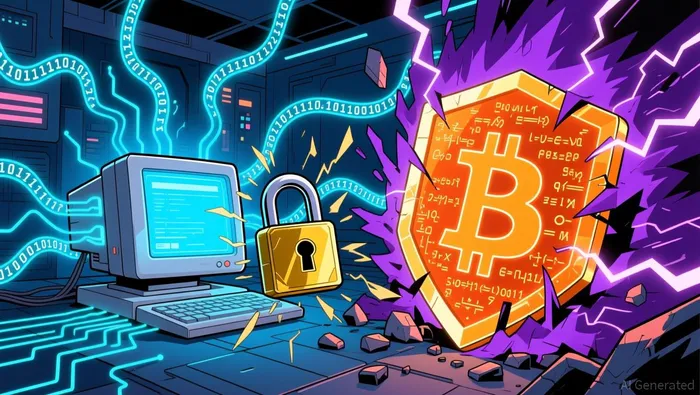
Meanwhile, Bitcoin's future faces challenges such as quantum computing, which could disrupt its cryptographic security unless a major upgrade is implemented as experts warn. The success of this upgrade depends on coordination among developers, exchanges, and custodians. Additionally, Bitcoin will contend with growing competition from privacy-focused cryptocurrencies like ZcashZEC-- according to industry analysis.
In the fintech sector, PayPal has launched its stablecoin, PYUSD, and is expanding its crypto team to support its broader digital asset strategy as reported. Stripe is also rolling out Tempo, its own layerLAYER-- 1 blockchain, and is partnering with Paradigm to compete with EthereumETH-- and SolanaSOL-- according to industry reports. Klarna and Revolut are also strengthening their crypto operations, highlighting the sector's growing importance according to market analysis.
Could Government Buying Signal a Market Inflection Point for Bitcoin?
Cathie Wood views potential government purchases of Bitcoin as a significant market inflection point, especially as Bitcoin's supply tightens according to analysis. This shift could reinforce the scarcity narrative that has historically driven Bitcoin's price dynamics. The U.S. government's involvement could also normalize Bitcoin's role as a digital store of value, particularly if purchasing is tied to long-term national strategy as reported.
Such strategic buying could also influence institutional and retail perceptions of Bitcoin. If the government positions Bitcoin as a strategic asset, it may encourage broader adoption and investment, particularly in markets with crypto-friendly regulations according to market analysts.
However, the timeline and scale of government purchases remain unclear. While the administration has already created a reserve, there is no public timeline for how much Bitcoin it will acquire or how this will impact the broader market as noted in reports.
What Risks Loom Over Bitcoin's Long-Term Viability?
Quantum computing represents one of the most significant risks for Bitcoin's long-term security according to experts. If a sufficiently powerful quantum computer is developed, it could potentially break the cryptographic algorithms that underpin Bitcoin's security. This would necessitate a major upgrade to Bitcoin's codebase to implement post-quantum cryptography as analysis indicates.
The success of such an upgrade depends heavily on coordination among key stakeholders in the Bitcoin ecosystem according to industry reports. Any delays or failures in this process could erode confidence in Bitcoin's security, particularly among institutional investors. While no quantum computer capable of breaking Bitcoin's encryption currently exists, the threat is real and could become more urgent in the coming years according to security experts.
In addition to quantum risks, Bitcoin faces growing competition from privacy-focused cryptocurrencies like Zcash as industry analysis shows. These alternatives offer enhanced privacy features and could attract users looking for greater anonymity. While Bitcoin is expected to remain a dominant store of value, its market share could be challenged if it fails to address these threats according to market projections.
How Is the Travel Industry Leveraging Crypto and Blockchain?
The travel industry is rapidly adopting crypto and blockchain technologies to enhance cross-border payments and reduce transaction costs according to industry reports. Travelers are increasingly using digital currencies to pay for flights, hotels, and other services without relying on traditional banking infrastructure as observed.
Cryptocurrency-friendly destinations such as El Salvador, Portugal, and Thailand are marketing themselves as gateways to a decentralized travel economy according to travel industry analysis. These regions are embracing Bitcoin and other digital assets as a means of attracting digital nomads and crypto enthusiasts. Hotels, airlines, and tourism boards are also experimenting with NFT-based loyalty programs and digital IDs as reported.
Blockchain is also being used to streamline travel-related processes such as identity verification and visa applications according to industry reports. This could reduce bureaucratic hurdles and improve access to travel for a broader audience. For now, the most immediate impact of crypto in travel is its ability to enable instant, low-fee transactions as noted.
What Are the Key Takeaways for Investors in 2026?
Bitcoin's role in national strategy, potential quantum risks, and competition from privacy-focused cryptocurrencies all have implications for investors in 2026 according to market analysis. While the U.S. government's potential buying strategy could reinforce Bitcoin's scarcity narrative, it also introduces uncertainty about the scale and timing of such purchases as reported.
Investors must also consider the long-term security risks posed by quantum computing and the growing competition from alternative digital assets according to expert analysis. Despite these challenges, Bitcoin is expected to retain its value and continue to attract institutional interest according to industry forecasts.
Finally, the growing adoption of crypto in the travel and fintech sectors suggests that Bitcoin's use cases are expanding beyond its role as a store of value as industry reports indicate. This diversification could provide additional support for Bitcoin's price in the long term according to market analysis.

Blending traditional trading wisdom with cutting-edge cryptocurrency insights.
Latest Articles
Stay ahead of the market.
Get curated U.S. market news, insights and key dates delivered to your inbox.




Comments
No comments yet