
Bitcoin Explained: What It Is and Why It's Volatile in 2026
 Aime Summary
Bitcoin is a decentralized digital currency that operates without a central authority, making it inherently volatile. Bitcoin's price has dropped significantly in 2026, with prices falling below $64,000, driven by macroeconomic factors, reduced liquidity, and a shift in investor sentiment. Bitcoin's role as a digital currency has diminished in favor of stablecoins for everyday use, and institutional investors are pulling back, with spot BitcoinBTC-- ETFs experiencing substantial outflows.
In the past few months, Bitcoin has been the subject of growing uncertainty and volatility, with prices dropping below $64,000 as of February 2026. The cryptocurrency, once seen as a revolutionary alternative to traditional finance, now faces a reckoning as its value fluctuates wildly and questions arise about its long-term viability. This drop has been driven by a range of factors—macroeconomic pressures, reduced liquidity, and a broader reassessment of Bitcoin's place in the financial ecosystem. Understanding Bitcoin and its place in a modern portfolio is more important than ever for investors who are trying to navigate the uncertainty of the current market environment.
What Is Bitcoin and How Does It Work?
Bitcoin is a decentralized digital currency that operates on a technology known in the article. Unlike traditional fiat currencies, Bitcoin is not controlled by any central authority like a government or a central bank. Instead, it is maintained by a global network of computers that validate transactions and ensure the integrity of the system. Transactions are recorded on a public ledger, and the process of validating these transactions—known as mining—is incentivized through rewards in Bitcoin. This decentralized nature is one of the key appeals of Bitcoin for those seeking financial autonomy. However, it also makes the cryptocurrency highly susceptible to volatility, as prices are driven largely by supply and demand from buyers and sellers according to market analysis.
The supply of Bitcoin is capped at 21 million coins, a design feature that mimics the scarcity of precious metals like gold. This scarcity is intended to preserve value over time, and the process of "halving"—where the number of new Bitcoin awarded to miners is reduced by half every four years—further supports this goal. However, in practice, Bitcoin's price has been anything but stable, and the recent plunge in value has raised questions about its role as a store of value or a long-term investment according to CNBC analysis.
What's Behind Bitcoin's Recent Price Drop?
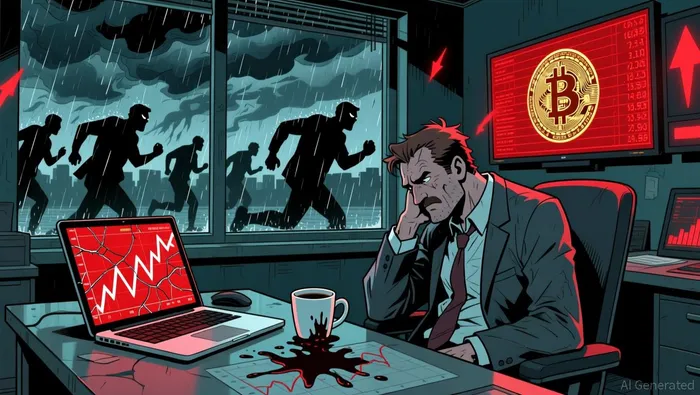
In early 2026, Bitcoin has experienced a dramatic drop in price, with some analysts estimating that it has lost more than half of its value from its October 2025 peak. This decline has been attributed to a combination of factors, including macroeconomic uncertainty, reduced liquidity in the market, and a broader reassessment of Bitcoin's utility as a digital currency. Institutional investors, who once showed interest in Bitcoin through the launch of spot ETFs in early 2024, have pulled back significantly, leading to outflows that have further pressured the price according to CNBC reporting.
The Trump administration's pro-crypto stance initially provided some support for Bitcoin, but that has not been enough to reverse the recent losses. Market participants are now bracing for further volatility, as liquidity has become thinner, meaning that even small trades can cause larger price swings. Analysts like Thomas Probst of Kaiko have noted that the reduced liquidity translates into sharper and more erratic price movements, making it even harder for investors to predict the direction of the market according to Reuters reporting.
Should Investors Consider Bitcoin as a Long-Term Holding?
For many investors, the recent decline in Bitcoin's price has raised questions about whether the cryptocurrency still has a place in their portfolios. While some still believe in its long-term potential as a store of value, others are treating it with increasing caution. Financial advisors like Vered Frank and Douglas Boneparth have emphasized that Bitcoin should be treated as a high-risk, high-volatility asset and should not make up a large portion of a diversified portfolio. Frank suggests that a 1% to 5% allocation could be appropriate for investors who are comfortable with the risks according to CoinShares analysis.
The recent price action has also highlighted the speculative nature of Bitcoin investing. Unlike traditional assets like stocks or bonds, which generate income or cash flow, Bitcoin's value is based almost entirely on price appreciation and investor sentiment. This means that Bitcoin can rise or fall sharply in response to changes in market conditions, regulatory developments, or macroeconomic factors. For investors who are considering Bitcoin as a long-term holding, it is important to understand that volatility is a defining feature of the asset and that it should not be treated as a core part of most investment strategies according to Bloomberg reporting.

Manténgase al tanto de las noticias de Wall Street en tiempo real.
Latest Articles
Stay ahead of the market.
Get curated U.S. market news, insights and key dates delivered to your inbox.


AInvest
PRO
AInvest
PRO



Comments
No comments yet