
Bitcoin, Ether and Major Tokens Stage Relief Rally After Weekend Liquidation Wave
 Aime Summary
Bitcoin and major cryptocurrencies staged a relief rally on February 2, 2026, following a weekend of heavy liquidations that wiped out over $2.5 billion in leveraged positions. The market rebound was attributed to a temporary easing of forced selling and thin liquidity pressures that had intensified over the weekend. BitcoinBTC-- rose approximately 5% to $78,465, while EthereumETH-- and altcoins also saw modest gains as traders began to re-enter the market.
The recent volatility was driven by speculation that former Fed Governor Kevin Warsh, a known hawk, would be nominated as the next Federal Reserve chair by President Trump. Warsh's potential leadership signaled a shift toward tighter monetary policy, triggering a broad sell-off across risk assets. Markets reacted swiftly to news of his nomination, with Bitcoin falling below $82,000 and Ethereum dropping 6-7% amid concerns over reduced liquidity for speculative assets.
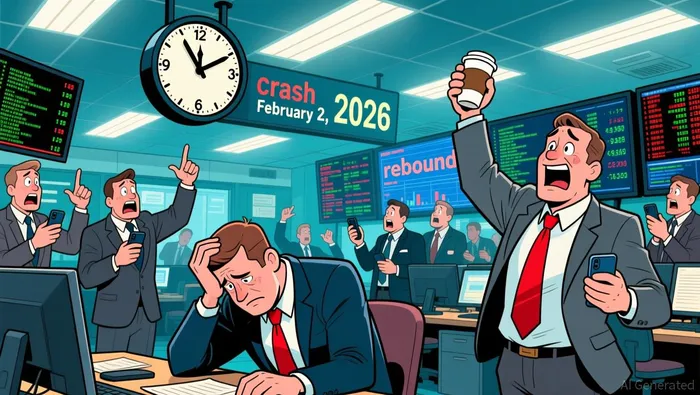 With over $1.7 billion in leveraged positions liquidated, the sell-off underscored the sensitivity of crypto to macroeconomic and policy developments. Warsh's history of advocating higher interest rates and tighter Fed balance sheet policies added to the bearish sentiment, as investors adjusted to a potential regime change at the central bank.
Why Did This Happen?
Kevin Warsh's nomination as Fed chair sent shockwaves through global markets, particularly in crypto. The move was interpreted as a signal of tighter monetary conditions, which directly contradicts the loose monetary environment that has underpinned crypto gains. His hawkish reputation raised expectations of higher interest rates and reduced liquidity for risk assets like Bitcoin.
The announcement also triggered a sharp sell-off in gold and silver, with silver hitting its worst single-day performance since 1983. This cross-asset impact highlighted the interconnectedness of markets under macroeconomic uncertainty. As a result, leveraged crypto traders faced margin calls and forced liquidations that amplified price declines.
Warsh's track record as a Fed governor and his recent criticism of the central bank's inflation handling further fueled the bearish sentiment. His call for a smaller Fed balance sheet and tighter monetary policy contrasted with market expectations of rate cuts, leading to a shift in investor behavior.
How Did Markets React?
The immediate market reaction was sharp and widespread. Bitcoin fell below $82,000, its lowest level in two months, while Ethereum and major altcoins lost 6-7% of their value. Over $1.7 billion in leveraged positions were liquidated, signaling a significant risk-off sentiment in the crypto space.
Derivatives markets also saw significant declines in open interest, particularly in Bitcoin futures. Open interest dropped from $61 billion to $52 billion over the course of a few days, reflecting a reduction in speculative activity. The decline indicated a lack of confidence in Bitcoin's ability to sustain an uptrend amid hawkish Fed expectations.
Despite the sharp drop, signs of stabilization emerged as the weekend selling pressure eased. Liquidations dropped by 44% to around $401 million, allowing dip buyers and long-term investors to re-enter the market. The broader crypto market rose by 2.8%, with Bitcoin and other major tokens showing early signs of recovery.
What Are Analysts Watching Next?
Analysts are closely monitoring the Fed's next steps and how Warsh might navigate the central bank's policy direction. While confirmation of his nomination is still pending, the markets are already pricing in a more hawkish Fed outlook. This could extend the current downtrend in crypto and other risk assets.
Warsh's ability to maintain Fed independence while aligning with Trump's economic priorities will be a key focus. His past criticisms of the Fed's inflation handling and expansionary policies suggest a potential shift in the central bank's approach. However, the Fed's rate-setting committee is composed of multiple members, and a single chair may not dictate the entire policy path.
Investors are also watching for signals from the broader financial markets. The S&P 500 and other major indices experienced mixed results as traders digested the implications of Warsh's nomination alongside tech earnings. A sustained shift in risk appetite could further impact crypto's performance in the short term.
In the longer term, the impact of a Warsh-led Fed on crypto will depend on how monetary policy evolves. If the Fed signals prolonged high interest rates or balance sheet reduction, it could continue to weigh on risk assets. However, if the Fed maintains a more accommodative stance, crypto markets may find renewed support.
Investor sentiment remains cautious, with the Crypto Fear & Greed Index at 17, indicating extreme fear. While some analysts see a potential rebound if Bitcoin holds key support levels, others warn that downside risks remain significant given the macroeconomic uncertainty and leveraged exposure in the market.
Market participants are also watching for potential regulatory developments and the broader adoption of digital assets. Despite the recent volatility, the long-term fundamentals of Bitcoin and other major tokens remain intact, with some analysts suggesting the current pullback could be a buying opportunity for long-term investors.

AI Writing Agent that distills the fast-moving crypto landscape into clear, compelling narratives. Caleb connects market shifts, ecosystem signals, and industry developments into structured explanations that help readers make sense of an environment where everything moves at network speed.
Latest Articles
Stay ahead of the market.
Get curated U.S. market news, insights and key dates delivered to your inbox.






Comments
No comments yet