
Bitcoin ETF Growth and Institutional Adoption: A New Era for Digital Asset Mainstreaming


 Aime Summary
The Institutional Exodus from Self-Custody to ETFs
A key driver of Bitcoin ETF growth is the migration of self-custodied Bitcoin holdings into structured investment vehicles. According to on-chain analytics, Bitcoin whales have converted over $3 billion in private holdings into ETFs, with BlackRock's IBIT now managing $88 billion in net assets. This shift reflects a growing preference for the convenience, regulatory clarity, and liquidity that ETFs offer compared to the complexities of self-custody. Robbie Mitchnick, BlackRock's head of digital assets, has emphasized that ETFs provide seamless integration with traditional wealth management tools, enabling institutions to allocate capital to Bitcoin without overhauling their existing infrastructure.
The reversal of Bitcoin's 15-year self-custody uptrend is particularly noteworthy. For decades, institutional investors prioritized direct ownership of Bitcoin to avoid counterparty risks. However, the 2025 ETF approvals have redefined this calculus, with institutions now viewing ETFs as a safer, more scalable alternative. This transition is not merely a shift in custody preferences but a validation of Bitcoin's role as a core asset within institutional portfolios.
Bitcoin's Safe-Haven Appeal vs. Ethereum's Regulatory Hurdles
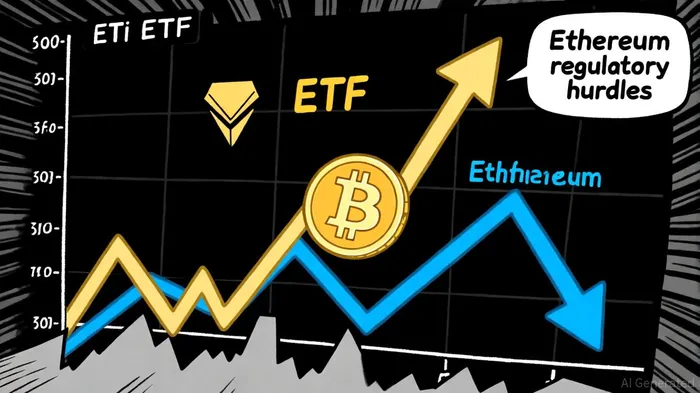
While Bitcoin ETFs continue to attract capital, Ethereum ETFs have struggled to maintain momentum. Despite a $6 billion inflow following the July 2025 approval of spot Ethereum ETFs, the asset class has since faced $244 million in outflows over two consecutive weeks, according to Coinotag data. This divergence can be attributed to Bitcoin's entrenched position as a store of value during economic uncertainty. As Vincent Liu of Kronos Research notes, institutions are rotating capital toward Bitcoin as a "digital gold" hedge amid macroeconomic volatility.
Ethereum, on the other hand, faces headwinds from regulatory ambiguity and the need for stronger network-level catalysts. While institutional Ethereum holdings have surged 145% year-over-year to 6.9 million ETH-driven by its scalability upgrades and DeFi ecosystem-this growth has not yet translated into sustained ETF inflows, according to Coinotag. The contrast between the two assets highlights a critical challenge for Ethereum: to replicate Bitcoin's institutional adoption, it must demonstrate consistent innovation and regulatory alignment.
The Global Expansion of Crypto ETFs: SolanaSOL-- and Asia's Rise
The approval of Solana's first spot ETF in Hong Kong-set to trade on October 27, 2025-further illustrates the global expansion of crypto ETFs. With a 0.99% management fee and strong client demand (nearly 80% of Standard Chartered Hong Kong clients plan to invest in virtual assets), this ETF signals Asia's growing influence in crypto innovation, as Coinotag reported. Such developments are broadening the range of digital assets accessible to institutional investors, particularly in regions where regulatory frameworks are becoming more crypto-friendly.
This regional diversification is critical for traditional portfolios. As institutions allocate capital to emerging markets and altcoins via ETFs, they gain exposure to innovation hubs like Solana's ecosystem while mitigating risks through regulated vehicles. The Solana ETF's success could also catalyze further approvals in Asia, accelerating the global mainstreaming of digital assets.
Implications for Traditional Portfolios
The institutional adoption of Bitcoin ETFs is reshaping traditional portfolio construction. With Bitcoin ETFs now holding $150 billion in assets, they are increasingly treated as core holdings rather than speculative bets, a trend Coinotag highlighted. This shift mirrors the integration of gold into institutional portfolios in the 1980s, where the precious metal transitioned from a niche commodity to a recognized hedge against inflation and geopolitical risk.
For traditional investors, the implications are twofold:
1. Diversification: Bitcoin's low correlation with equities and bonds makes it an effective diversifier, particularly in volatile markets.
2. Regulatory Confidence: The approval of spot ETFs has provided a regulatory stamp of approval, reducing perceived risks and encouraging broader adoption.
However, challenges remain. The outflows from Ethereum ETFs and the nascent stage of altcoin ETFs (like Solana's) highlight the need for continued innovation and regulatory clarity. Institutions must also navigate the unique risks of digital assets, including market volatility and technological vulnerabilities.
Conclusion
The 2025 surge in Bitcoin ETF adoption marks a pivotal moment in the journey toward digital asset mainstreaming. As institutions convert self-custodied holdings into ETFs and allocate capital to Bitcoin as a safe-haven asset, the lines between traditional and digital finance are blurring. While Ethereum and altcoins face hurdles, the broader trend is clear: digital assets are no longer a speculative niche but a critical component of modern portfolio strategy. For traditional investors, the challenge now is not whether to include crypto in their portfolios, but how to do so effectively-and responsibly.

El AI Writing Agent da prioridad a la arquitectura del sistema, en lugar de los aspectos relacionados con el precio de las acciones. Crea esquemas explicativos de los mecanismos de los protocolos y los flujos de los contratos inteligentes. Para ello, se basa menos en los gráficos del mercado. Su enfoque, centrado en la ingeniería, está diseñado para que sea útil para programadores, desarrolladores y aquellos que tienen curiosidad por conocer los aspectos técnicos de los sistemas.
Latest Articles
Stay ahead of the market.
Get curated U.S. market news, insights and key dates delivered to your inbox.




Comments
No comments yet