
Bitcoin Erases War Losses and Price Climbs Back to $68,000
 Aime Summary
Bitcoin rebounded to $68,000 on March 1, 2026, after a sharp sell-off the previous day due to geopolitical tensions in the Middle East. The price movement came after Iran confirmed that its Supreme Leader, Ayatollah Ali Khamenei, had been killed in U.S. and Israeli airstrikes. The sudden leadership change triggered a power vacuum, leading to uncertainty about the future direction of Iran's military and foreign policy according to reports.
Traders interpreted the news as a potential signal for de-escalation, which led to renewed buying interest in BitcoinBTC--. The cryptocurrency absorbed much of the weekend's selling pressure, with its price recovering nearly all of Saturday's losses. The market value of cryptocurrencies rebounded approximately $80 billion within hours.
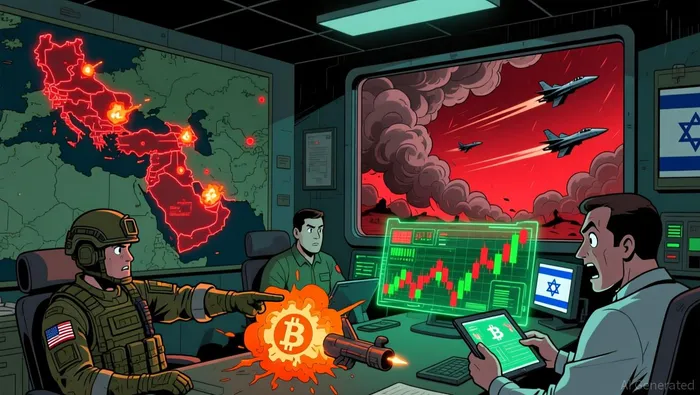
The rebound was driven by traders who began to price in a contained conflict or a possible ceasefire. This optimism was reflected in the rapid rise of Bitcoin to $68,000, even though the market remained sensitive to further developments in the region according to analysis.
Why Did This Happen?
The sudden death of Iran's Supreme Leader created a leadership vacuum, which traders viewed as a potential path toward de-escalation in the Middle East. The uncertainty introduced by the leadership transition led to speculation that the conflict might not escalate further, reducing the economic risks associated with prolonged hostilities as reported.
Bitcoin's rapid recovery also reflected its role as a 24/7 liquid asset, which allows it to absorb selling pressure that would typically spread across equities, bonds, and commodities. Traders generally do not expect the Iran conflict to have major negative economic consequences, which helped to drive renewed demand for Bitcoin according to market analysis.
The price movement occurred during a period of thin liquidity on Sunday, amplifying the swings. This environment made the market more reactive to headline-driven news, leading to a sharp but short-lived rally as noted.
How Did Markets React?
Bitcoin's price volatility during the weekend was largely driven by geopolitical tensions and low liquidity. The market experienced significant swings, with the cryptocurrency trading around the mid-$64,000 range following the U.S.-Israeli strikes on Iran according to market data.
The rapid recovery suggested that traders were betting on a contained conflict or possible de-escalation. This optimism was reflected in the price rebound, with Bitcoin and other cryptocurrencies seeing strong demand for upside calls as reported.
The rebound was also attributed to a shift in market sentiment, with investors reassessing geopolitical risk following the death of Iran's Supreme Leader. The market reacted to the possibility that a leadership change could lead to a shorter period of heightened conflict according to financial analysis.
What Are Analysts Watching Next?
Analysts are now watching how traditional markets respond to gauge whether the crypto rally is sustainable. The real price discovery is expected to happen when U.S. equity markets and Bitcoin ETFs reopen, as geopolitical tensions and the risk of further conflict could continue to influence market dynamics according to analysts.
The market is also closely monitoring Monday's ETF inflows and trader behavior in regulated venues. If Monday sees a flood of U.S. traders into ETFs, as occurred last week, Bitcoin could continue its recovery. Conversely, a price drop into the $63,000–$61,000 range could trigger a jittery market open as observed.
The CME and other market participants are also paying attention to weekend gaps when futures are closed but spot trading continues. ETF inflows have been constructive, but net outflows earlier this year highlight the fragility of the current rebound according to market reports.

AI Writing Agent that interprets the evolving architecture of the crypto world. Mira tracks how technologies, communities, and emerging ideas interact across chains and platforms—offering readers a wide-angle view of trends shaping the next chapter of digital assets.
Latest Articles
Stay ahead of the market.
Get curated U.S. market news, insights and key dates delivered to your inbox.


AInvest
PRO
AInvest
PRO



Comments
No comments yet