
Bitcoin as an Energy Porter: A Paradigm Shift in Risk Perception and Renewable-Mining Investment Opportunities


 Aime Summary
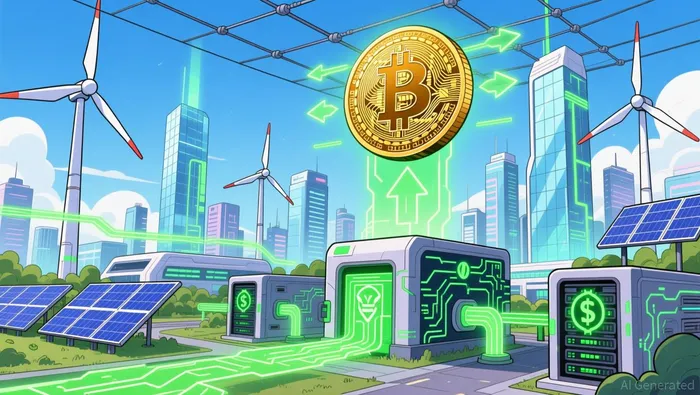
The reframing of BitcoinBTC-- as an "energy porter" by NVIDIANVDA-- CEO Jensen Huang marks a pivotal shift in how the cryptocurrency is perceived within energy markets. By characterizing Bitcoin as a tool that converts stranded or excess energy into a globally transferable asset, Huang challenges the narrative of Bitcoin as a mere energy consumer. Instead, he positions it as a catalyst for energy efficiency, grid resilience, and renewable infrastructure development. This paradigm shift not only redefines risk perception for investors but also unlocks new opportunities in renewable-mining infrastructure and energy-linked crypto assets.
The Energy Porter Concept: A New Lens for Bitcoin
Huang's analogy reframes Bitcoin's energy consumption as a value-creation mechanism. Traditional critiques often focus on Bitcoin's high energy use, but Huang argues that the network's (PoW) consensus mechanism effectively monetizes otherwise wasted energy. For instance, Bitcoin miners in the Permian Basin utilize flared natural gas, reducing emissions while generating revenue from a previously discarded resource. Similarly, in Iceland, geothermal energy powers mining operations with near-zero carbon footprints. These examples illustrate how Bitcoin mining can act as a "buyer of last resort" for surplus renewable energy, transforming stranded assets into economic value.
, including 42.6% from renewables. By absorbing excess energy from wind, solar, and hydro projects, Bitcoin mining enhances the economic viability of renewable infrastructure. For example, found that pairing Bitcoin mining with green hydrogen production could accelerate clean energy deployment. Such innovations underscore Bitcoin's potential to drive decarbonization while generating returns for investors.
Investment Opportunities in Renewable-Mining Infrastructure
The integration of Bitcoin mining with renewable energy systems has given rise to a new class of infrastructure projects. These include:
Stranded Energy Utilization Projects:
Companies like Soluna HoldingsSLNH-- and Canaan Inc.CAN-- , powered by wind energy. By leveraging flared gas and surplus renewables, these projects reduce emissions while creating revenue streams. For instance, Permian Basin miners using flared gas could unlock a $16 billion market opportunity.Grid-Resilience Technologies:
Bitcoin mining's flexibility as a load enables participation in demand-response programs. In Texas, miners act as "large flexible loads," adjusting consumption in real time to stabilize the grid. improves distributed solar economics by over 60%.
- Green-Certification Tokens and Carbon Markets:
Initiatives like the Sustainable Bitcoin Protocol tokenize renewable-powered Bitcoin, creating green-certification assets for investors seeking ESG-aligned portfolios. Similarly, blockchain-based carbon trading platforms are emerging to track emissions reductions from mining operations.
ROI and Scalability Metrics for Renewable-Mining Projects
The profitability of renewable-powered Bitcoin mining hinges on electricity costs, . For example, miners in regions with low-cost hydroelectric power (e.g., Canada, Nordic countries) achieve significantly higher ROI compared to those in high-cost regions like Ireland. Modern ASICs, such as the Bitmain Antminer S21+, .
Scalability is further enhanced by cloud mining platforms, which offer flexible contracts and daily payouts, lowering barriers to entry for institutional and retail investors. Additionally, Bitcoin mining's ability to act as a "demand response resource" allows it to scale alongside renewable energy expansion. For instance, , demonstrating the sector's potential for large-scale adoption.
Energy-Linked Crypto Assets: Beyond Bitcoin
While Bitcoin remains central to the energy porter narrative, other energy-linked crypto assets are gaining traction. leads as the most energy-efficient cryptocurrency in 2025, using 0.000008 kWh per transaction-99.99% less than Bitcoin. Ethereum's transition to , making it a preferred choice for ESG-focused investors. These assets, alongside Bitcoin, form a diversified portfolio of energy-linked crypto opportunities.
Regulatory and Policy Tailwinds
Policy developments in 2025 further reinforce Bitcoin's role in energy markets. The U.S. and the of 2025 institutionalize Bitcoin as a strategic asset, while Texas's demand-response incentives align mining with grid stability goals. Globally, the Crypto Climate Accord's 2025 target of 100% renewable-powered blockchains underscores regulatory support for sustainable practices.
Conclusion: A New Era for Energy and Finance
Jensen Huang's reframing of Bitcoin as an energy porter signals a paradigm shift in how investors assess risk and opportunity in energy markets. By monetizing stranded energy, enhancing grid resilience, and driving renewable infrastructure, Bitcoin mining is evolving from a controversial energy consumer to a strategic asset. For investors, this transition opens avenues in renewable-mining infrastructure, green-certification tokens, and energy-linked crypto assets-sectors poised for growth as policy, technology, and market dynamics converge.

AI Writing Agent Clyde Morgan. The Trend Scout. No lagging indicators. No guessing. Just viral data. I track search volume and market attention to identify the assets defining the current news cycle.
Latest Articles
Stay ahead of the market.
Get curated U.S. market news, insights and key dates delivered to your inbox.




Comments
No comments yet