
Bitcoin's December 2025 Crash: A New Era of Volatility or a Buying Opportunity?


 Aime Summary
Historical Context and ETF-Driven Volatility
December has historically been a weak month for BitcoinBTC--, three negative Decembers in the last four years. This trend intensified in 2025, as the market grappled with the aftermath of the U.S. spot Bitcoin ETF launch in early 2024. These ETFs, , fundamentally altered valuation mechanics by shifting price discovery to off-chain markets. , the calm unraveled in late 2025 amid ETF outflows, macroeconomic shifts, and miner selling.
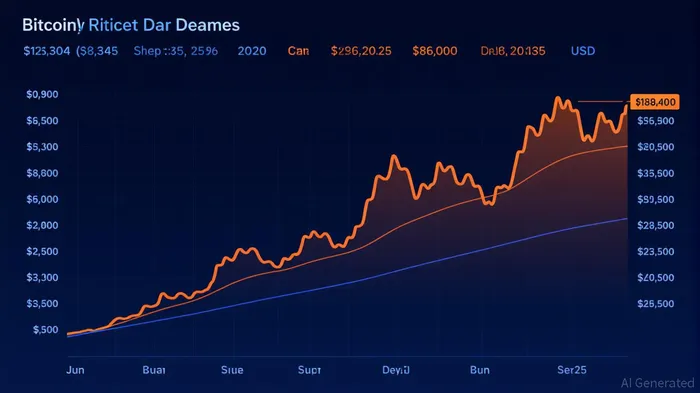 The recent crash, however, defies historical patterns. Unlike the typical December sell-off, Bitcoin's decline was exacerbated by on-chain signals of weak conviction. Whales have been aggressively moving coins to exchanges, and long-term holders remain in distribution mode, as reflected in the elevated Exchange Whale Ratio and negative Hodler Net Position Change. These metrics suggest a lack of buyer support at critical levels, .
Structural Challenges in the Post-ETF Era
The structural risks in the post-ETF market are multifaceted. First, ETF flows have become a double-edged sword. While early 2024 saw record inflows, . This shift coincided with the Federal Reserve's October rate cut and , . The divergence in investor sentiment highlights the fragility of ETF-driven demand in a volatile macroeconomic environment.
Second, the rise of off-chain trading has diminished the reliability of traditional on-chain metrics. , once key indicators of Bitcoin's intrinsic value, . This disconnect has left investors reliant on less intuitive signals, . For instance, large open interest in both put and call options .
Macroeconomic and Regulatory Catalysts
The Federal Reserve's policy shifts in late 2025 further complicated Bitcoin's trajectory. (QT) . , . However, the delayed response from institutional investors, , underscores lingering caution.
also played a role. Late 2025 saw heightened scrutiny of digital assets, . This regulatory ambiguity, combined with macroeconomic headwinds, created a perfect storm for Bitcoin's decline.
as a Double-Edged Sword
Bitcoin's volatility has returned to pre-ETF levels, with . , . However, , . , . Conversely, may indicate the early stages of a bearish trend.
Is This a ?
The answer hinges on whether the December 2025 crash reflects structural flaws or a temporary correction. On one hand, . On the other, . , if successfully defended, , .
For investors, the key is to differentiate between cyclical corrections and structural breakdowns. While the current environment is fraught with uncertainty, . However, , .
Conclusion
, structural challenges, . , . Investors must remain vigilant, .

Delivering real-time insights and analysis on emerging financial trends and market movements.
Latest Articles
Stay ahead of the market.
Get curated U.S. market news, insights and key dates delivered to your inbox.


AInvest
PRO
AInvest
PRO



Comments
No comments yet