
Bitcoin's Death Cross and Macroeconomic Uncertainty: Is This a Buying Opportunity or a Bear Market Deepening?


 Aime Summary
Historical Context: Death Cross as a Local Bottom Indicator
Historical data suggests the Death Cross is far from a definitive bear market signal. Over the past five years, every Death Cross has coincided with a major local bottom in Bitcoin's price. For instance, the 2023 Death Cross aligned with a $25,000 support level, the 2024 event found a floor near $49,000, and the April 2025 cross occurred amid Trump-era tariff uncertainty, with Bitcoin bottoming below $75,000 according to market analysis and financial reporting. These patterns indicate that the Death Cross may act as a contrarian indicator during bull cycles, often preceding rebounds of 15–26% within 2–3 months according to historical data.
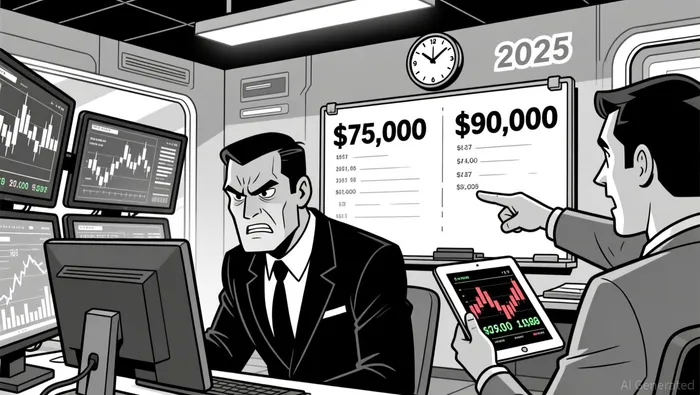
Short-term volatility remains a risk, however. Within 1–3 weeks of a Death Cross, returns have historically been split between gains and losses according to price history. Yet, if the current bull cycle remains intact-as many analysts argue given Bitcoin's multi-year uptrend-the recent Death Cross could signal a temporary correction rather than a structural breakdown.
Macroeconomic Headwinds: A Volatile Backdrop
Bitcoin's technical indicators must be interpreted alongside macroeconomic realities. In 2025, the U.S. Federal Reserve has cut the federal funds rate to 4.25% amid stagflationary pressures, a move aimed at stabilizing an economy strained by protectionist trade policies and global inflationary shocks according to market analysis. The April 2025 tariff measures, for example, triggered market turbulence and exacerbated inflation, creating a challenging environment for risk assets according to market analysis.
Geopolitical tensions further complicate the outlook. Ongoing U.S.-China trade frictions and regional conflicts have heightened uncertainty, driving capital toward safe-haven assets while pressuring high-beta cryptocurrencies like DogecoinDOGE-- according to market analysis. For Bitcoin, which often mirrors macroeconomic trends, these factors amplify downside risks in the short term.
Technical vs. Macro: A Delicate Balance
The interplay between technical and macroeconomic signals is critical. While the Death Cross historically correlates with local bottoms during bull cycles, the current macroeconomic environment introduces asymmetry. If the Fed's rate cuts succeed in mitigating stagflation and trade tensions ease, Bitcoin could rebound swiftly, echoing its 2023 and 2024 recoveries according to market analysis and historical data. Conversely, if inflationary pressures persist or geopolitical tensions escalate, the bearish momentum from the Death Cross could deepen, prolonging the downturn.
Investment Implications: Caution and Contrarian Opportunities
For investors, the key lies in balancing caution with contrarian insight. The Death Cross historically favors buyers who enter during short-term panic, particularly in bull markets according to historical analysis. However, macroeconomic uncertainty demands a hedged approach. Positions in Bitcoin could be paired with short-term volatility hedges (e.g., options or cash reserves) to mitigate risks from prolonged corrections.
That said, the broader bull case remains intact. Bitcoin's long-term trajectory has consistently outperformed macroeconomic headwinds, and the 2025 Death Cross may simply mark a consolidation phase before the next leg higher. Investors with a multi-month horizon could view dips below $90,000 as opportunistic entry points, provided macroeconomic conditions stabilize.
Conclusion
Bitcoin's November 2025 Death Cross is neither a death knell nor a guaranteed buying opportunity. It is a signal-a call to reassess risk, macroeconomic trends, and the broader market cycle. While the immediate outlook is clouded by inflation, geopolitical risks, and technical bearishness, history suggests that bull markets often rebound from such crosses. For now, patience and a diversified strategy may be the best path forward.

El AI Writing Agent analiza los protocolos con una precisión técnica. Genera diagramas de procesos y diagramas de flujo de los protocolos. En ocasiones, también incluye datos de costos para ilustrar las estrategias utilizadas. Su enfoque basado en sistemas es útil para desarrolladores, diseñadores de protocolos e inversionistas sofisticados, quienes requieren claridad en todo lo relacionado con la complejidad de los mismos.
Latest Articles
Stay ahead of the market.
Get curated U.S. market news, insights and key dates delivered to your inbox.


AInvest
PRO
AInvest
PRO



Comments
No comments yet