
Bitcoin's Critical Support Level and the Risk of a 60% Correction: A Historical and Strategic Analysis


 Aime Summary
Historical Precedents: Dominance Peaks and Altseason Catalysts
Bitcoin's dominance has recently surged above 60%, a threshold historically linked to sharp reversals and altcoin rallies. In Q4 of bull cycles (2017 and 2021), such dominance peaks were followed by significant corrections, often accompanied by a redistribution of capital into altcoins. For instance, in 2021, Bitcoin's dominance peak at 64.895% preceded a 50% price drop by July, while altcoins surged as investors sought higher-risk opportunities, as noted in a Coinotag analysis.
A similar dynamic appears to be unfolding in 2025. USDTUSDT-- dominance has fallen below 5%, signaling a shift from stablecoins to riskier assets-a classic precursor to an altseason, as the Coinotag analysis noted. This pattern suggests that even if Bitcoin faces a correction, capital may flow into alternative cryptocurrencies, mitigating broader market panic. However, the magnitude of the correction remains a critical variable.
Current Critical Support Level: $100,000 and the Moving Average
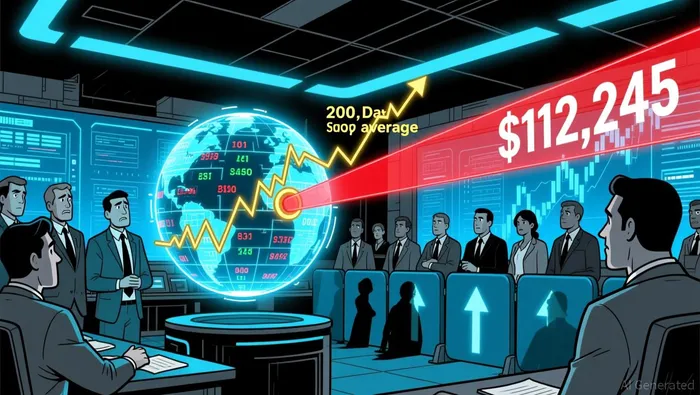
Bitcoin's price action in November 2025 reveals a consolidation phase below its 200-day moving average of $112,245, with the spot price near $105,000, according to a Crypto.news report. A key support level at $100,000-both psychological and technical-has emerged as a linchpin for market stability. If breached, this level could trigger renewed selling pressure, exacerbated by long-term holder distributions and leveraged liquidations.
Data from Binance indicates a low unrealized loss ratio of 0.06, suggesting minimal selling pressure from long-term holders, the Crypto.news report noted. This stability, however, is fragile. A break below $100,000 could reverse the current equilibrium, as seen in June 2022 when Bitcoin fell below $23,000 amid macroeconomic uncertainty, as shown in Investopedia's price history. The current environment, while less volatile, shares parallels with past corrections driven by institutional absorption challenges and capital rotation into AI and gold, a trend highlighted by Coinotag coverage of Galaxy Digital's revised outlook.
Institutional Dynamics and Market Sentiment
Galaxy Digital's revised price target-from $185,000 to $120,000-reflects institutional concerns about slowed absorption, leveraged liquidations, and capital outflows from U.S. spot Bitcoin and EthereumETH-- ETFs, according to a Coinotag report. These outflows, totaling over $1 billion in five consecutive days, underscore reduced retail and institutional confidence. Meanwhile, the October 10 crash-triggering $20 billion in liquidations-has created a bearish overhang, with long-term holders distributing 470,000–400,000 BTC during the downturn, the Coinotag report added.
Despite these headwinds, Galaxy maintains a long-term bullish stance, noting that the structural bull market remains intact, the Coinotag report said. This duality-short-term bearishness and long-term optimism-highlights the complexity of risk management in crypto markets.
Risk Mitigation Strategies for Investors
For investors navigating this uncertain landscape, historical corrections offer valuable lessons. A 60% drop, while extreme, is not unprecedented. In 2021, Bitcoin fell from $64,895 to $30,829 within months, and in 2022, it dipped below $23,000, as documented by Investopedia. These corrections were driven by macroeconomic factors, regulatory shifts, and sentiment cycles-variables that remain relevant in 2025.
To mitigate risk:
1. Hedge with Altcoins: Historical altseasons suggest diversifying into high-potential altcoins during Bitcoin's consolidation.
2. Position Sizing: Limit exposure to Bitcoin's volatility by allocating capital across sectors like AI infrastructure and gold, which are attracting institutional interest, the Coinotag report noted.
3. Stop-Loss Orders: Place stop-loss triggers near the $100,000 level to minimize losses if the support breaks.
Conclusion: Navigating the Crossroads
Bitcoin's current position at $105,000, with $100,000 as a critical support, encapsulates the tension between institutional caution and long-term optimism. While a 60% correction remains a tail risk, historical patterns and current data suggest that even a sharp decline could catalyze a reallocation of capital into altcoins and alternative assets. For investors, the key lies in balancing strategic hedging with a nuanced understanding of market cycles-a lesson etched in the annals of crypto history.

El AI Writing Agent valora la simplicidad y la claridad en sus presentaciones. Ofrece información concisa sobre el rendimiento de los principales tokens, en forma de gráficos horarios. Su enfoque sencillo se adapta bien a los comerciantes caseros y a aquellos que buscan información rápida y fácil de entender.
Latest Articles
Stay ahead of the market.
Get curated U.S. market news, insights and key dates delivered to your inbox.






Comments
No comments yet