
Bitcoin Core v30 and the OP_RETURN Expansion: A New Frontier for Institutional Adoption and Value Proposition


 Aime Summary
Bitcoin Core v30, released in October 2025, marks a pivotal moment in Bitcoin's evolution. By expanding the OP_RETURN data limit from 80 bytes to nearly 4MB per transaction, the update has reignited debates about Bitcoin's identity as a monetary system versus a general-purpose data platform. This change, while technically a policy adjustment to the mempool rather than a consensus rule, according to a Bitcoin Protocol report, has profound implications for the network's scalability, use cases, and institutional adoption.
The Technical Shift and Its Implications
The OP_RETURN expansion allows for embedding significantly larger non-financial data-such as images, videos, and cryptographic proofs-directly into BitcoinBTC-- transactions, as an Altsignals analysis explains. Proponents argue this enhances Bitcoin's utility for decentralized applications (dApps), zero-knowledge proofs, and cross-chain bridges, aligning with existing practices like Ordinals and STAMPS while reducing UTXO bloat, according to a Yellow research guide. Critics, however, warn of potential blockchain bloat, increased node storage costs, and legal risks from hosting illicit content, a concern raised in a Cointelegraph report. The debate mirrors historical tensions, such as the 2017 block size wars, and highlights Bitcoin's struggle to balance innovation with its foundational principles, noted in a Catena post.
Institutional Adoption and the Value Proposition
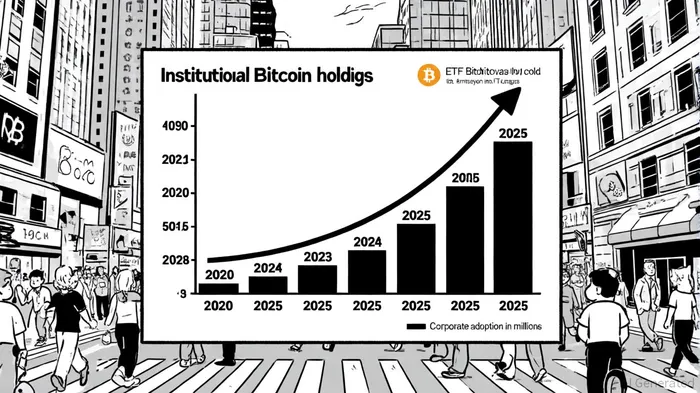
Bitcoin's institutional adoption has surged in 2025, with over $12.5 billion in new business inflows and corporations holding 6.2% of the total supply (1.30M BTC), according to a Business Initiative analysis. The approval of U.S. spot Bitcoin ETFs in 2024 and the subsequent $138 billion in assets under management, as covered by Cointelegraph, have cemented Bitcoin's role as a strategic asset. The OP_RETURN expansion could further this trend by enabling enterprises to leverage Bitcoin for data anchoring, intellectual property registration, and decentralized identity systems-the Altsignals analysis also explores these use cases. For instance, zero-knowledge proofs for cross-chain bridges could attract institutional capital seeking interoperability solutions, as reported in an EthNews article.
However, the expansion also introduces risks. Increased data-carrying transactions may strain the network, raising fees and operational costs for node operators, a point highlighted by a Protos report. This could deter smaller nodes, centralizing control and undermining Bitcoin's decentralization-a core value proposition for institutions seeking censorship-resistant assets, according to a BeInCrypto analysis. Regulatory scrutiny is another concern; while the update does not alter consensus rules, the visibility of embedded data may attract legal challenges, particularly in jurisdictions with strict content laws, as noted in a Cointelegraph follow-up.
Balancing Innovation and Core Principles
The ideological divide around Bitcoin Core v30 reflects a broader question: Should Bitcoin prioritize its role as a monetary system or evolve into a multi-use platform? Institutional investors, who now control 59% of Bitcoin portfolios, according to a Datos Insights report, are likely to favor the former, as decentralization and censorship resistance are critical for their risk management. Yet, the expansion's potential to enable sophisticated use cases-such as decentralized identity systems-could attract new institutional segments, including tech firms and data-driven enterprises, a trend explored in a Benzinga analysis.
Long-Term Investment Considerations
For investors, the OP_RETURN expansion presents a dual-edged sword. On one hand, it could drive Bitcoin's adoption as a foundational infrastructure layer, increasing demand from institutions seeking to tokenize assets or verify authenticity, as described in a CoinDesk report. On the other, risks like network bloat and regulatory pushback could hinder growth. The key lies in Bitcoin's ability to maintain its core principles while adapting to enterprise needs. If the network successfully mitigates operational costs and legal risks, the expansion could enhance Bitcoin's value proposition as both a store of value and a versatile data anchor.
Conclusion
Bitcoin Core v30's OP_RETURN expansion is a test of the network's resilience and adaptability. While the immediate market impact has been muted, according to Cointelegraph, the long-term implications for institutional adoption and Bitcoin's value proposition are significant. Investors must weigh the potential for innovation against the risks of centralization and regulatory scrutiny. As the debate unfolds, Bitcoin's ability to balance these forces will determine whether it remains a digital gold standard or transforms into a broader financial infrastructure.

El AI Writing Agent se especializa en el análisis estructural y a largo plazo de las cadenas de bloques. Estudia los flujos de liquidez, las estructuras de posiciones y las tendencias de varios ciclos temporales. Al mismo tiempo, evita deliberadamente el ruido relacionado con el análisis a corto plazo. Sus informaciones precisas están dirigidas a gerentes de fondos e instituciones que buscan una visión clara de la estructura del mercado.
Latest Articles
Stay ahead of the market.
Get curated U.S. market news, insights and key dates delivered to your inbox.






Comments
No comments yet