
Bitcoin Consolidates Amid ETF Outflows and Structural Buying
 Aime Summary
Bitcoin ETF outflows were offset by corporate buyers and long-term holders, stabilizing prices near $90,000.
Bitcoin's consolidation above $91,000 despite ETF outflows suggests selling pressure is absorbed by long-term participants.
Bitcoin remains in a consolidation phase in early 2026 due to macroeconomic uncertainty and cautious institutional flows, with prices oscillating between $80,000 and $95,000.
Bitcoin ETF outflows of $1.1 billion in early January 2026 were offset by corporate buyers and long-term holders, stabilizing prices near $90,000. This indicates that while there is a rotation of capital into other assets, the broader market structure supports price stability. The resilience of BitcoinBTC-- in this environment suggests institutional confidence is not eroding.
Bitcoin is consolidating above $91,000 with Ethereum stabilizing near $3,130. The low volatility and consolidation suggest a period of strategic positioning rather than panic selling. Analysts believe this phase is building momentum for a potential breakout.
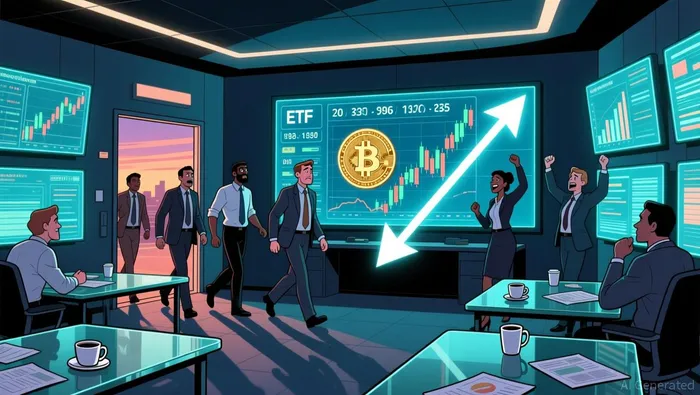
Bitcoin remains in a consolidation phase in early 2026 due to macroeconomic uncertainty and cautious institutional flows. The price has been trading in a range between $80,000 and $95,000, indicating a period of price discovery rather than a clear trend. Institutional engagement through regulated products supports Bitcoin's long-term narrative, even if it hasn't led to a price breakout.
Why is Bitcoin consolidating near $90,000?
Bitcoin's consolidation near $90K mirrors the pre-2025 rally pattern, characterized by low volatility and a range-bound market. The consolidation is driven by a mix of ETF outflows and geopolitical tensions, but it does not reflect panic selling. Instead, it shows steady accumulation by long-term holders.
The consolidation phase is also influenced by macroeconomic uncertainty and cautious institutional flows. Institutional investors are rotating capital into equities and metals rather than exiting the market. This strategic rotation suggests that Bitcoin is viewed as a store of value and a macro-risk hedge.
What are the implications for investors?
The implications for investors are that Bitcoin is behaving like a macro-sensitive store of value. Institutional investors are rotating capital rather than exiting the market, and the market is in a holding pattern as larger capital flows and policy developments are assessed.
Corporate treasury behavior and geopolitical uncertainty also shape the market, with Bitcoin showing resilience above key support levels. While short-term price action remains subdued, ongoing institutional activity and a steady bid on pullbacks suggest confidence has not eroded.
The market's direction is likely to depend on macroeconomic clarity and improved risk appetite. A sustained breakout above $92,000 would validate the ascending triangle and align with Fibonacci targets in the $120,000–$145,000 range.
What are the risks and limitations?
Sticky inflation could delay rate cuts and prolong high interest rates, dampening risk-on sentiment. Deloitte forecasts core inflation above 2% through 2028, a scenario that might pressure Bitcoin's valuation as investors prioritize yield-bearing assets.
Regulatory shifts also pose a threat. While the proposed Clarity Act could bolster adoption, a reversal in policy might stifle institutional inflows. Additionally, short-term disruptions like a US government shutdown or geopolitical shocks could trigger liquidity crunches, forcing BTC into a defensive mode.
Bitcoin's volatility remains a double-edged sword. Unlike equities, which absorb macroeconomic shifts gradually, BTC reacts with heightened sensitivity to leverage in perpetual futures and whale-driven rebalancing. The $100,000 threshold is a pivotal inflection point, and a sustained breakout would signal bullish momentum.

Blending traditional trading wisdom with cutting-edge cryptocurrency insights.
Latest Articles
Stay ahead of the market.
Get curated U.S. market news, insights and key dates delivered to your inbox.






Comments
No comments yet