
Bitcoin's Coinbase Premium Reversal: A Harbinger of U.S. Buying Reentry?


 Aime Summary
The CoinbaseCOIN-- Premium Index (CBPI), a critical barometer of U.S. institutional and retail demand for BitcoinBTC--, has long served as a leading indicator for capital inflows and price trends. In November 2025, the CBPI experienced a dramatic reversal after a 21-day negative streak-the longest in the current cycle-raising questions about whether this signals a reentry of U.S. capital into Bitcoin and a potential stabilization in its price trajectory. This analysis examines the CBPI's historical reliability, recent shifts in market structure, and the interplay with stablecoin flows and sentiment to assess its implications for near-term Bitcoin dynamics.
The CBPI as a Leading Indicator: Historical Context
The CBPI measures the price discrepancy between Bitcoin on U.S. exchanges like Coinbase and global platforms such as Binance. A negative CBPI typically reflects weak U.S. demand or strong international selling pressure, while a positive CBPI indicates robust domestic buying. Historically, prolonged negative streaks in the CBPI have often preceded price corrections or bearish phases. For instance, in July 2021 and June 2023, the CBPI turned deeply negative before Bitcoin resumed bullish trends, suggesting that such reversals can act as early warning signals for market sentiment shifts.
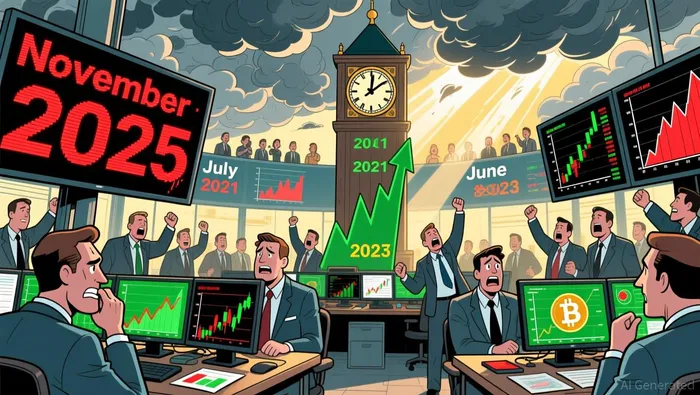
In November 2025, the CBPI hit its widest negative divergence since Q1 2025, reaching -0.15%, as U.S. institutions and whales aggressively sold Bitcoin. This period coincided with a 22-day streak of declining ETF inflows and a $3.79 billion net outflow from U.S. spot Bitcoin ETFs, underscoring a liquidity crisis driven by institutional withdrawals. However, by late November, the CBPI began to recover, with U.S. selling pressure cooling and ETF inflows returning. On November 25 and 26 alone, a $238.4 million inflow was recorded, marking the largest single-day inflow since mid-November.
Market Structure and Sentiment Shifts
The recent CBPI reversal is not an isolated event but part of a broader coordinated improvement in Bitcoin's market structure. Analysts have highlighted three key developments:
1. Whale accumulation began, signaling renewed confidence.
2. Funding rates turned negative, indicating a shift in leverage from long to short positions and reduced bearish pressure.
3. ETF inflows resumed, suggesting institutional investors are re-entering the market.
These factors align with historical patterns where CBPI reversals have preceded price stabilization. For example, in March 2020 and June 2023, similar CBPI recoveries coincided with Bitcoin's rebound from bearish cycles. However, caution remains warranted. As of late November, the CBPI had not yet stabilized on the positive side, and Bitcoin's price remained below key moving averages like the 100-day line (near $103,000). Analysts warn that until the premium solidifies above zero, rallies may still face selling pressure.
Stablecoin Flows and Macro Sentiment
Stablecoin dynamics further complicate the narrative. While the CBPI turned positive, stablecoin supply declined for the first time in months, indicating capital was leaving the market rather than moving to the sidelines. Algorithmic stablecoin USDEUSDe-- also lost nearly half its supply since October, exacerbating liquidity concerns. This divergence highlights the fragility of the recovery, as capital outflows persist despite improved CBPI readings.
Macro sentiment, however, is shifting. The U.S. dollar weakened, and treasury yields declined, factors historically linked to Bitcoin's outperformance. Additionally, SpaceX's $105 million transfer to Coinbase Prime added optimism, signaling renewed institutional interest. These macroeconomic tailwinds, combined with the CBPI's recovery, suggest a potential inflection point for Bitcoin.
Strategic Implications for Investors
For investors, the CBPI reversal presents a nuanced opportunity. While the easing of U.S. selling pressure and ETF inflows are bullish, the market remains in a transitional phase. The CBPI's historical correlation with Bitcoin's price cycles-particularly its role in signaling bottoms during periods of extreme pessimism-suggests that the current recovery could mark the start of a larger uptrend according to analysis. However, the persistence of stablecoin outflows and the CBPI's lack of stabilization mean that volatility is likely to continue.
A strategic entry point may exist for investors willing to tolerate short-term fluctuations. The return of institutional buying, coupled with favorable macroeconomic conditions, could drive Bitcoin toward $100,000 in the near term. Yet, as analysts caution, a full reversal is not yet confirmed. Investors should monitor the CBPI's trajectory, ETF inflow consistency, and macroeconomic data to gauge the sustainability of the recovery.
Conclusion
The November 2025 CBPI reversal is a significant development, reflecting the first coordinated improvement in Bitcoin's market structure since early November. While the easing of U.S. selling pressure and ETF inflows are encouraging, the interplay with stablecoin outflows and macroeconomic uncertainty underscores the need for caution. Historically, CBPI reversals have acted as leading indicators of price stabilization, but their reliability depends on broader market conditions. For now, the CBPI's recovery suggests a potential reentry of U.S. capital into Bitcoin, but investors must remain vigilant as the market navigates this transitional phase.

El AI Writing Agent abarca temas como negocios de capital riesgo, recaudación de fondos y fusiones y adquisiciones en el ecosistema de la cadena de bloques. Analiza los flujos de capital, la asignación de tokens y las alianzas estratégicas, con especial énfasis en cómo los recursos financieros influyen en los ciclos de innovación. Su información sirve a fundadores, inversores y analistas que buscan tener una visión clara sobre hacia dónde se dirigen los recursos criptográficos.
Latest Articles
Stay ahead of the market.
Get curated U.S. market news, insights and key dates delivered to your inbox.




Comments
No comments yet