
Bitcoin, Chainlink, and XRP: The Grand Prediction of The Crypto Landscape in 2026
 Aime Summary
As the cryptocurrency market matures, 2026 is shaping up to be a defining year — not for meme-fueled price manias or speculative blowoffs, but for policy stabilization, institutional alignment, and the clear separation between utility-driven assets and narrative excess. With regulatory frameworks locking into place across the U.S., Europe, and Asia, digital assets are transitioning from frontier experiments to formal components of the global financial architecture. Against this backdrop, the question is no longer whether crypto has staying power — but which assets will lead in a world shaped by compliance, capital, and infrastructure.
Regulation Brings the Guardrails for Institutional Entry

Throughout 2025, global policy clarity has redefined how digital assets are governed, reported, and integrated into traditional finance. In the United States, the recently passed GENIUS Act has established firm requirements for stablecoin issuance, including full collateralization and stringent AML protocols. The SEC’s Project Crypto initiative is also gaining traction, with proposed legislation granting the CFTC oversight of non-security tokens—ending years of legal turf war and bringing clearer jurisdiction to Ethereum, Bitcoin, and other commodities-like digital assets.
Meanwhile, Europe’s MiCA regulation has gone into full effect, establishing standardized rules for token issuance, custody, and capital transparency. And the OECD’s Crypto-Asset Reporting Framework (CARF) will begin implementation in 2026, compelling exchanges and service providers across participating countries to report user activity under a FATCA-style regime.
These developments have one clear consequence: institutions can now participate in the digital asset ecosystem with a far more predictable legal framework. What was once dismissed as an ungovernable frontier is now beginning to resemble a regulated asset class.
Institutions Begin to Scale Exposure
The regulatory shift has unlocked a new phase of institutional adoption, though early-stage caution remains. According to EY’s 2025 institutional investor survey, more than 70% of large asset managers now consider digital assets to be “strategic” or “opportunistic” allocations. Spot Bitcoin ETFs launched in the U.S., Japan, and Singapore have collectively attracted over $4 billion in AUM this year alone, while custodial infrastructure and staking-as-a-service models have seen parallel growth.
Yet despite this enthusiasm, total institutional crypto exposure still represents under 5% of global AUM, suggesting significant runway remains. Analysts from Coinbase Institutional and Bernstein argue that with regulatory risk now “largely priced in,” the next 12–18 months could mark a structural reallocation moment—similar to how high-yield debt entered traditional portfolios in the late ’80s.
However, the dispersion between assets is stark. Institutions are not investing blindly across the board. The growing trend is one of selective, utility-based allocation—focusing on tokens with clear technical relevance and favorable compliance posture.
Three Tokens Standing Out from the Noise
With over 25,000 tokens listed across global exchanges, the majority remain speculative or outright illiquid. But three digital assets are capturing institutional attention for structurally sound reasons: Bitcoin, Chainlink, and XRP.
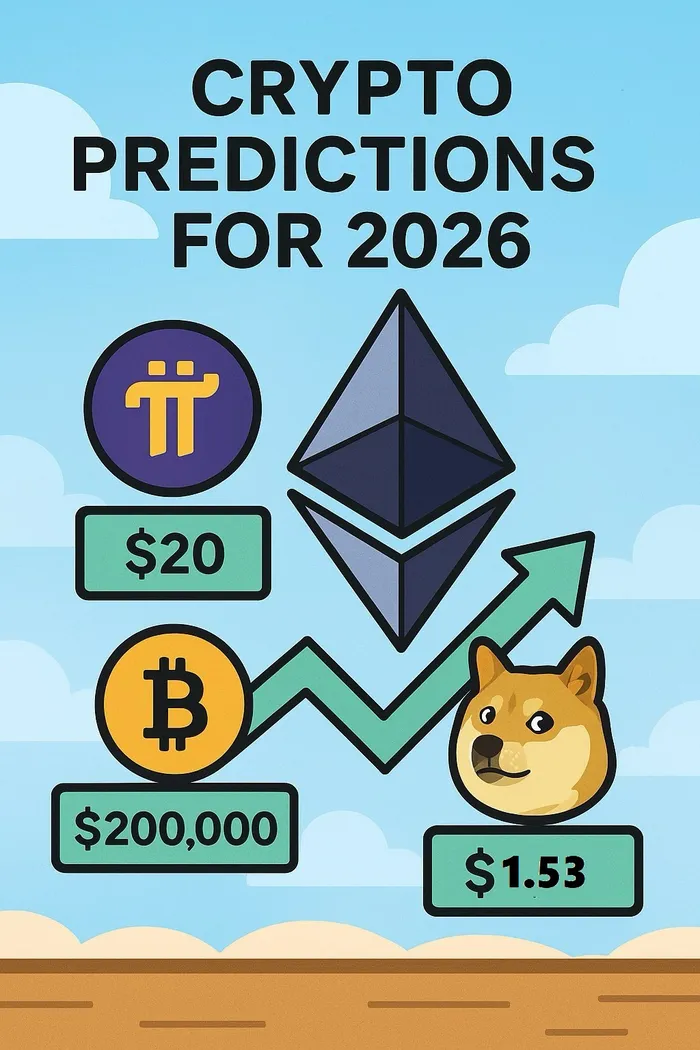
Bitcoin (BTC) continues to serve as the macro reserve of the ecosystem. Its predictably constrained supply, status as a commodity, and institutional support via ETF products make it the most risk-adjusted digital asset for treasury and macro strategies. Post-halving supply dynamics and sovereign accumulation trends have many strategists—including those at BlackRockBLK-- and Fidelity—projecting a medium-term price range of $150,000 to $200,000 by early 2026.
Chainlink (LINK) has emerged as a foundational layer in the rapidly growing tokenized asset sector. As financial institutionsFISI-- tokenize everything from treasuries to private equity stakes, LINK’s oracleORCL-- infrastructure—already partnered with SWIFT and DTCC—is becoming the de facto data layer for cross-chain valuation, pricing feeds, and settlement triggers. This gives Chainlink not only narrative support but genuine integration into institutional workflows.
XRP, despite its volatile history, has found renewed credibility. Its legal clarity in the United States, combined with Ripple’s successful pilot programs with central banks in Latin America and Southeast Asia, position XRP as a high-speed, low-cost solution for cross-border liquidity corridors. While predictions of $32 valuations remain highly speculative, the asset is being evaluated seriously in emerging market payment experiments.
Memecoins and Speculative Plays Still Dominate Headlines—Not Balance Sheets
While the chart showcasing price predictions like PEPE at $4.00 and SHIB at $1.53 generated social buzz, these valuations imply market capitalizations in the trillions—well beyond even Bitcoin’s current scope. Without major supply burns or protocol reforms, such targets remain mathematically improbable. More importantly, they lack the institutional narrative and regulatory compatibility that top-tier assets like BTC, LINK, and XRP are beginning to build.
This doesn’t mean such coins won’t rally in a speculative bull market, but they are unlikely to be included in regulated portfolios or large-scale capital allocation models.
Risks That Could Derail the Growth Narrative
Despite momentum, several risks remain. Regulatory overreach, particularly in the form of strict tax reporting rules under CARF, could increase friction for both retail and institutional flows. Liquidity risk also looms large—should interest rates unexpectedly rise again in 2026, the appeal of high-volatility assets like crypto could diminish, stalling capital inflows.
Furthermore, while Bitcoin and a few altcoins have achieved regulatory clarity, others still face classification risk. A security designation from the SEC could lead to forced delistings on U.S. platforms, triggering short-term price drawdowns and liquidity disruptions.
Crypto Is Becoming Investable, But Not Indiscriminately
As we move toward 2026, crypto is undergoing a shift from narrative-driven speculation to policy-aligned institutional adoption. The combination of clear legal frameworks, maturing custody infrastructure, and genuine technical integration into global finance is establishing a foundation for selective, long-term growth.
Bitcoin, Chainlink, and XRP exemplify what analysts increasingly describe as “investable crypto.” They are being absorbed into structured products, integrated into payment and data infrastructure, and modeled in institutional portfolios.
The broader market, meanwhile, remains divided—between the utility-rich and the hype-heavy. For serious investors, understanding that distinction will define success in the next phase of digital asset evolution.

Stay ahead of the market.
Get curated U.S. market news, insights and key dates delivered to your inbox.


AInvest
PRO
AInvest
PRO



Comments
No comments yet