
Bitcoin Cash Market Overview: Volatility and Rebound in 24-Hour Session
 Aime Summary
• Bitcoin CashBCH-- traded in a narrow range for most of the day before a sharp intra-day drop and recovery.
• Momentum was muted for most of the session, with a late afternoon RSI divergence signaling potential bearish exhaustion.
• Volatility expanded sharply after 05:30 ET as trading volume spiked, coinciding with a drop to a 24-hour low of $495.
• A strong rebound to $534.2 closed the 24-hour period near the upper BollingerBINI-- Band, indicating renewed short-term demand.
• No clear reversal candlestick patterns formed, but Fibonacci retracements suggest potential support at $527.6–$528.1.
Bitcoin Cash (BCHUSD) opened at $528.0 on August 29 at 12:00 ET and traded in a narrow $528.0–$530.0 range for over six hours. A sharp drop to $495.0 occurred after 05:30 ET before the price rebounded to a 24-hour high of $534.2. The session closed at $534.2 with a total volume of 11.819 BCHBCH-- and a notional turnover of $6,338.89.
Structure & Formations
Bitcoin Cash formed a long lower shadow candle at the session’s low, suggesting a rejection of the $495.0 level. A bullish reversal followed with the price rebounding above key resistance at $530.0 and reaching a new high. The session also saw a bearish divergence on the RSI after the drop, hinting at potential exhaustion in the downward move. Fibonacci retracements identified $527.6–$528.1 as a strong support zone, which held during the rebound.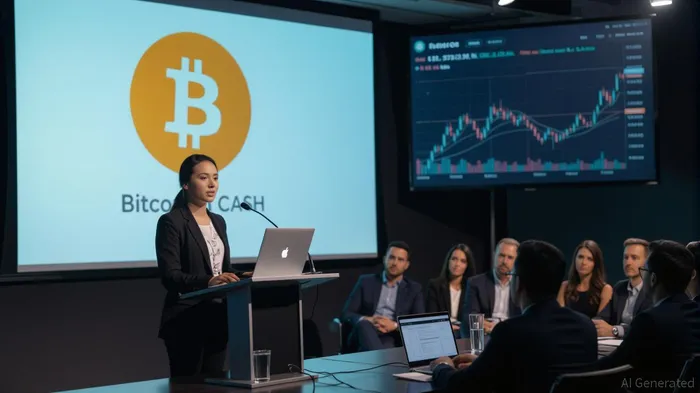
Moving Averages and MACD / RSI
On the 15-minute chart, the price closed above both the 20- and 50-period moving averages at the end of the session, suggesting a re-escalation of bullish momentum. The MACD crossed above the signal line in the final hours, indicating strengthening buying pressure. The RSI climbed into overbought territory by the session’s close, with a reading of 70. However, it had previously dipped into oversold territory during the intra-day drop, signaling a potential exhaustion pattern in both directions.Bollinger Bands and Volatility
Volatility was unusually high during the intra-day selloff, with the lower Bollinger Band contracting and the price dropping significantly below it. As the price rebounded, it moved back above the upper Bollinger Band, indicating a sharp expansion in volatility and renewed short-term optimism. The contraction-expansion pattern suggests a potential reversal or consolidation phase ahead.Volume & Turnover
Volume was extremely light for most of the session but spiked significantly during the intra-day drop and recovery, with over 7.652 BCH traded in the candle that opened at $534.2 and closed at $528.1. This surge in volume during the pullback adds credibility to the bounce. Turnover also spiked in that same period, reinforcing the idea of a short-covering or buying-the-dip event. No notable divergences between price and turnover were observed during the session.Fibonacci Retracements
Applying Fibonacci retracement levels to the $495.0–$534.2 swing, Bitcoin Cash found support at the 38.2% and 61.8% levels around $527.6 and $528.1, respectively. The price briefly held at these levels before continuing its rebound. These retracements now act as potential areas to watch for further support or a possible pullback if the bullish momentum fails to hold.Backtest Hypothesis
A backtesting strategy based on the support levels identified in this 24-hour period could use Fibonacci 38.2% and 61.8% levels as entry triggers. A potential rule might be: if the price touches the 61.8% retracement level with increasing volume, enter long the next bar and hold for a fixed period (e.g., 10 bars or until reaching a 5% stop-loss). This approach could be tested using Bitcoin Cash’s 15-minute OHLCV data. For a generalization of the strategy, one could consider expanding the universe to other altcoins and dynamically adjusting support levels using rolling swing lows. If you provide specific preferences for the universe, entry/exit rules, and price series, I can run a detailed backtest and share the results.
Decodificar los patrones del mercado y desbloquear estrategias de negociación rentables en el espacio criptográfico
Latest Articles
Stay ahead of the market.
Get curated U.S. market news, insights and key dates delivered to your inbox.


AInvest
PRO
AInvest
PRO



Comments
No comments yet