
Bitcoin's Bull Run at a Crossroads: Is the $111K Target Still Alive?


 Aime Summary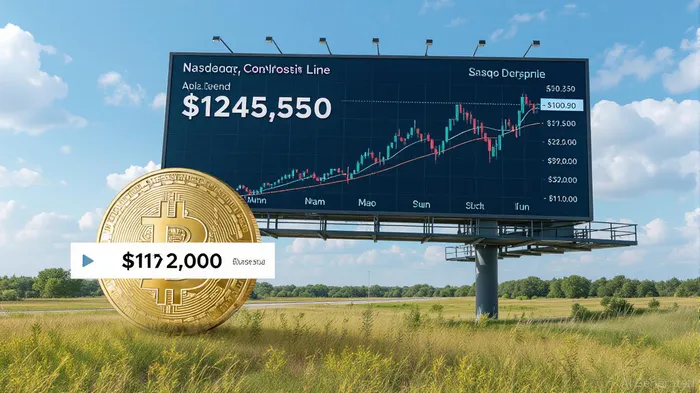
Bitcoin's recent surge to an all-time high of $124,000 in August 2025 has reignited debates about the sustainability of its bull cycle. While on-chain metrics and institutional adoption suggest a resilient market structure, diverging signals from equities and crypto sentiment raise critical questions: Is the $111K target still viable, or is the bull trend consolidating ahead of a potential correction?
Bitcoin's Volatility and On-Chain Resilience
Bitcoin's price action in August 2025 has been a masterclass in volatility. After a brief dip to $112,000, the asset rebounded sharply, driven by speculative demand in futures markets (CME basis funding rate at 9%) and robust inflows into BitcoinBTC-- ETPs and Digital AssetDAAQ-- Treasuries (DATs). On-chain data reinforces this bullish narrative:
- Transaction volume surged 26% month-over-month to 12.9 million transactions, the highest since November 2024.
- Median fees fell 13% to 421 sats, signaling a shift from speculative ordinal activity to core financial use.
- Miner revenue hit $59.4K per EH/s, with global hashrate reaching 902 EH/s—a 47% YoY increase.
However, holder behavior metrics reveal a nuanced picture. The SOPR (Spent Output Profit Ratio) remains near 1.03, indicating most transactions occur at breakeven or marginal profit. Meanwhile, the MVRV ratio (2.3x) suggests long-term holders are up 230%, but short-term holders have only gained 13%. This disparity hints at selective profit-taking rather than panic selling, a sign of a maturing market.
Nasdaq Breadth Divergence: A Cautionary Mirror
The Nasdaq Composite's record highs in August 2025 mask a troubling trend: narrow market participation. The S&P 500's advance-decline line has declined since May 2024, while the percentage of stocks trading above their 50-day moving averages plummeted from 75% in late July to 50% by early August. This divergence mirrors Bitcoin's reliance on a small group of large-cap tech stocks (the “Magnificent Seven”) and institutional-grade crypto assets.
The Nasdaq's rally is increasingly driven by AI-driven earnings and speculative bets on rate cuts, much like Bitcoin's derivatives-driven surge. However, the lack of broad participation raises concerns about fragility. For instance, the Russell 2000's 2% gain in August—a rare bright spot—suggests small-cap stocks are beginning to catch up, but this trend is still nascent.
Cross-Market Sentiment: Fed Policy as the Linchpin
The Federal Reserve's dovish pivot has been a tailwind for both equities and crypto. The expectation of a 25-basis-point rate cut in September 2025 has fueled liquidity, with Bitcoin's implied volatility dropping to 32% (below its one-year average of 50%). This compression has made bullish positioning cheaper: a +25% out-of-the-money (OTM) one-year call now costs 6% of the spot price, compared to 18% in late 2024.
Yet, cross-market sentiment shifts are not uniform. While Bitcoin ETFs and regulatory clarity (e.g., the BITCOIN Act of 2025) have institutionalized crypto, equities face divergent pressures. The bond market's caution—elevated long-duration yields—signals skepticism about fiscal sustainability, creating a dissonance between equity optimism and macroeconomic reality.
Strategic Roadmap for Investors
- Hedge Against Divergence: Given the narrowness of both the Nasdaq and Bitcoin's rally, investors should diversify into small-cap equities and altcoins with strong fundamentals. For example, could offer insights into how AI-driven narratives play out in both sectors.
- Monitor On-Chain Liquidity: Watch Bitcoin's exchange outflows (Binance's reserves fell from 595K to 544.5K BTC in 2025) and miner equity performance. A reversal in these trends could signal a shift in capital allocation.
- Leverage Derivatives for Positioning: With call premiums up 37% MoM, consider using options to lock in gains while maintaining exposure. A $111K target remains plausible if the Fed delivers on rate cuts, but volatility could test this level.
- Assess Regulatory Catalysts: The approval of spot Bitcoin ETFs and the repeal of SAB 121 have normalized crypto as a financial asset. Institutional inflows (e.g., BlackRock's $130B AUM in Bitcoin ETFs) suggest the bull trend is here to stay, but regulatory shifts in 2026 could introduce new variables.
Conclusion
Bitcoin's bull run is at a crossroads, with on-chain strength and institutional adoption providing a solid foundation. However, the parallels with the Nasdaq's breadth divergence underscore the risks of overconcentration. The $111K target remains alive if macroeconomic conditions and Fed policy align with current expectations, but investors must remain vigilant. By hedging against narrow rallies, leveraging derivatives, and monitoring regulatory developments, crypto and equity investors can navigate the next phase of the cycle with strategic clarity.

Proporcionar información y análisis en tiempo real sobre las tendencias financieras en vías de desarrollo y los movimientos del mercado.
Latest Articles
Stay ahead of the market.
Get curated U.S. market news, insights and key dates delivered to your inbox.






Comments
No comments yet