
Bitcoin (BTC) Security and Infrastructure in 2026: Regulated Platforms and Wallet Best Practices
 Aime Summary
Regulated financial apps now offer institutional-grade encryption and fund segregation, reducing risks associated with self-custody. - Staking platforms like LidoLDO-- and wallets like Ledger provide enhanced security through hardware-isolated keys and fine-grained delegations according to Ledger support. - Emerging malware like Torg Grabber poses a serious threat to crypto wallets and browser extensions, targeting sensitive user data.
Bitcoin buying and holding has become significantly safer and more accessible for individual investors. Regulated financial apps like SoFiSOFI-- and CoinbaseCOIN-- now offer institutional-grade encryption and segregated customer fund management, reducing the risks associated with self-custody. These platforms also help automate tax reporting and support fractional purchases, making BitcoinBTC-- more approachable for everyday investors. The collapse of unregulated exchanges like FTX in 2022 reinforced the importance of choosing regulated platforms that provide transparency and recovery options.
Security remains a critical concern in the crypto ecosystem. A hardware wallet, for example, stores private keys offline and provides the highest level of security for long-term storage. However, even hardware wallets require careful management of seed phrases, which are essential for wallet recovery. The Torg Grabber malware, which targets over 700 crypto-related browser extensions, illustrates the need for users to be vigilant about protecting sensitive data.
Investors are increasingly using regulated exchanges to manage their Bitcoin holdings. Kraken and Coinbase are among the top U.S. platforms for their track records in security, compliance, and user experience. Kraken is noted for its quarterly proof of reserves, while Coinbase provides a user-friendly interface and robust security features. Other platforms like OKX and eToro offer distinct advantages for active traders and beginners, respectively.
What are the best practices for securing a crypto wallet in 2026?
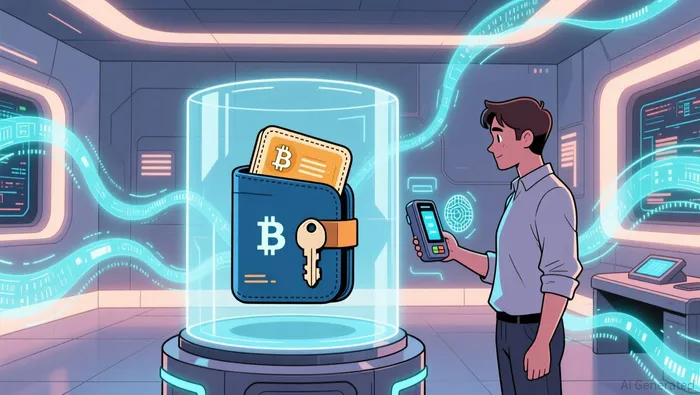
Securing a crypto wallet in 2026 involves a combination of best practices and technological tools. A wallet does not store coins directly but instead manages the keys needed to access them. Hot wallets are convenient for frequent use but less secure compared to cold wallets, which store keys offline. Beginners are advised to use both types depending on their needs, keeping some funds on exchanges for convenience and others in personal wallets for security.
Custodial wallets are managed by third parties, while non-custodial wallets give users full control over their keys. For maximum security, users should protect their seed phrase by storing it offline and never sharing it. Two-factor authentication and phishing awareness are also essential security practices.
How do investors manage Bitcoin risks and volatility in 2026?
Managing Bitcoin risks and volatility in 2026 involves a combination of investment strategies and tools. Dollar-cost averaging, which involves making smaller, regular investments, is recommended as a strategy to mitigate the impact of price fluctuations. This method is particularly useful for beginners and casual investors who may lack the experience to navigate sharp market swings.
Investors are also advised to consider Bitcoin ETFs as a safer option for those who prefer traditional brokerage platforms. Fractional purchases and automation of tax reporting by regulated platforms help reduce errors and lower the risk of mistakes in tax compliance. However, investors must remain informed about the risks involved in cryptocurrency investing and invest only what they can afford to lose.
What are the emerging threats to crypto investors in 2026?
Emerging threats to crypto investors in 2026 include malware attacks and post-quantum cryptography risks. Torg Grabber, for instance, targets over 700 browser extensions related to cryptocurrency wallets, exfiltrating sensitive data and loading additional malicious modules. Users are advised to avoid storing sensitive files like seed phrases on commonly scanned folders and to ensure all devices are running the most up-to-date operating systems.
Post-quantum cryptography is another area of concern for the blockchain and web3 industries. Quantum computing is advancing rapidly, and experts warn that current cryptographic systems used by blockchains like Bitcoin and EthereumETH-- could be compromised in the future. The "Harvest Now, Decrypt Later" threat, where malicious actors store encrypted data for future decryption with quantum computers, underscores the urgency for the industry to act now.

Blending traditional trading wisdom with cutting-edge cryptocurrency insights.
Latest Articles
Stay ahead of the market.
Get curated U.S. market news, insights and key dates delivered to your inbox.


AInvest
PRO
AInvest
PRO



Comments
No comments yet