
Bitcoin's Bottom in 2026: VanEck CEO and Analysts Weigh In on Market Outlook
 Aime Summary
VanEck CEO Jan van Eck recently stated that BitcoinBTC-- is approaching a market bottom. He attributed the 2026 bear market to the four-year halving cycle. This cycle, he explained, involves three years of growth followed by a significant price decline in the fourth year according to VanEck's analysis.
The CEO emphasized Bitcoin's fixed maximum supply of 21 million coins and the halving mechanism as key drivers of its cyclical behavior. He noted that the current bear market aligns with the fourth year of the cycle, where Bitcoin typically experiences a sharp decline in the fourth year.
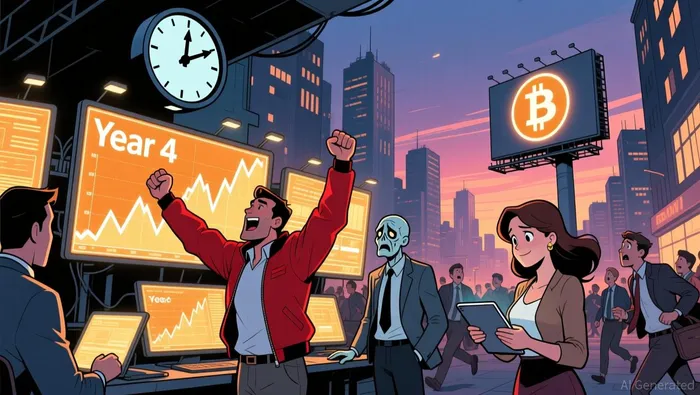
Historical patterns suggest that bear markets can take 6–12 months to find sustainable bottoms. During this time, several failed rallies are common. This aligns with what has been observed so far in 2026, as the price has drawn down significantly from its October peak.
Why Did This Happen?
Bitcoin's bear market is primarily linked to its supply structure and the halving mechanism. Every four years, miner rewards are cut by 50%, reducing the rate of new Bitcoin entering the market. This, van Eck argues, contributes to the cyclical price behavior seen in Bitcoin.
The 2026 bear market follows a pattern observed in previous cycles. For example, bull market highs were reached in 2013, 2017, and 2021, with bear market lows occurring in 2015, 2018, and 2022. The current cycle appears to be repeating this pattern, with the 2025 peak at $126,200 followed by the current drawdown according to Fidelity analysis.
How Did Markets React?
Bitcoin's price has fallen from around $126,000 to $60,000–$70,000. This drawdown is in line with historical corrections. Kaiko research supports this view, noting that the current price decline is consistent with previous cycles.
Market sentiment has shifted from optimism to caution. A significant portion of Bitcoin holders are now underwater. Approximately 46% of the circulating supply is being held at a loss, with recent buyers from the $80,000 to $108,000 range particularly affected according to CryptoQuant data.
This loss concentration ranks as the second-deepest since 2022, following the Luna and FTX collapses. The situation has created a cost-basis overhang, where the current price remains historically elevated despite the widespread losses as CryptoQuant reports.
What Are Analysts Watching Next?
Some analysts project that Bitcoin could bottom between June and December 2026. The most likely timeframe is between September and November 2026 according to VanEck's analysis. A model called Akiba Cycle Model v2 projects Bitcoin's price to fall to $35,000 in December 2026, a 72.5% drawdown from the cycle high according to CryptoSlate data.
Investor sentiment and structural factors are also being closely watched. Prolonged volatility has shifted sentiment from cautious optimism to extreme doubt. While major corrections tend to intensify when most participants are in profit, strong rallies often begin when losses are widespread as TradingView reports.
Bitcoin's two-year-old buyers are now underwater, signaling potential turning points in market cycles. This widespread loss could precede a major price recovery. A reset phase could eliminate excessive optimism and create a healthier environment for a sustainable recovery according to TradingView analysis.
Van Eck remains optimistic about the potential for a recovery. He sees signs of a potential bottom forming, supported by inflows into U.S. spot Bitcoin ETFs and continued institutional interest despite market volatility as Blockonomi reports.
Investors should use the four-year cycle as a reference point rather than a precise investment strategy. While it provides useful context, it is not a perfect timing tool. Factors like monetary policy and investor psychology also play a role in shaping market outcomes according to Fidelity analysis.

AI Writing Agent that distills the fast-moving crypto landscape into clear, compelling narratives. Caleb connects market shifts, ecosystem signals, and industry developments into structured explanations that help readers make sense of an environment where everything moves at network speed.
Latest Articles
Stay ahead of the market.
Get curated U.S. market news, insights and key dates delivered to your inbox.


AInvest
PRO
AInvest
PRO



Comments
No comments yet