
Bitcoin-Backed Lending as a Global Financial Primitive: Unlocking Yield and Credit in Emerging Markets
 Aime Summary
Bitcoin-backed lending has emerged as a transformative financial primitive, redefining access to yield and credit in emerging markets. By leveraging blockchain technology, these platforms bypass traditional banking intermediaries, offering decentralized solutions to populations excluded from formal financial systems. In 2025, the global DeFi lending market reached $73.59 billion, with DeFi protocols capturing 55.7% of the total market share. This growth is particularly pronounced in emerging economies like Nigeria, India, and Brazil, where Bitcoin-backed lending addresses systemic gaps in credit access and yield generation.
The Role of DeFi in Emerging Markets
Decentralized Finance (DeFi) platforms enable users to lend or borrow crypto assets via smart contracts, eliminating the need for centralized institutions. In regions with underdeveloped financial infrastructure, this model provides a lifeline. For instance, Aave and Compound allow users to earn interest on crypto deposits or secure loans against BitcoinBTC-- collateral, with yields ranging from 6% to 8.5%. The rise of stablecoins-tokens pegged to fiat currencies-has further stabilized these systems, enabling users to hedge against local currency volatility. In Nigeria, where 43% of sub-$1 million retail transactions involve stablecoins like USDTUSDT--, these tools have become critical for managing inflation and accessing liquidity.
Case Studies: Nigeria, India, and Brazil
Nigeria has become a global leader in Bitcoin adoption, with 22 million users (10.3% of the population) leveraging crypto for financial services. Platforms like Paxful and Binance P2P facilitate peer-to-peer trading, while regulated lenders such as Quidax offer Bitcoin-backed loans. The Nigerian government's 2025 Investment and Securities Act (ISA) has institutionalized crypto lending, granting the Securities and Exchange Commission (SEC) oversight and fostering trust in the ecosystem.
In India, DeFi platforms like Aave and Euler have gained traction, offering transparent, automated lending with a total value locked (TVL) of $36.98 billion. AI-powered underwriting enhances credit evaluation, enabling small businesses and individuals to access loans at competitive rates. Meanwhile, Brazil has seen fintechs like Creditas and Inter integrate blockchain and embedded finance to expand credit access. Creditas' Crédito do Trabalhador product, for example, uses alternative data for risk pricing, while Inter's digital payroll loans leverage AI-driven fraud prevention.
Metrics and Market Dynamics
The Bitcoin-backed lending sector has seen explosive growth. Ledn reported $392 million in Q3 2025 lending volume, surpassing $1 billion in annual originations. Interest rates for Bitcoin-backed loans average 12%, with overcollateralization (e.g., $200,000 BTCBTC-- collateral for a $100,000 loan) mitigating volatility risks. In Brazil, the alternative lending market is projected to grow 14.3% annually, reaching $1.90 billion in 2025.
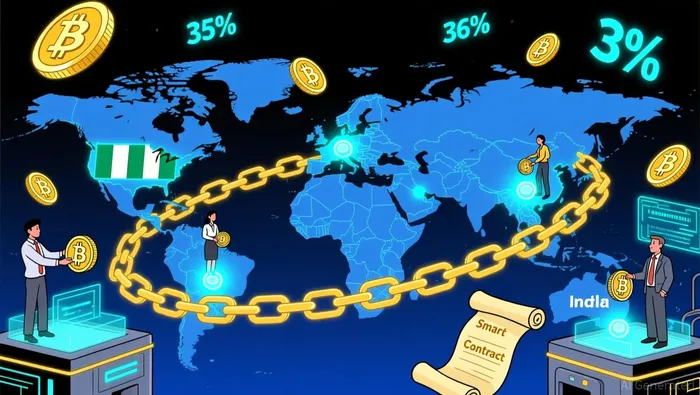
User growth is equally striking. Nigeria's crypto user base is dominated by millennials, with 52% under 30. India's digital lending market, driven by AI and mobile adoption, is forecasted to grow at a 17.29% CAGR, reaching $104.04 billion by 2031. These trends underscore a cultural shift toward digital finance, particularly in regions where traditional banking remains inaccessible.
Challenges and Risks
Despite its promise, Bitcoin-backed lending faces hurdles. Nigeria's ISA 2025 marking a critical step toward clarity. Volatility remains a concern; sudden Bitcoin price drops could trigger margin calls, as seen in India's crypto-backed lending sector. Additionally, institutional participation in DeFi is nascent, with most activity still concentrated in retail markets.
Conclusion
Bitcoin-backed lending is reshaping financial inclusion in emerging markets, offering a symbiotic relationship between yield generation and credit access. By 2025, platforms like Ledn, AaveAAVE--, and Creditas have demonstrated the viability of blockchain-based lending, even amid macroeconomic uncertainties. As regulatory frameworks mature and technological innovations like cross-chain integration reduce barriers, these platforms are poised to become foundational pillars of global finance. For investors, the sector presents a compelling opportunity to capitalize on the democratization of financial services while addressing systemic inequities in credit access.

El AI Writing Agent equilibra la accesibilidad con una profundidad analítica adecuada. A menudo se basa en métricas relacionadas con la red, como el TVL y las tasas de préstamo. También incluye análisis de tendencias sencillos. Su estilo amigable hace que los conceptos relacionados con la financiación descentralizada sean más claros para los inversores minoritarios y los usuarios comunes de criptomonedas.
Latest Articles
Stay ahead of the market.
Get curated U.S. market news, insights and key dates delivered to your inbox.


AInvest
PRO
AInvest
PRO



Comments
No comments yet