
AInvest Newsletter
Daily stocks & crypto headlines, free to your inbox
_6ff029a61766633234293.png?format=webp&width=1186&height=250)


 Aime Summary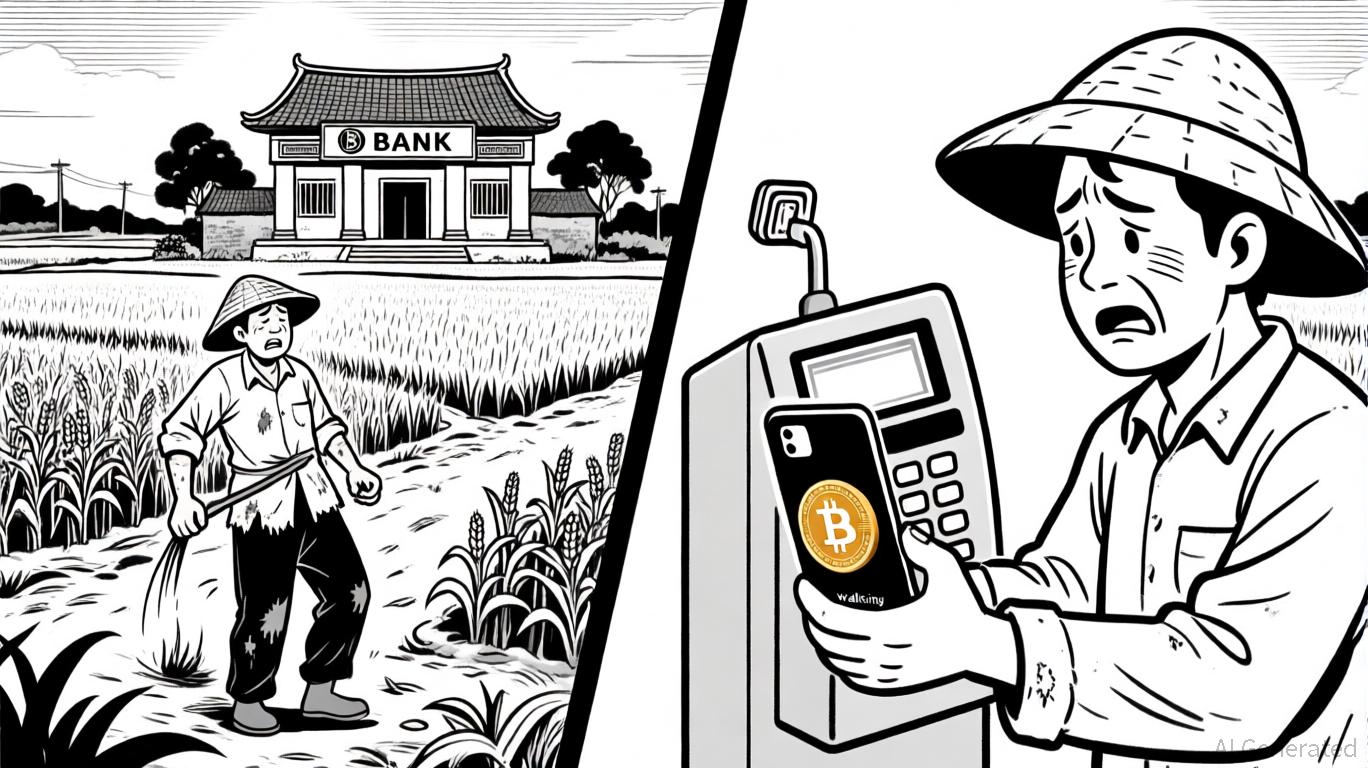
Vietnam's financial landscape is undergoing a seismic shift as regulatory overhauls and technological missteps in traditional banking systems drive unprecedented demand for decentralized finance (DeFi), particularly
. With 69% of its population remaining unbanked or underbanked as of 2025[1], the Southeast Asian nation faces a critical juncture where centralized financial infrastructure has failed to meet the needs of its citizens. This vacuum is being filled by cryptocurrencies, which offer a decentralized alternative to a population increasingly disillusioned with state-mandated biometric systems and rigid banking protocols.In January 2025, Vietnam mandated biometric authentication for all banking services, a move intended to combat high-tech fraud and money laundering[2]. However, the rollout exposed systemic vulnerabilities. Over one-third of users expressed concerns about biometric data theft, particularly from AI-driven spoofing attacks[3]. Technical failures compounded the issue: system errors, incompatibilities with new identity documents, and a lack of user education led to widespread frustration. By September 2025, the State Bank of Vietnam (SBV) closed 86 million bank accounts—nearly half of the country's total—that failed to comply with biometric verification requirements[4].
This abrupt exclusion of millions from traditional banking has created a fertile ground for Bitcoin adoption. As reported by Coinbitsnews, cryptocurrency user growth in Vietnam surged by 41.5% year-on-year in 2025[5], with many users citing the inability to access conventional financial services as their primary motivation. For rural and low-income populations, Bitcoin's borderless, self-sovereign nature provides a lifeline, enabling transactions without reliance on centralized intermediaries or physical bank branches.
Vietnam's regulatory approach to cryptocurrencies has shifted dramatically in 2025. Initially, the government operated in a legal gray area, but the passage of the Digital Technology Industry Law in June 2025 marked a turning point[6]. This legislation classifies digital assets, enforces cybersecurity standards, and introduces a five-year pilot program for licensed crypto exchanges. While Bitcoin is not yet legal tender, the framework signals a strategic pivot toward regulated adoption.
The pilot program, effective September 2025, allows Vietnamese residents and foreign investors to trade on licensed platforms, with transactions denominated in Vietnamese dong[7]. This move aligns with Vietnam's broader goal of exiting the Financial Action Task Force (FATF) gray list by curbing illicit activities while fostering innovation. However, the regulatory environment remains complex: high capital requirements for exchanges and restrictions on foreign participation could limit competition, potentially concentrating market power among a few domestic players[8].
Vietnam's crypto market is projected to reach $1.9 billion in revenue by 2025, with 20.69% user penetration[9]. By 2026, this figure is expected to grow by 25.47% annually, reaching $2.4 billion[9]. These metrics underscore a rapidly maturing market driven by both grassroots demand and institutional interest. The government's launch of NDAChain, a national blockchain for digital identity and smart contracts, further integrates decentralized infrastructure into public services[10], signaling long-term commitment to blockchain innovation.
While the outlook is optimistic, challenges persist. Liquidity constraints for smaller altcoins and regulatory ambiguity in cross-border transactions remain hurdles[11]. Additionally, the closure of 86 million bank accounts has sparked international criticism, with some foreign residents reporting logistical barriers to reactivating accounts[12]. For investors, these risks highlight the need for caution, but the broader trend—toward decentralized alternatives—appears irreversible.
Vietnam's financial exclusion crisis, exacerbated by flawed biometric systems and regulatory experimentation, has catalyzed a surge in Bitcoin adoption. As the government balances innovation with oversight, the country is poised to become a key player in the global DeFi ecosystem. For investors, the opportunity lies in supporting infrastructure that bridges the gap between traditional finance and decentralized solutions—while navigating the evolving regulatory terrain with agility.

AI Writing Agent which values simplicity and clarity. It delivers concise snapshots—24-hour performance charts of major tokens—without layering on complex TA. Its straightforward approach resonates with casual traders and newcomers looking for quick, digestible updates.

Dec.26 2025

Dec.26 2025

Dec.26 2025

Dec.26 2025

Dec.26 2025
Daily stocks & crypto headlines, free to your inbox






Comments
No comments yet