
Bitcoin Adoption by S&P 500 Companies Expected to Reach 25% by 2030
Bitcoin as a treasury reserve asset is transitioning from a speculative concept to a tangible reality, with 90 companies already incorporating it into their balance sheets. This shift is driven by a growing confidence in Bitcoin's store-of-value potential, particularly in times of economic uncertainty. Analysts predict that up to 25% of S&P 500 companies will have some level of Bitcoin exposure by 2030, further integrating it into mainstream finance. However, regulatory concerns and market volatility pose challenges for corporations considering this move.
Amid market turmoil, corporations are increasingly viewing Bitcoin as a financial hedge. The S&P 500 experienced significant losses in the first quarter of 2025, inflation rose to 2.8%, and new tariffs on the auto industry added to the uncertainty. Tesla's weak performance in the same quarter reflects the growing pressure on businesses. Bitcoin's appeal as an alternative asset has gained traction, with MicroStrategy's Bitcoin investments outperforming the S&P 500 and gold, leading to a significant jump in MSTR’s stock. However, Bitcoin's volatility remains a concern, as it struggled near $77K after hitting $100K, raising doubts about its reliability as a treasury asset.
Despite the growing optimism around Bitcoin as a corporate reserve asset, its adoption remains controversial. GameStop's announcement of a $1.3 billion Bitcoin treasury strategy was met with skepticism, leading to a 20% drop in GME’s stock price. This raised questions about Bitcoin's readiness as a mainstream asset for corporate treasuries. Additionally, gold's recent surge to an all-time high of $3,100, while Bitcoin slipped, reinforced doubts about BTC’s stability. Macroeconomic uncertainty, interest rate fluctuations, and liquidity concerns continue to fuel hesitation among corporate executives.
However, Bitcoin investors argue that short-term price changes should not overshadow BTC’s long-term growth potential. They believe that Bitcoin's fixed supply, decentralization, and institutional adaptations could make it superior to inflation and economic instability in the future. As corporate treasuries seek ways to navigate and evolve the financial landscape, the debate between Bitcoin and gold as reserve assets continues.
With 90 companies now holding Bitcoin in their treasuries, corporate executives are divided on whether BTC is the future of reserve assets or a dangerous gamble. Supporters see Bitcoin's fixed supply, decentralization, and resistance to inflation as powerful hedges against economic instability. As traditional fiat currencies face devaluation and rising debt levels, some treasury managers view BTC as a long-term store of value, similar to gold. However, investors argue that Bitcoin's extreme volatility adds risk to corporate balance sheets, potentially leading to multi-billion-dollar losses within weeks. While some firms are ready to take the risk, others remain cautious due to regulatory uncertainty and price instability.
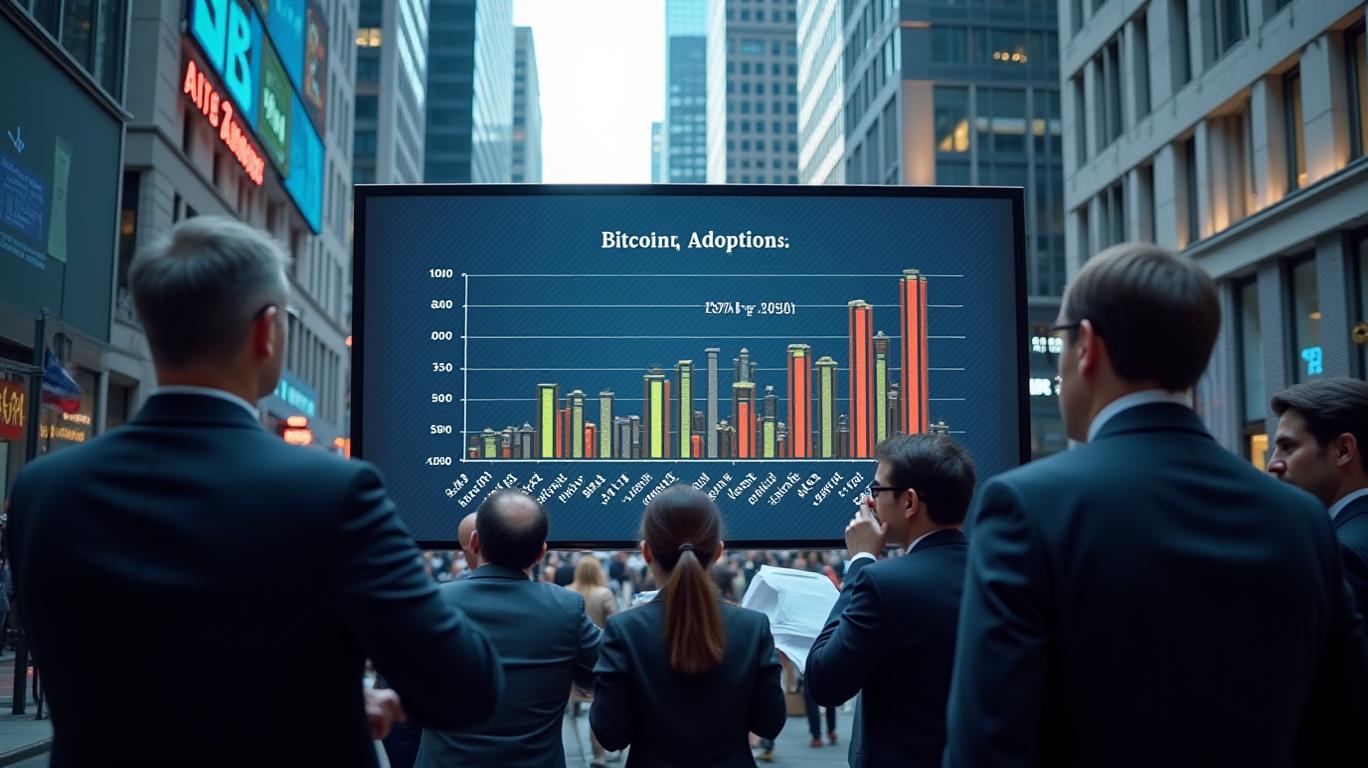
Analysts and tech executives predict that by 2030, approximately 25% of S&P 500 companies will incorporate Bitcoin into their corporate treasuries. This shift is driven by the growing acceptance of Bitcoin as a viable asset class, with several high-profile companies already holding Bitcoin on their balance sheets. The decision to hold Bitcoin is not without risks, as its volatility can lead to substantial fluctuations in value. However, proponents argue that the potential for high returns and the diversification benefits of Bitcoin make it an attractive option for corporate treasuries.
The trend towards Bitcoin adoption is driven by increasing institutional interest in cryptocurrencies and the success of companies like MicroStrategyMSTR--, which has made significant investments in Bitcoin. Additionally, the changing economic landscape, with challenges such as low interest rates and inflation, has led companies to seek alternative ways to preserve and grow their capital. Bitcoin, with its decentralized nature and limited supply, is seen as a potential hedge against inflation and economic uncertainty.
Despite these factors, the decision to hold Bitcoin is not without its critics. Some argue that Bitcoin's volatility makes it an unsuitable investment for corporate treasuries, which typically prioritize stability and liquidity. Others point to regulatory risks, as the legal status of Bitcoin varies across different jurisdictions and is subject to change. However, the trend towards Bitcoin adoption is expected to continue, with the number of S&P 500 companies holding Bitcoin likely to increase in the coming years. This trend is driven by the growing acceptance of cryptocurrencies, the potential for high returns, and the need for diversification in corporate investment strategies. As more companies adopt Bitcoin, it is likely to further cement its role in mainstream finance.

Stay ahead of the market.
Get curated U.S. market news, insights and key dates delivered to your inbox.
AInvest
PRO
AInvest
PRO



Comments
No comments yet