
Bitcoin's 7-Month Low: Is This a Buying Opportunity or a Warning Sign?


 Aime Summary
Macroeconomic Catalysts: Fed Policy and Global Liquidity Shifts
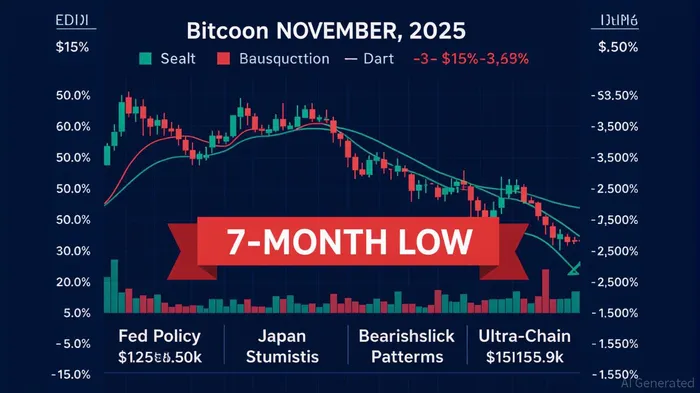
The Federal Reserve's evolving stance has been a primary driver of Bitcoin's selloff. While the central bank (QT) program , , investors remain anxious about the timing of rate cuts. This uncertainty has fueled a risk-off market environment, with BitcoinBTC-- falling victim to broader asset de-risking. . further amplified fears of systemic deleveraging, dragging crypto markets into a tailspin.
Meanwhile, , , has introduced a mixed bag of implications. While yen weakness could boost demand for Bitcoin as an inflation hedge, , . This interplay between liquidity expansion and rising borrowing costs creates a volatile backdrop for risk assets.
Regulatory Pressures and Institutional Retreat
Global regulatory ambiguity has compounded the sell-off. Over 65 crypto organizations have urged President Donald Trump to clarify digital asset regulations, highlighting a fragmented and often hostile policy landscape. In the U.S., weakened inflows into spot Bitcoin ETFs and heavy liquidations . Regulatory uncertainty, coupled with rising volatility, has led to a retreat by large-cap buyers, exacerbating downward pressure.
Contrarian Signals: Whale Activity and Hash Rate Resilience
Despite the bearish narrative, contrarian indicators suggest the market may be nearing a turning point. Market expert . The Bitcoin network's hash rate hitting all-time highs amid the price drop further signals miner confidence, with infrastructure investment outpacing short-term price action.
Negative funding rates in perpetual futures markets and rising stablecoin inflows also hint at institutional positioning for a rebound. , driven by post-Halving supply constraints and growing institutional demand. These metrics challenge the prevailing bearish sentiment, suggesting the selloff may be correcting overbought conditions rather than signaling a new bear market.
Technical Dilemmas: Death Cross and Market Sentiment
Technically, ", . However, such signals often precede oversold conditions. , . Whether this becomes a catalyst for accumulation or capitulation depends on how macroeconomic and regulatory risks evolve in early 2026.
Conclusion: A Tipping Point for Contrarian Investors?
Bitcoin's seven-month low presents a paradox: macroeconomic and regulatory headwinds suggest caution, while on-chain and institutional signals hint at resilience. For contrarian investors, the key lies in balancing short-term volatility with long-term fundamentals. If the Fed's rate-cut cycle materializes as expected and regulatory clarity emerges, Bitcoin could rebound on renewed liquidity and institutional adoption. However, a delayed policy response or further regulatory crackdowns could prolong the downturn.
In this environment, disciplined investors might consider dollar-cost averaging into dips, hedging against downside risks while positioning for a potential post-Halving rally. As Anslem argues, "The market is pricing in a worst-case scenario"-it's time to bet on the resilience of Bitcoin's infrastructure and the ingenuity of its participants.

Delivering real-time insights and analysis on emerging financial trends and market movements.
Latest Articles
Stay ahead of the market.
Get curated U.S. market news, insights and key dates delivered to your inbox.






Comments
No comments yet